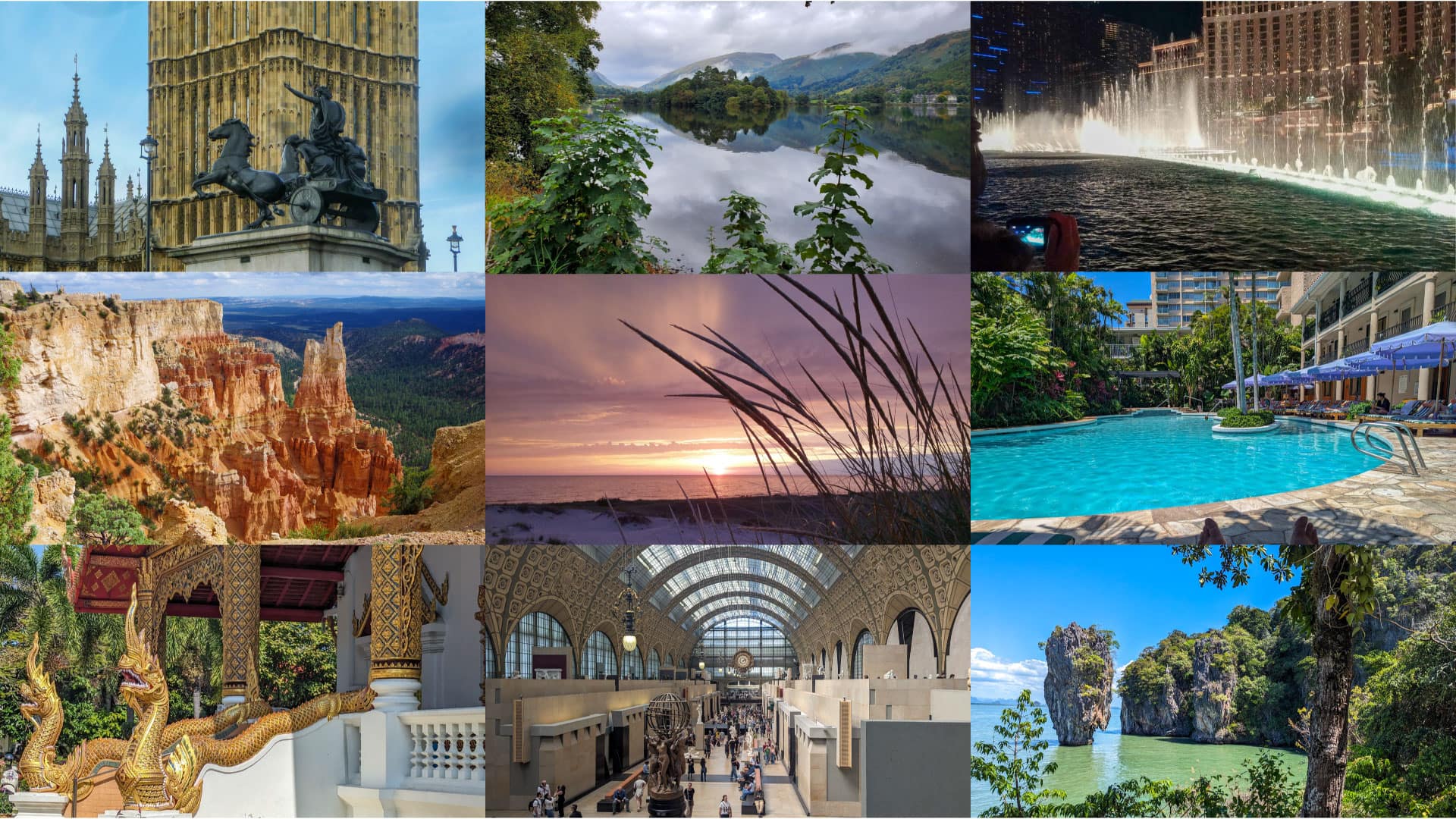
Of course this means you might need to figure out what you want to do before you get there. To me this is a major part of building an itinerary, because if you don’t know what you want to do when you get somewhere, how do you know how long you should stay?
This is a topic where a good guidebook really helps. It will have honest advice on what to see and why, so you can choose things of interest to you.
Assuming you have at least a rough idea of what you would like to see and do, here are some things to think about when it comes to booking things.
On our first trip to Britain, I booked most of our tours and attractions in advance. Except for Windsor Castle. So we spent three hours waiting to get in.
And by the time I got around to booking a whale watching tour in New Zealand, all the good time slots were full. (And then ours was canceled and we couldn’t reschedule.)
Individual Sights
It’s really hard to generalize on this since every place is different. Some sights you have to book in advance. Sometimes it saves money. Usually it saves standing in line. Sometimes all of the above!
- In larger cities you generally have the option of booking attractions individually or as part of a broader combo ticket or pass designed for visitors. Like cable TV packages, they seem to always include things you’re not interested in. Check to see if a given pass is good value for you given what you will visit. (Sometimes they may include hidden gems. In Florence one of our combo tickets included entry to the Palazzo Davanzati, which we hadn’t heard much about and ended up being one of our favorite spots.)
- Timed visits are becoming more common. For very popular sights – such as the Roman colosseum, the Nazrid Palaces at the Alhambra, Notre Dame, or the Grand Palace in Bangkok – you may need to choose an entry time in addition to booking in advance, with limited spaces available. A combo ticket or pass might include both timed and untimed attractions.
- Audio tours are often available, sometimes for an extra fee. Sometimes hardware is included; sometimes it’s an app you run on your phone.
- Guided tours may also be available.
- Advance booking windows vary. If you’re not seeing tickets available it could be because they’re not yet available, not because they’re sold out.
- Getting tickets through a third-party can be convenient or it may require you to pick up the tickets from someplace far from the sight. It can also be a scam. (The couple in front of us at Notre Dame had bought invalid tickets.) Beware of websites that look official but are not. It can be difficult to tell the difference. Official sites are generally the cheapest but may be less easy to use.
Start researching getting tickets as soon as you know when and where you want to go. I generally book attractions 1-3 months out unless I need to do it sooner because of limited access. I buy tickets for anything that I’m sure we’ll visit because it saves valuable time queueing. Plus I find it easier to shop and purchase online sitting at a PC with two 24” monitors when not in a time crunch! The exception is weather dependent sights and activities. If we have the flexibility I’ll wait until I have a better idea what the weather will be like. Snorkeling, for example, is highly dependent on local conditions.
Local Tours
Local tours are another way to take in the sights. A tour guide offers more tailored information than you’ll get from an audio guide, plus the ability to ask questions. (Though the quality varies with the guide.) If you’re traveling without a car, tours can also be a convenient — sometimes the only — way to get to an out-of-the-way place. In France, for example, we took a day tour to local villages from Sarlat since there was no option to rent a car locally, and no public transportation.
Some “tours” can also be used to get around ticketing systems. For example, when we went to Rome it was impossible to get tickets for the Colosseum from the official site, so we bought tickets from a third party. We had a guide for the arena floor, but otherwise the “guide” was simply there to get us in, not to show us around.
We’ve taken many tours where we felt having a guide would be advantageous. In other cases we’re happy to get by with a brochure or audio guide. Guidebooks often recommend different tours. In addition to guidebook recommendations, Tiqets, GetYourGuide, and Viator are are broad collections of local tours.

We post information about passes and tickets we use and tours we take here on the blog.
Responsible Travel
Travel is wonderful. It’s fun, interesting, and mind-opening. If not mind-blowing! We love it. We also recognize that travel impacts the environment and local communities, not always in a good way.
We try to be responsible travelers by:
- Visiting during shoulder or off season to reduce crowds.
- Staying at locally-owned accommodations, eating at locally-owned restaurants, and buying locally made crafts, so money stays in the community.
- In some places locals are being priced out of local housing by short-term rentals. We try to find hosts that are renting their vacation home while they’re not using it or are renting space on their property, or “aparthotels” designed specifically for travelers.
- Flights often can’t be avoided. The world is a big place! Rental cars can, and we try to avoid renting a car at all, or only renting one for a day or two to visit places not feasible via public transportation.
- Limiting plastic consumption. We carry refillable water bottles, have switched to bar shampoo (also helps with the 3-1-1 bag), and travel with wooden cutlery.