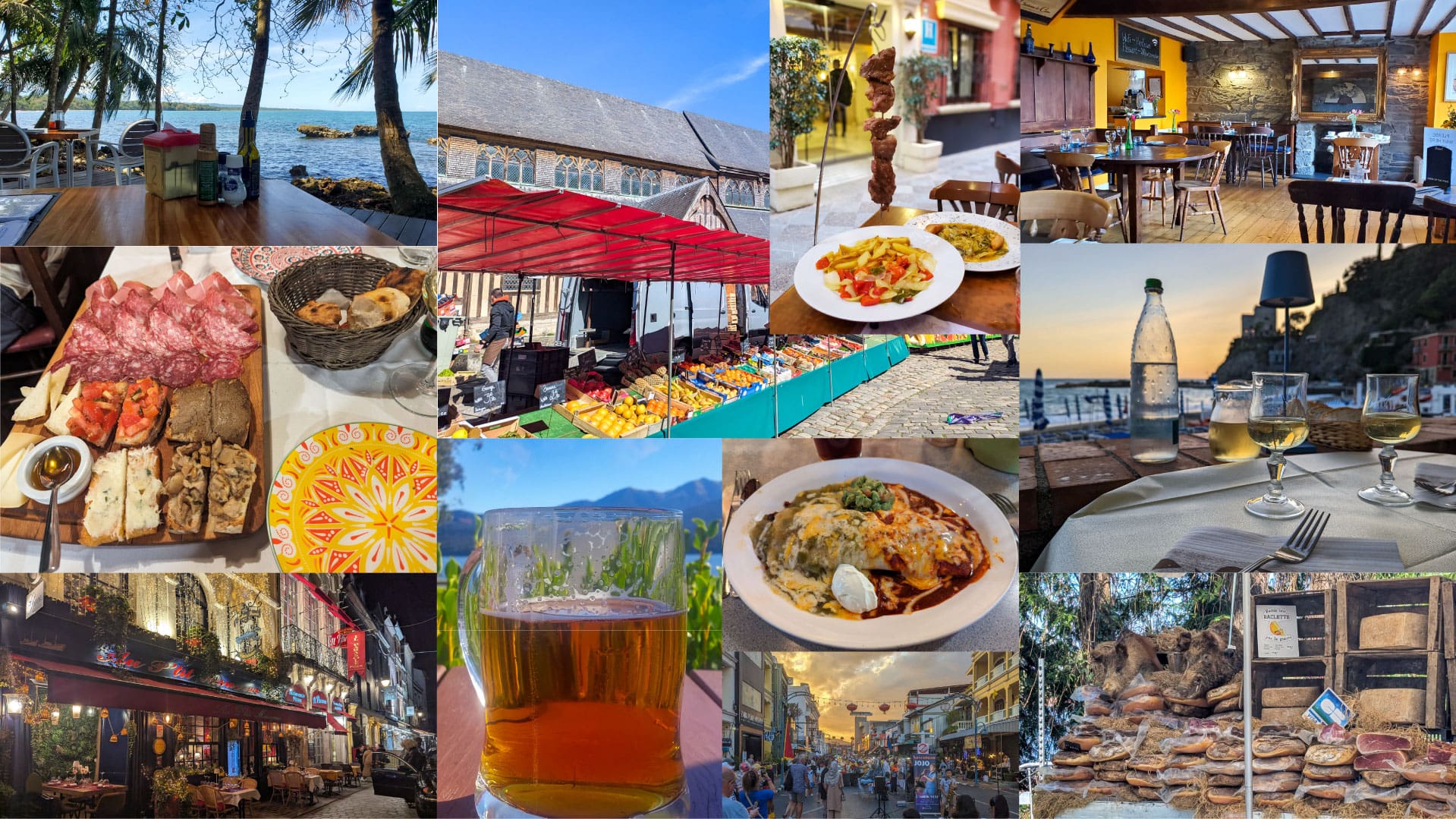
Finding new foods to try
I wouldn’t call us foodies, but we like trying new and local foods. When researching a new destination I like to see what food that area is known fort, to see what we might like to try — and if there’s anything we might want to avoid. A good guidebook will talk about local cuisine.
Saving money on food and drink
Food and beverage is one area where we save money. I estimate $50 per person per day ($10 breakfast, $15 lunch, $25 dinner) for food and drink and we rarely exceed that. We try to eat local as much as possible, since it’s usually less expensive than international food and better quality.
- Getting breakfast from a bakery and making our own coffee (if breakfast isn’t included in our room).
- Eating only one meal a day in addition to breakfast (we learned two restaurant meals a day is just too much food for us).
- Having the occasional “picnic” meal of charcuterie, sandwiches, or snacks like hummus or taramasalata, which are all things we like anyway. Plus grocery shopping in foreign places can be fun, and having a night in can be a relaxing change.
- Buying beer, wine, cider, or other alcohol at a store and drinking on our terrace if we have one rather than going to a bar. We’re not much for night life unless we run across some live music we enjoy. (Our favorite free surprise on vacation to date is happening to see Derick Sebastian play “Oye como va” on the ukulele at dinner one night on Maui. Amazing.)
Deciding where to eat
We can spend a lot of time going back and forth on where to eat. Not because we’re both opinionated, but because we’re not. And it’s terrible doing that when you’re tired and hangry, yet we don’t want to end up at some mediocre place just because it’s the first one that we ran across with an available table. So I create a shortlist of potential places to eat before we leave. I look for places that offer local food, since we like to try new things. I also know sometimes we just want something familiar, like pizza, a burger, or fish and chips. So I look for good places for those kinds of things too. We often pick up tips from hosts and other travelers too.
I go straight to Google Maps to research restaurants.
- I start by searching for any guidebook recommendations that caught my eye. Restaurants come and go, so I’m not surprised if some of them no longer exist.
- Beyond that I click on restaurants near where we’re staying to see what reviewers have to say about them.
- If I turn up too few options — or too many — I turn to TripAdvisor or travel blogs.
- I save any good options to a list within Google Maps. (I used to manually create a restaurant list for each location, but it’s easier to save them this way and easier to locate places when we get there.)
I also like to book a place for the night we arrive at a new destination, because I know we’re likely to be tired, stressed, and just not wanting to make that kind of decision right then.
Tips
- Always check to see if the tap water is safe to drink, and what’s available if it isn’t. At places we’ve stayed where you can’t drink the water they often have filtered water dispensers available.
- It’s also good to check local customs as far as booking reservations at restaurants. We’ve found — especially post-COVID — that they’re sometimes needed at places you wouldn’t expect to take them, like pubs in England.
- Food tours can be a good way to learn about local food and culture. We did a Devour tour in Spain and enjoyed it so much we did one in Italy too. I now look for food tours wherever we go.

We include information on this blog on where we ate.
Responsible Travel
Travel is wonderful. It’s fun, interesting, and mind-opening. If not mind-blowing! We love it. We also recognize that travel impacts the environment and local communities, not always in a good way.
We try to be responsible travelers by:
- Visiting during shoulder or off season to reduce crowds.
- Staying at locally-owned accommodations, eating at locally-owned restaurants, and buying locally made crafts, so money stays in the community.
- In some places locals are being priced out of local housing by short-term rentals. We try to find hosts that are renting their vacation home while they’re not using it or are renting space on their property, or “aparthotels” designed specifically for travelers.
- Flights often can’t be avoided. The world is a big place! Rental cars can, and we try to avoid renting a car at all, or only renting one for a day or two to visit places not feasible via public transportation.
- Limiting plastic consumption. We carry refillable water bottles, have switched to bar shampoo (also helps with the 3-1-1 bag), and travel with wooden cutlery.