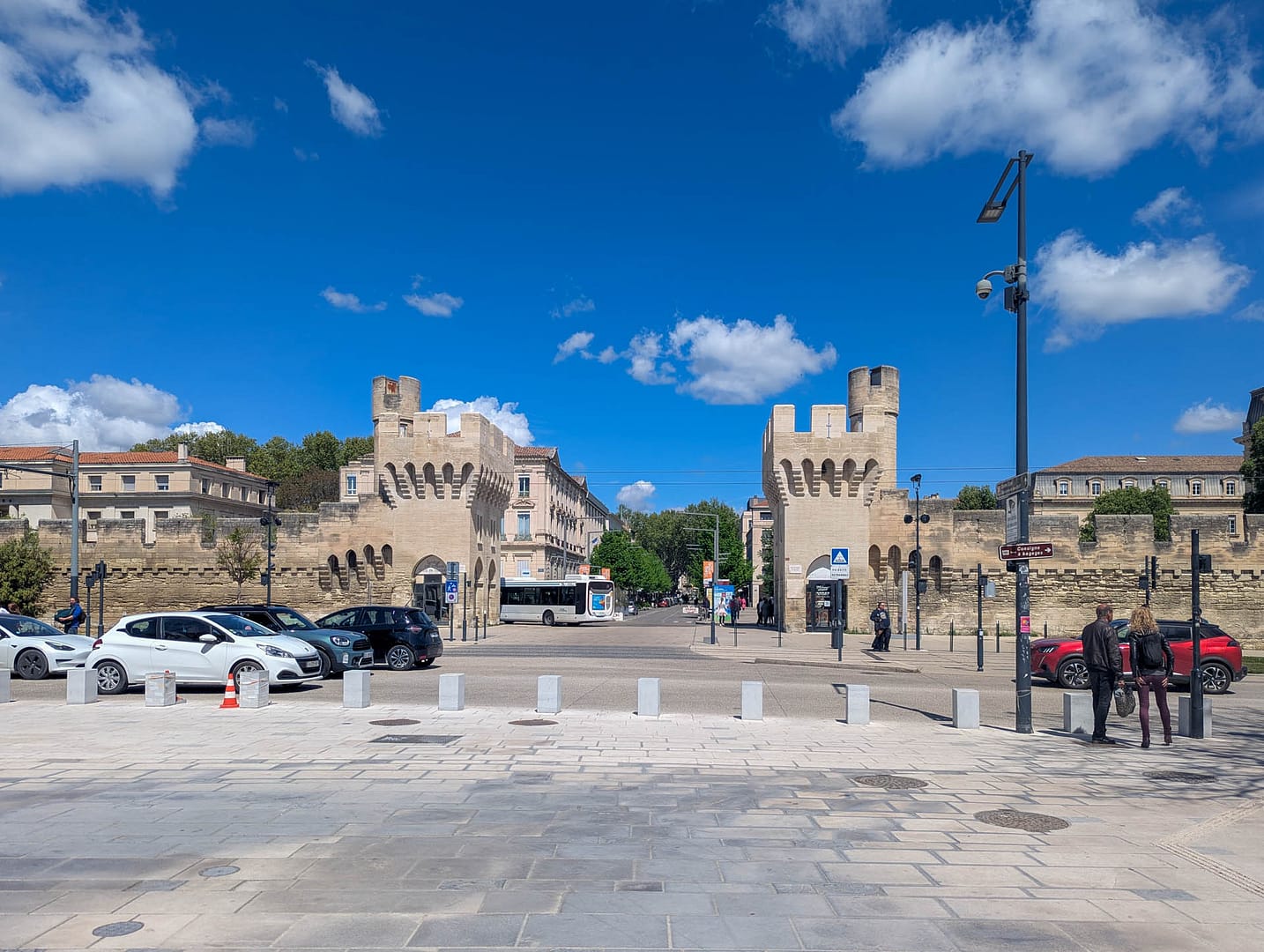
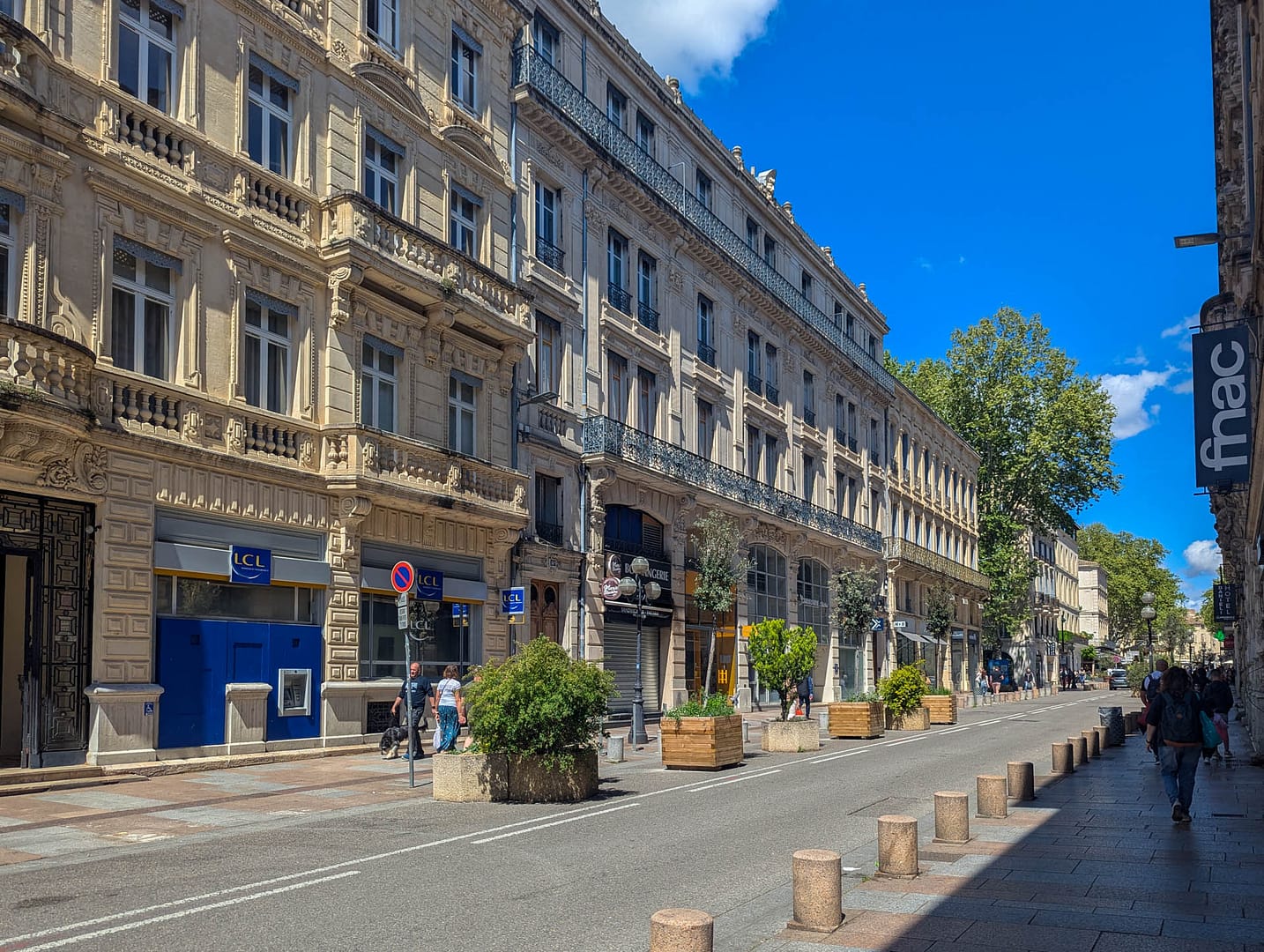
You enter the city through the old city gates across from the train station. It’s a straight shot up a main road to the clock tower square and the Palace of the Popes.
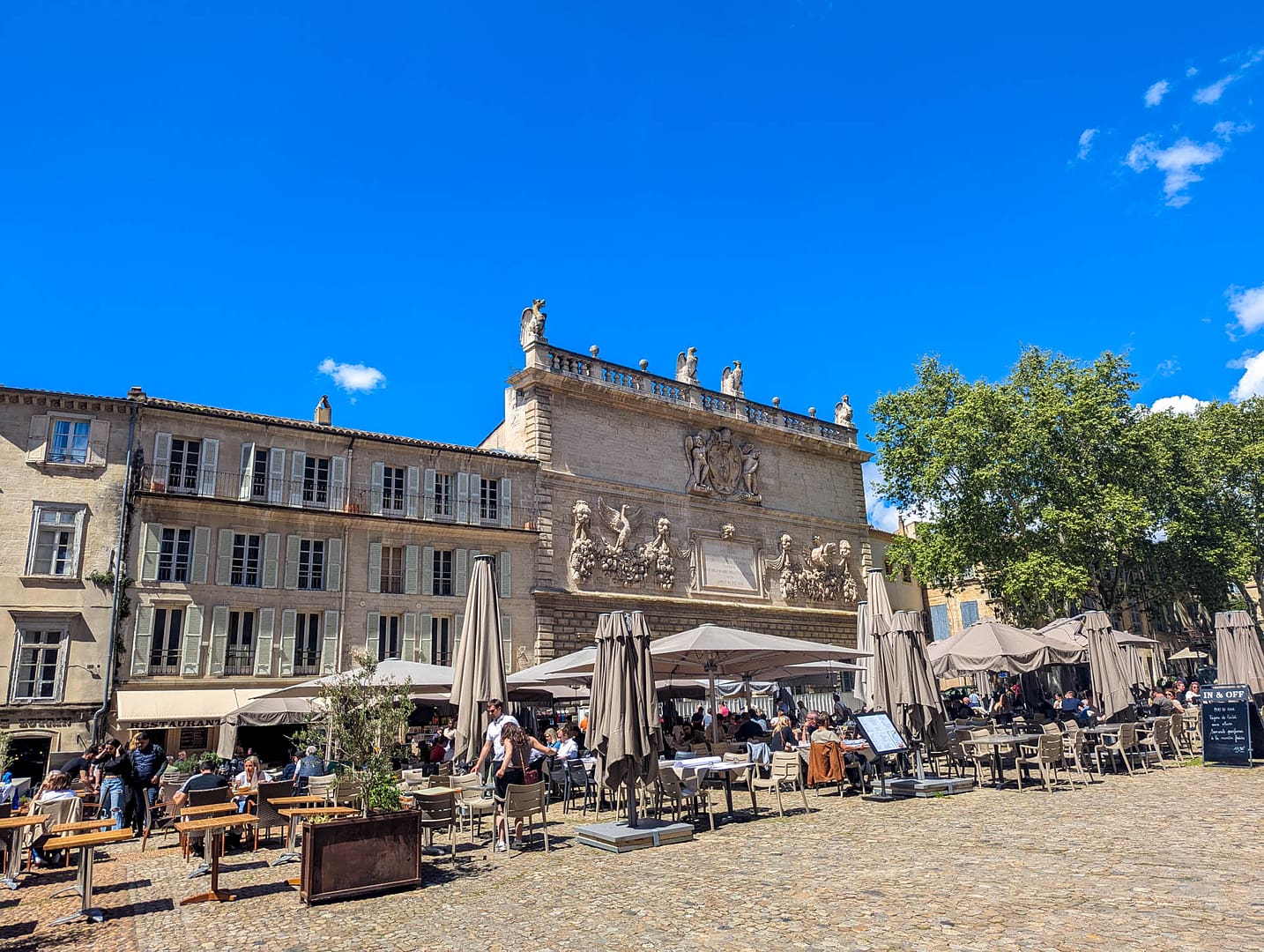
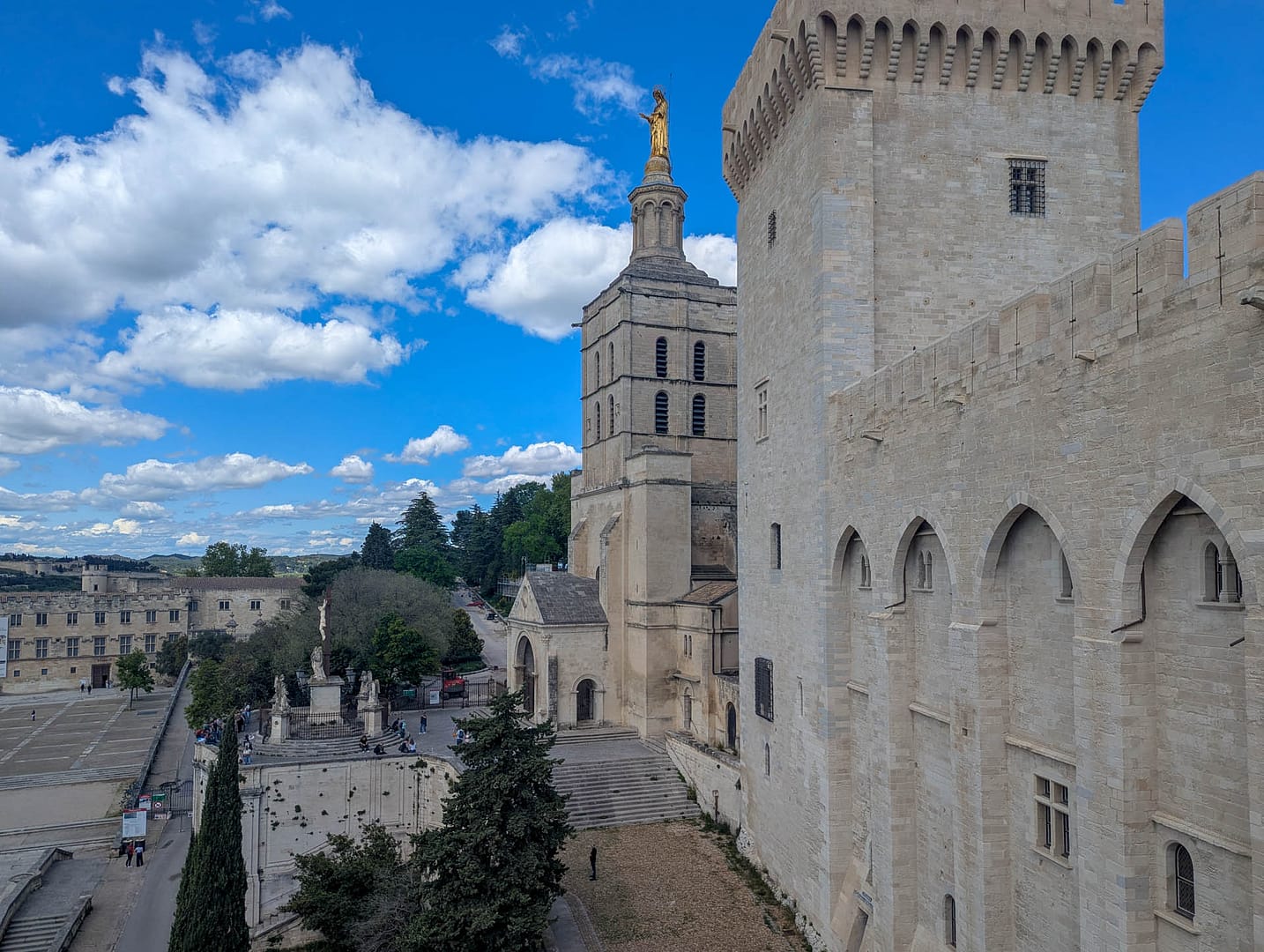
The Palace of the Popes is the largest remaining Gothic palace in Europe. It was built in the 1300s when the papacy moved to Avignon for fear that Italy was too dangerous.
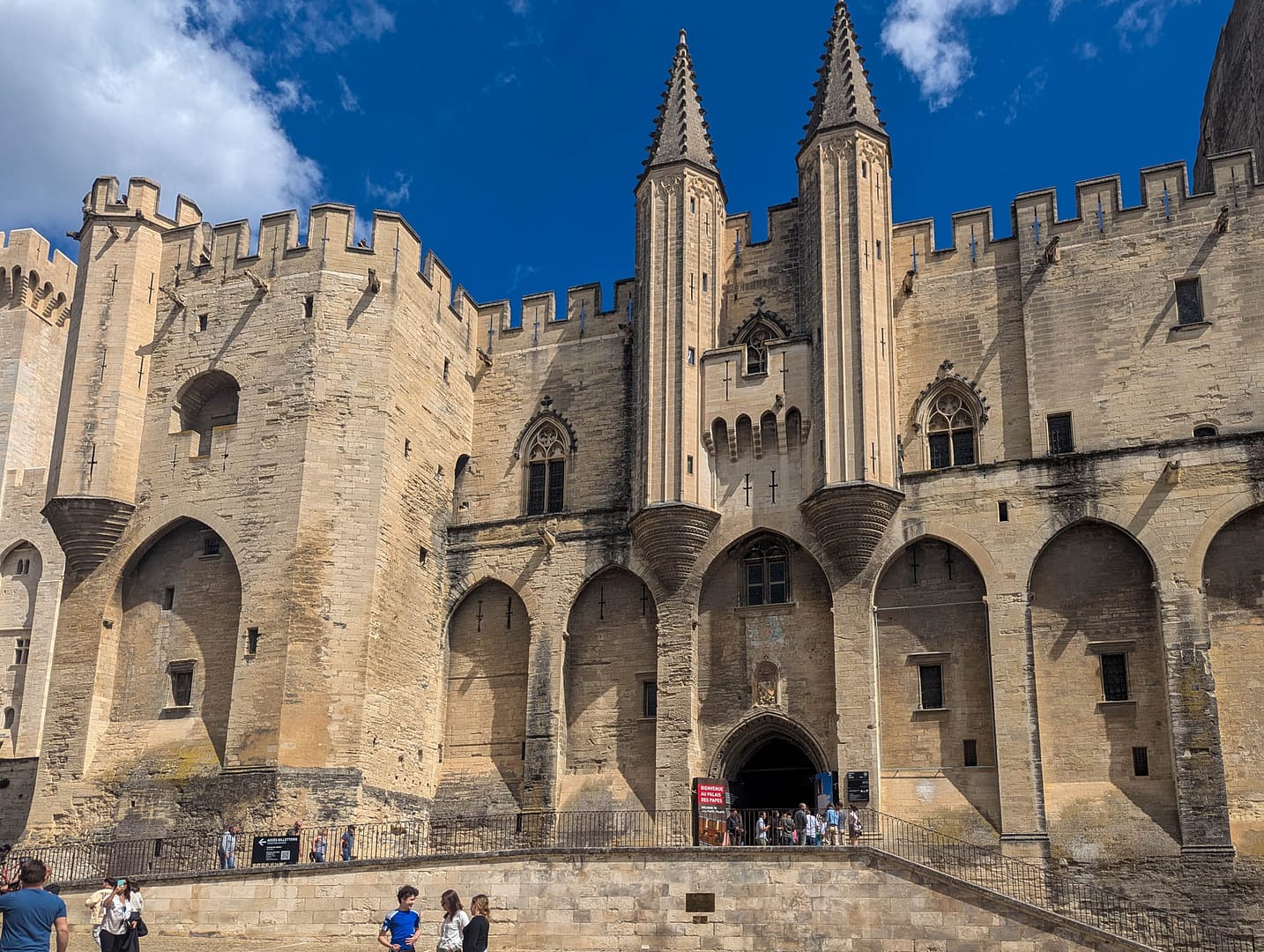
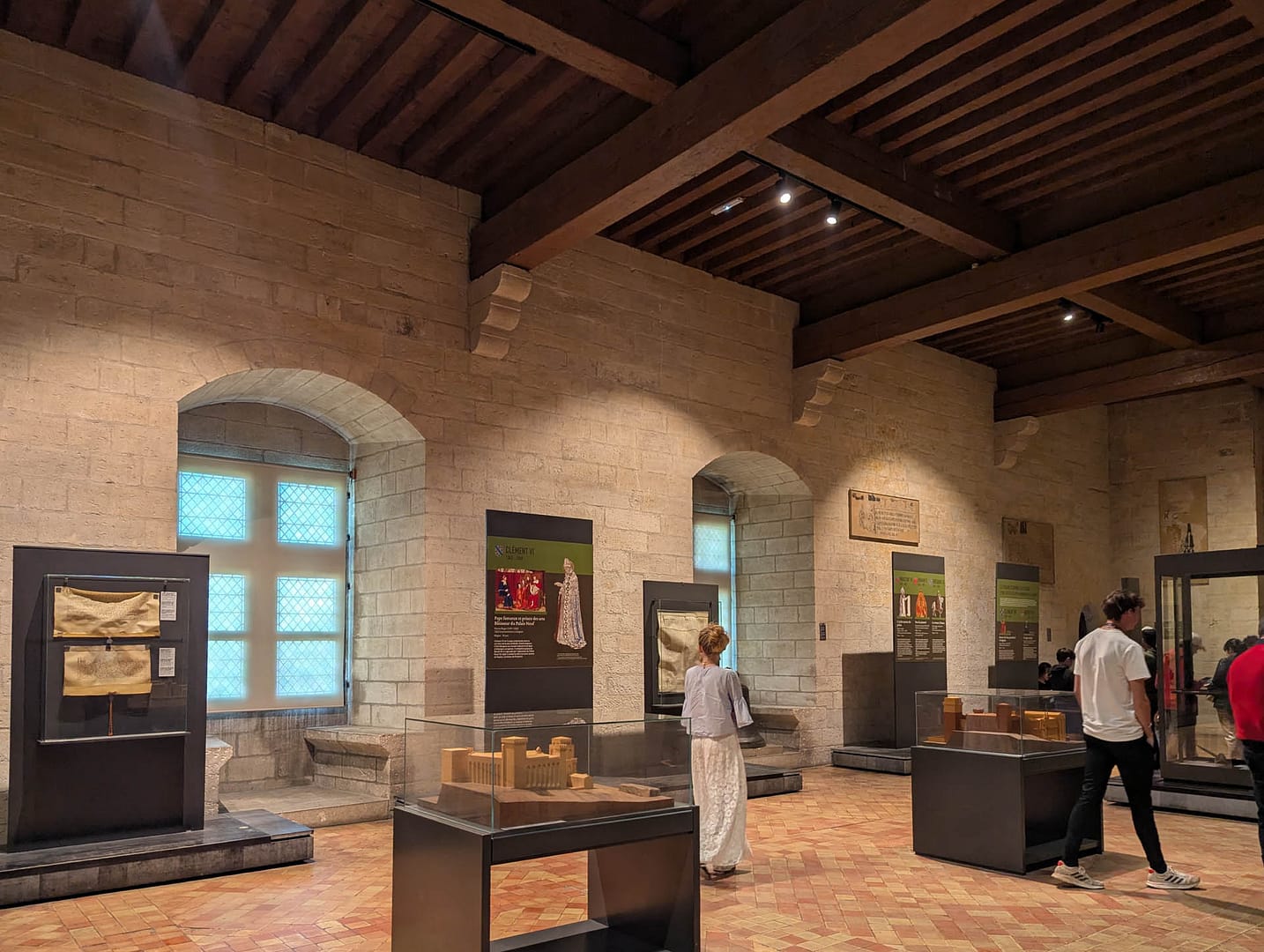
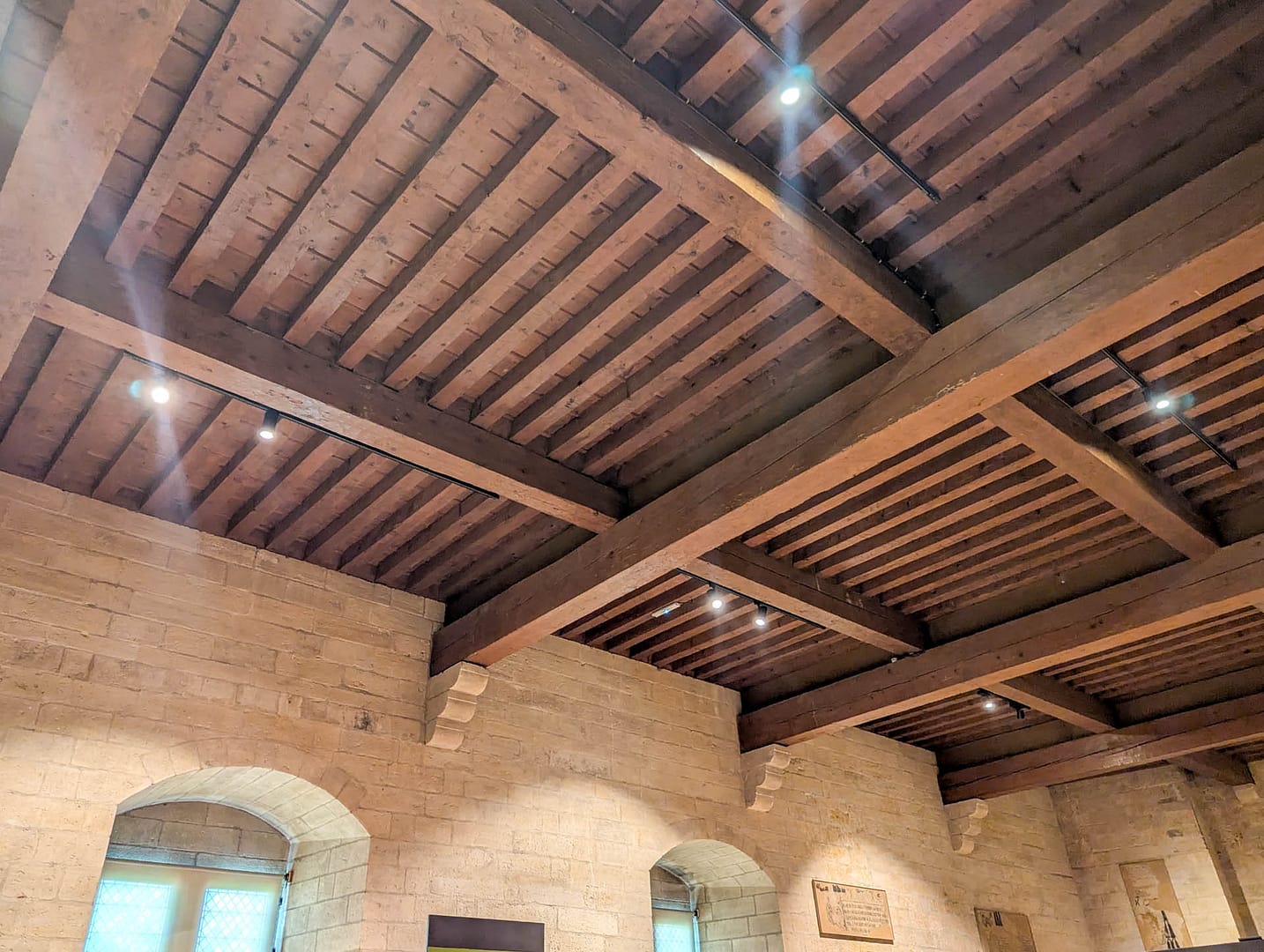
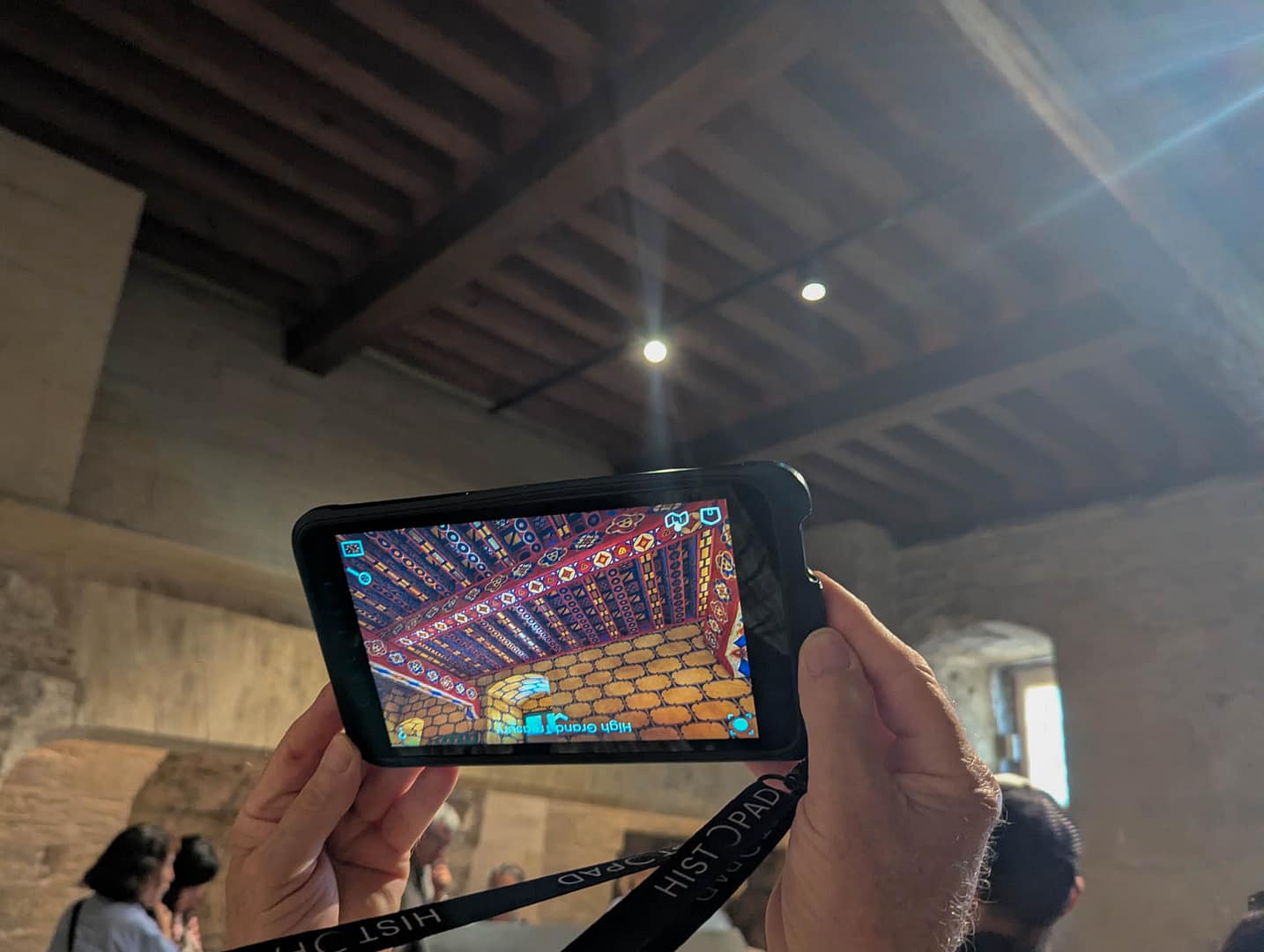
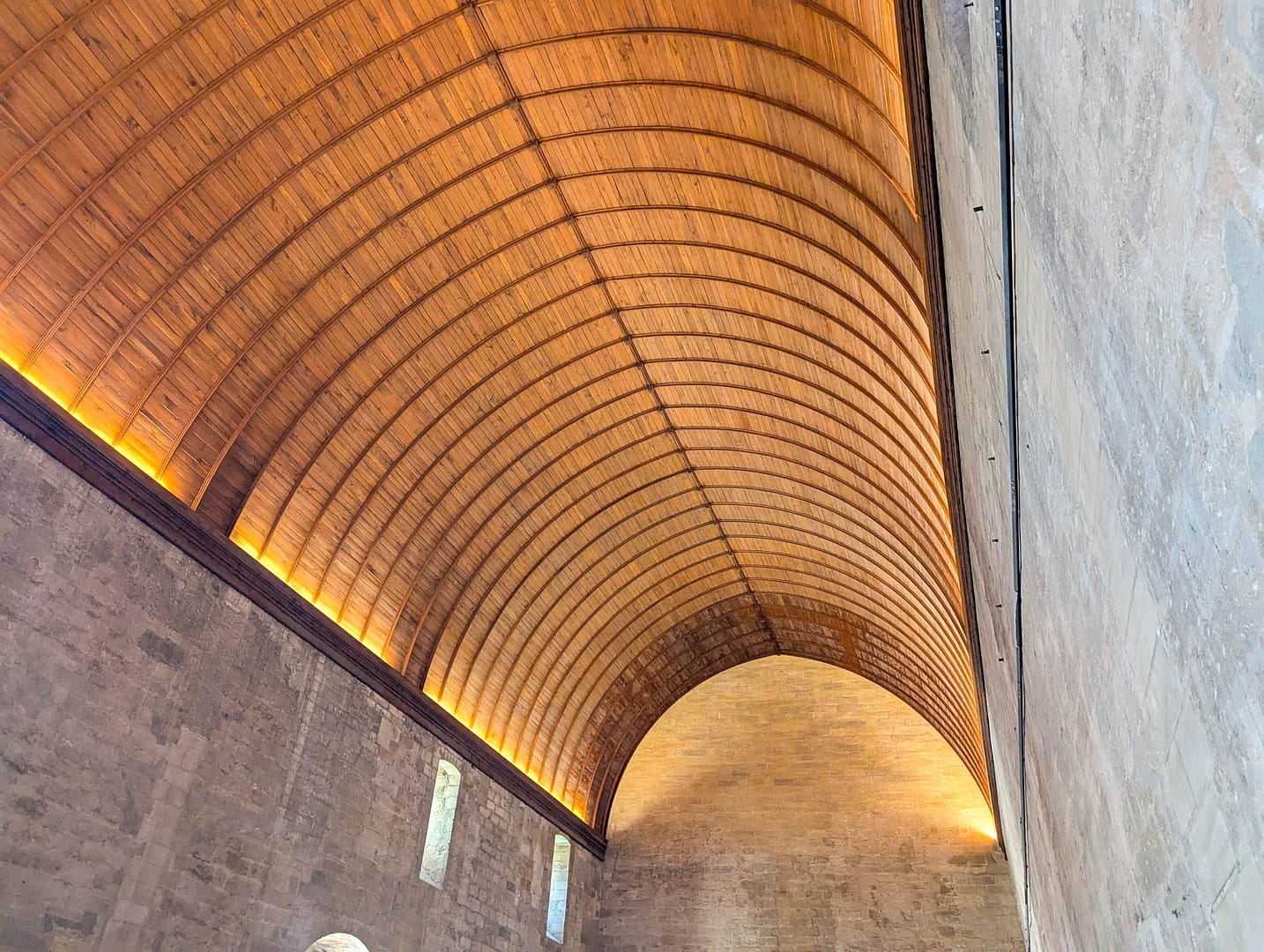
Most of the palace is empty. To help you visualize it, they hand out a HistoPad device. With the tablet you scan codes in selected rooms and it shows you a simulation of what the room looked like decorated and furnished. Below, for example, you can see the ceiling as it would have looked when painted.
It’s a touchpad so you can do stupid things like I did, and accidentally switch the language to Japanese. A kind staff person fixed it for me since I couldn’t read the screen.
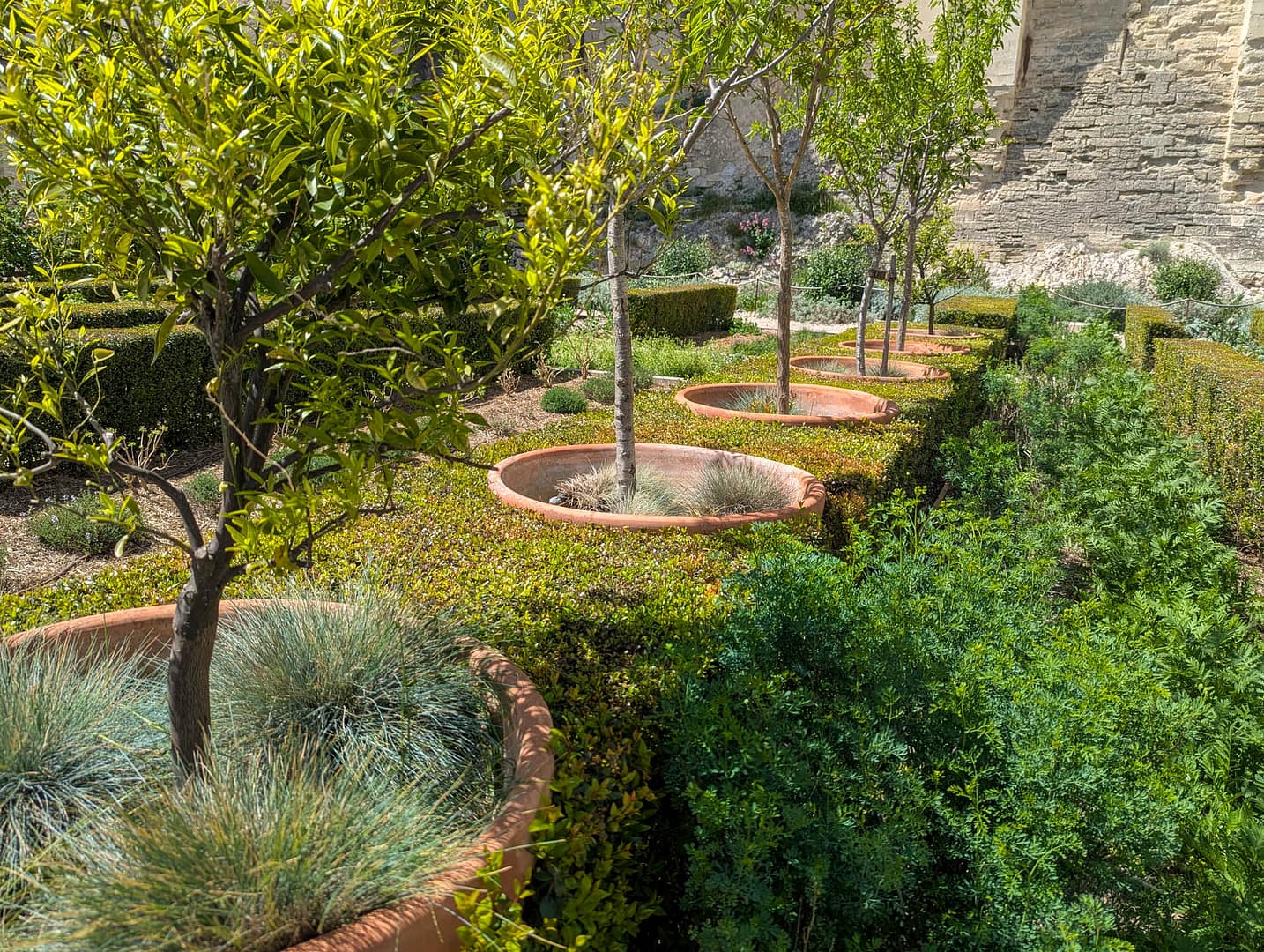
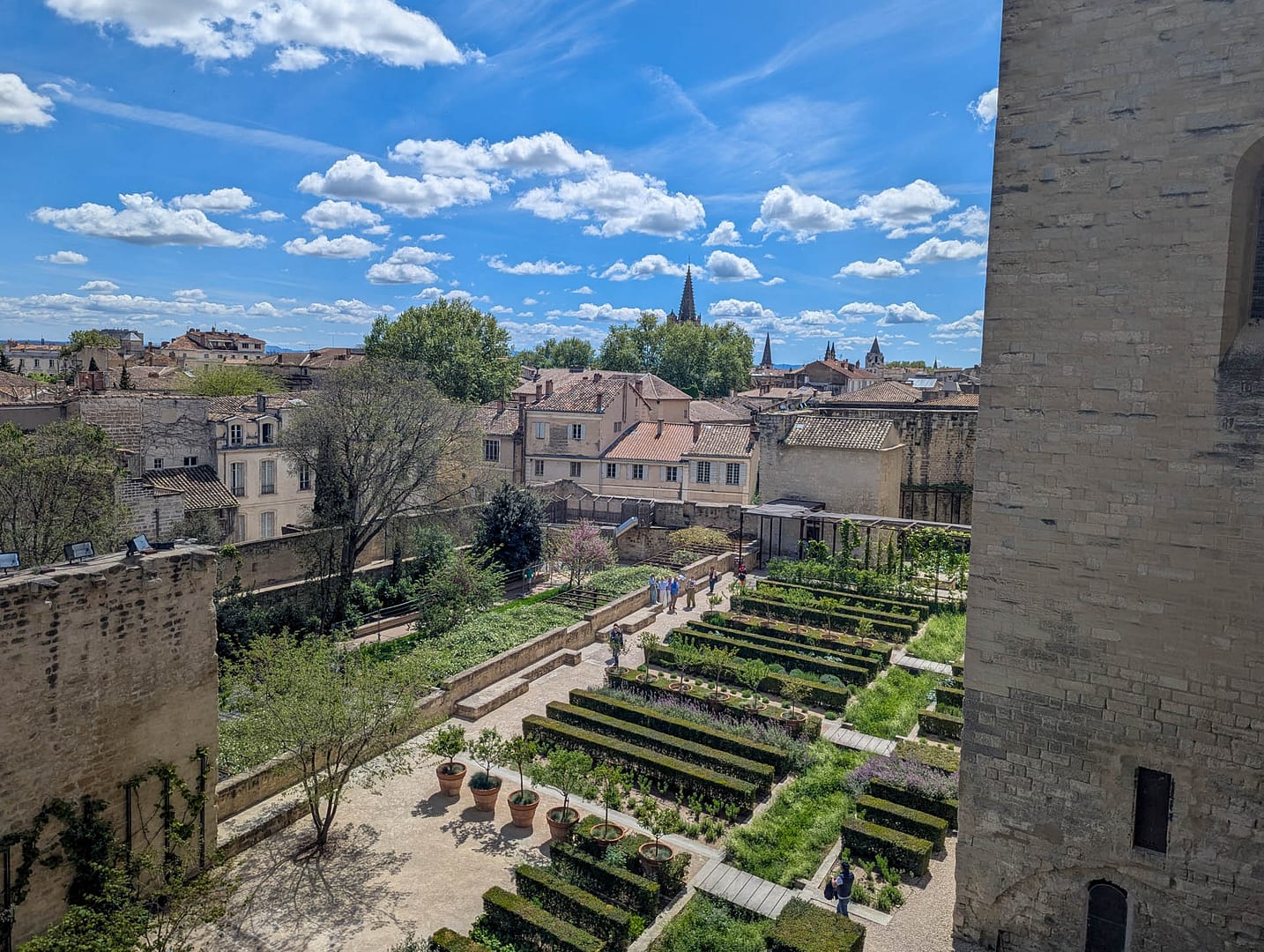
A large garden is enclosed within the walls. It looked like it was primarily used to grow food and herbs. We saw at least one new technique: pots buried inside a hedge. Visiting the garden costs extra.
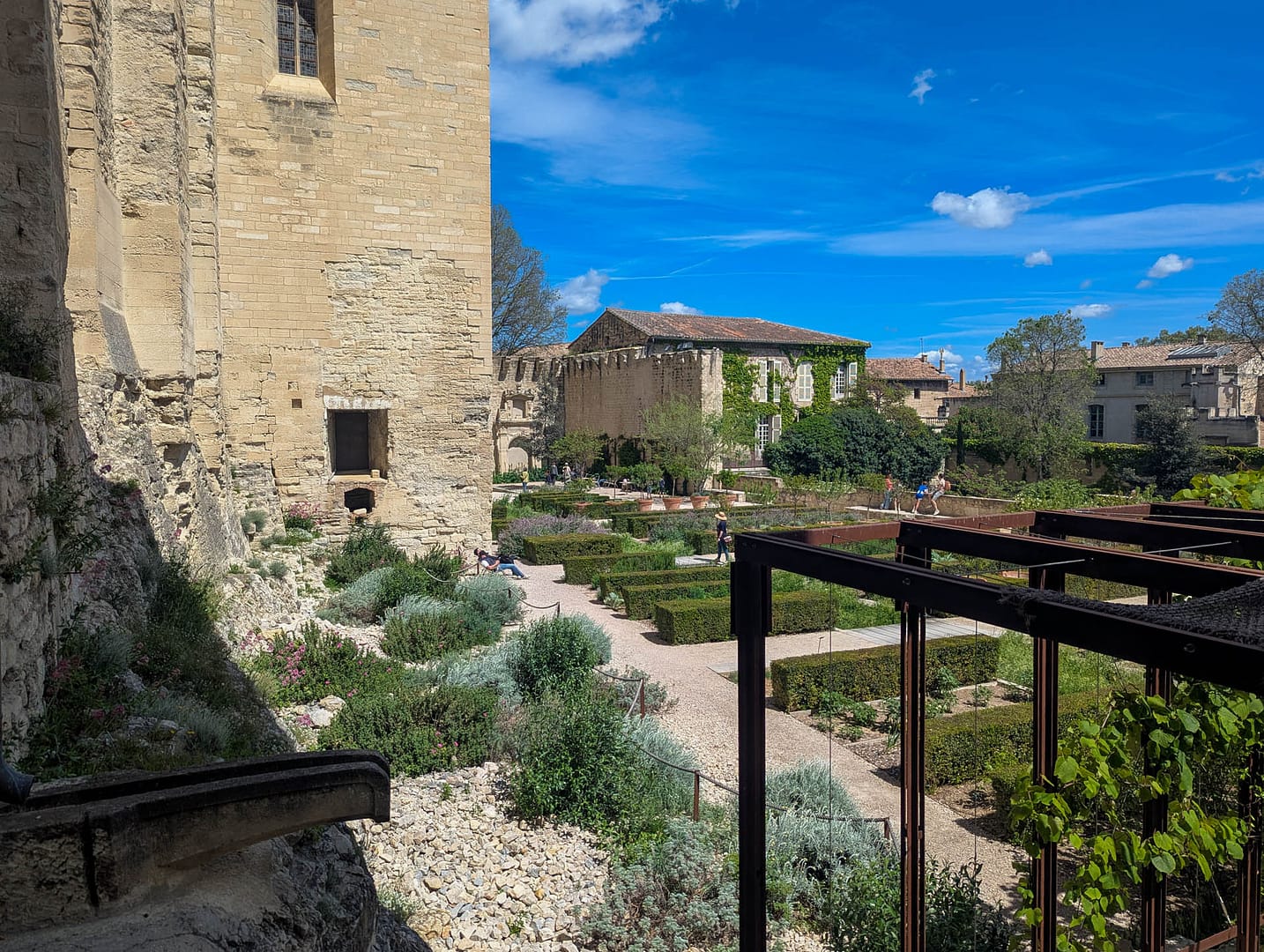
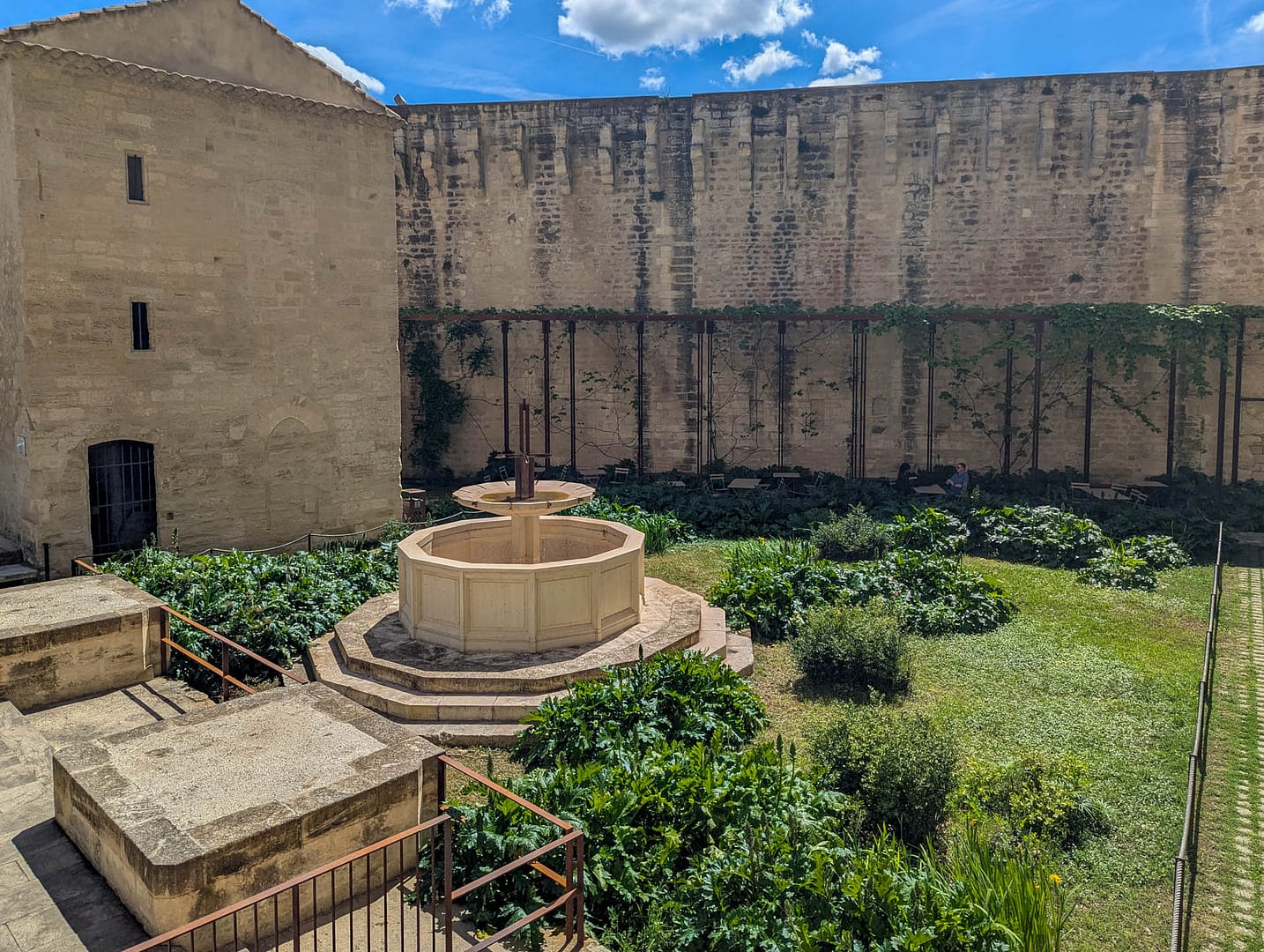
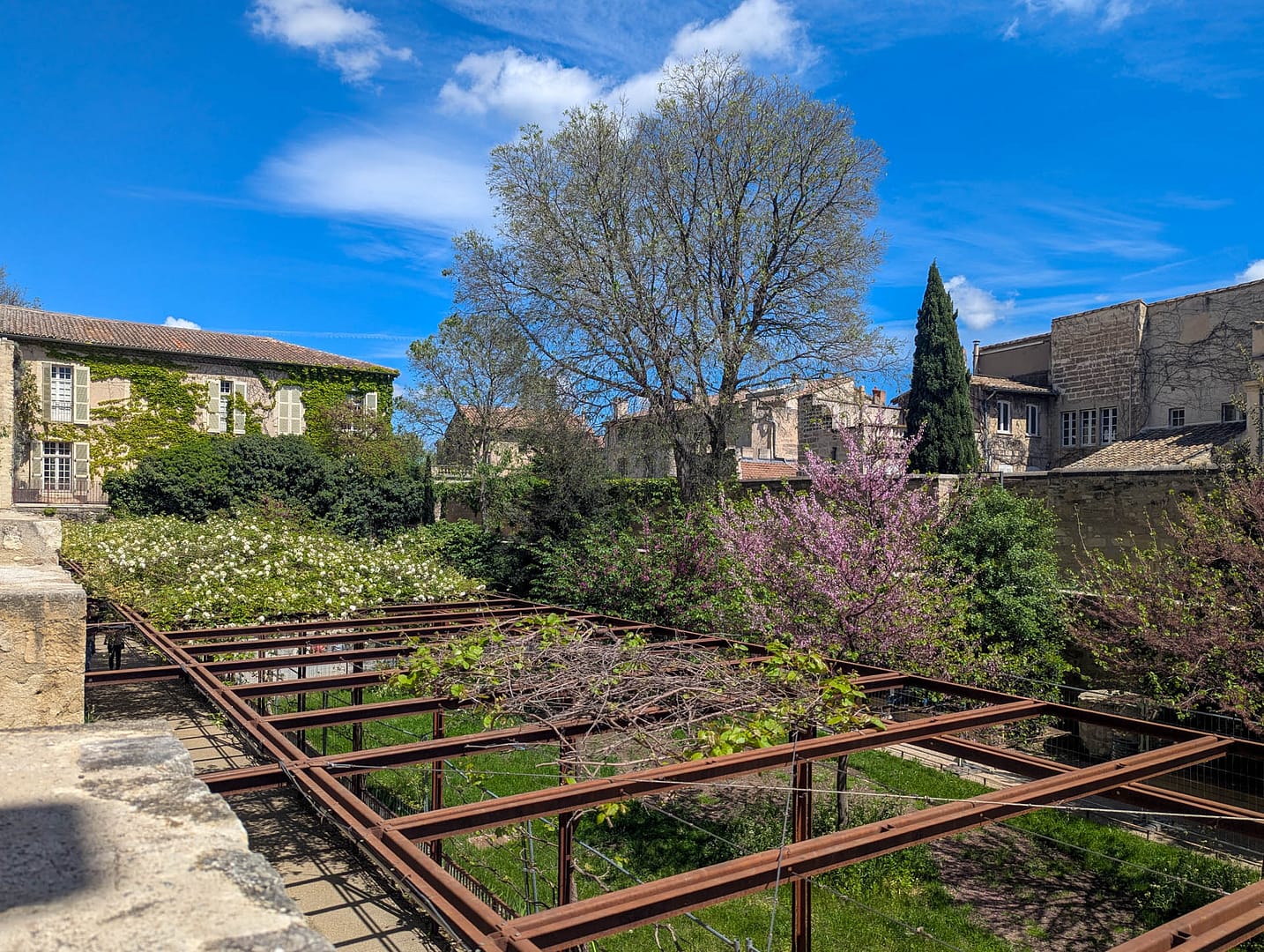
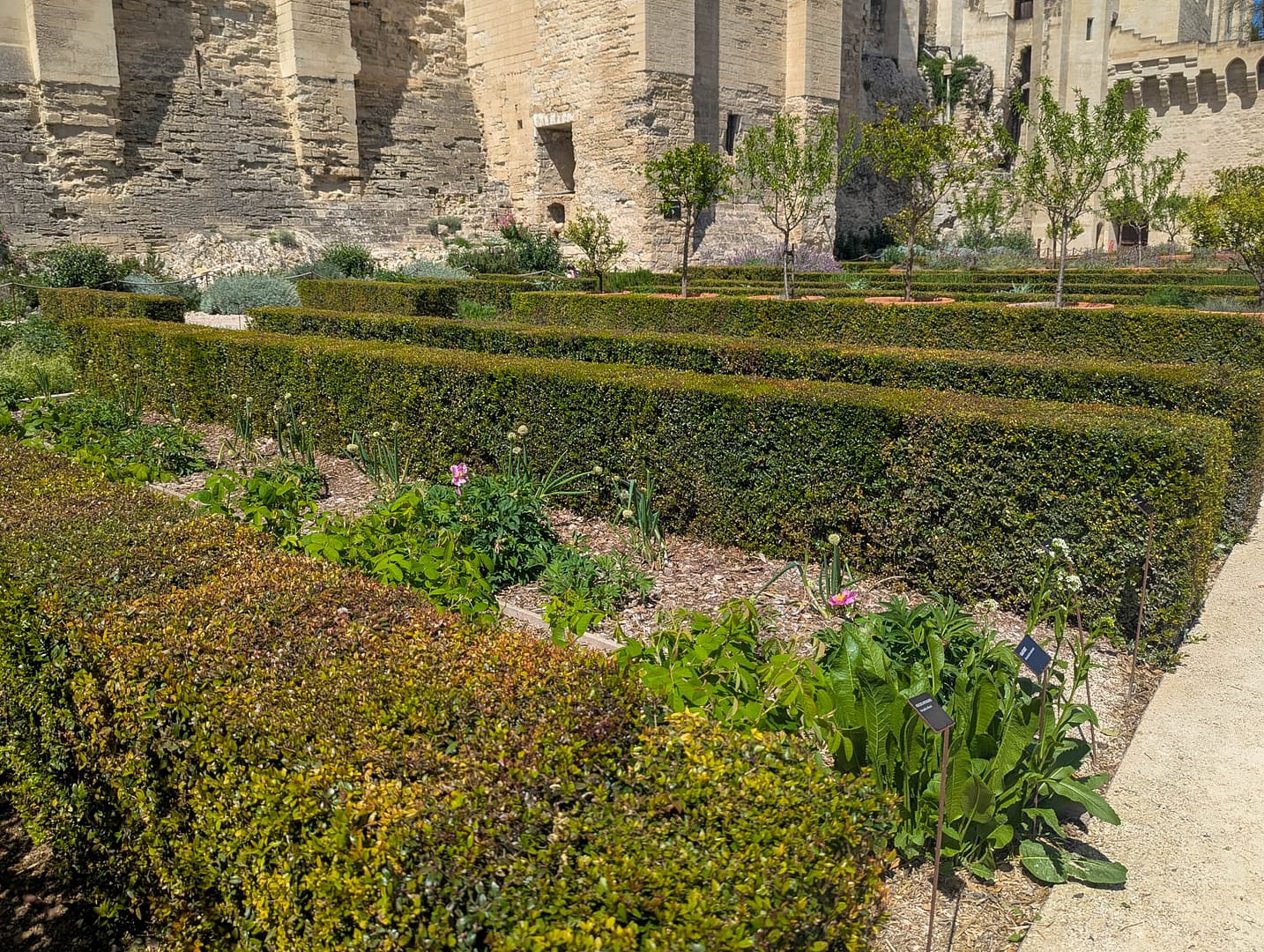
After the gardens you go through a large central courtyard.
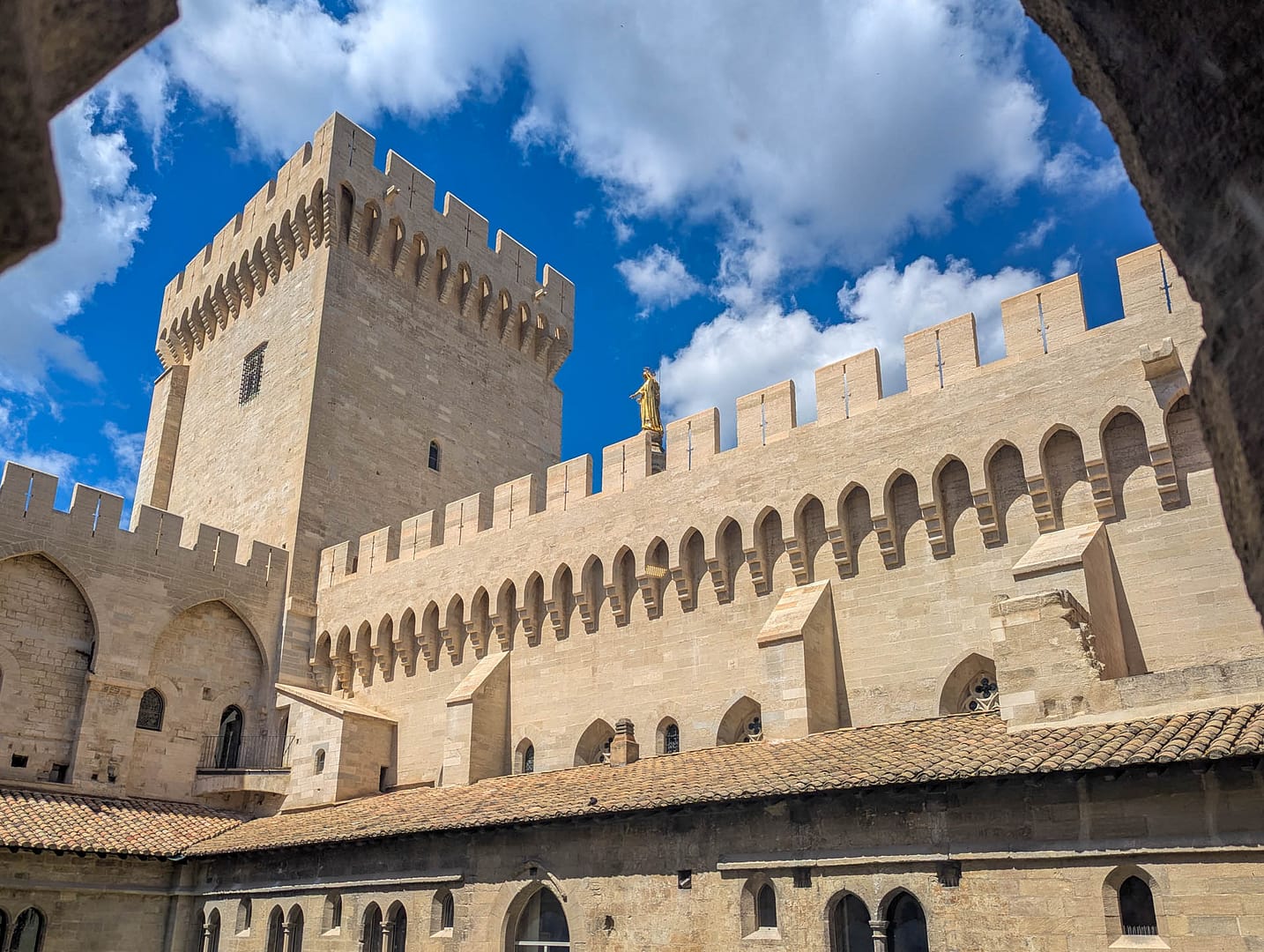
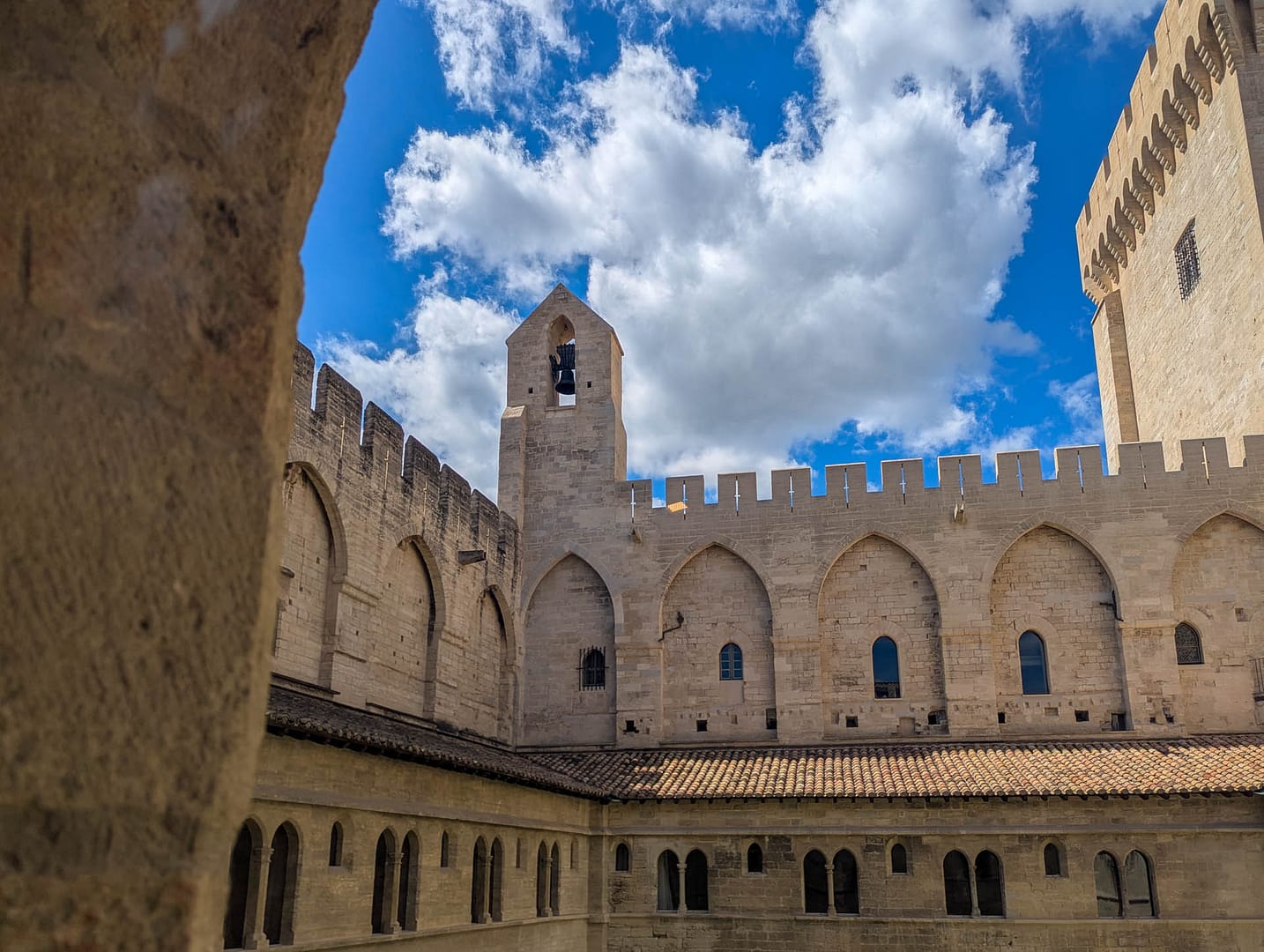
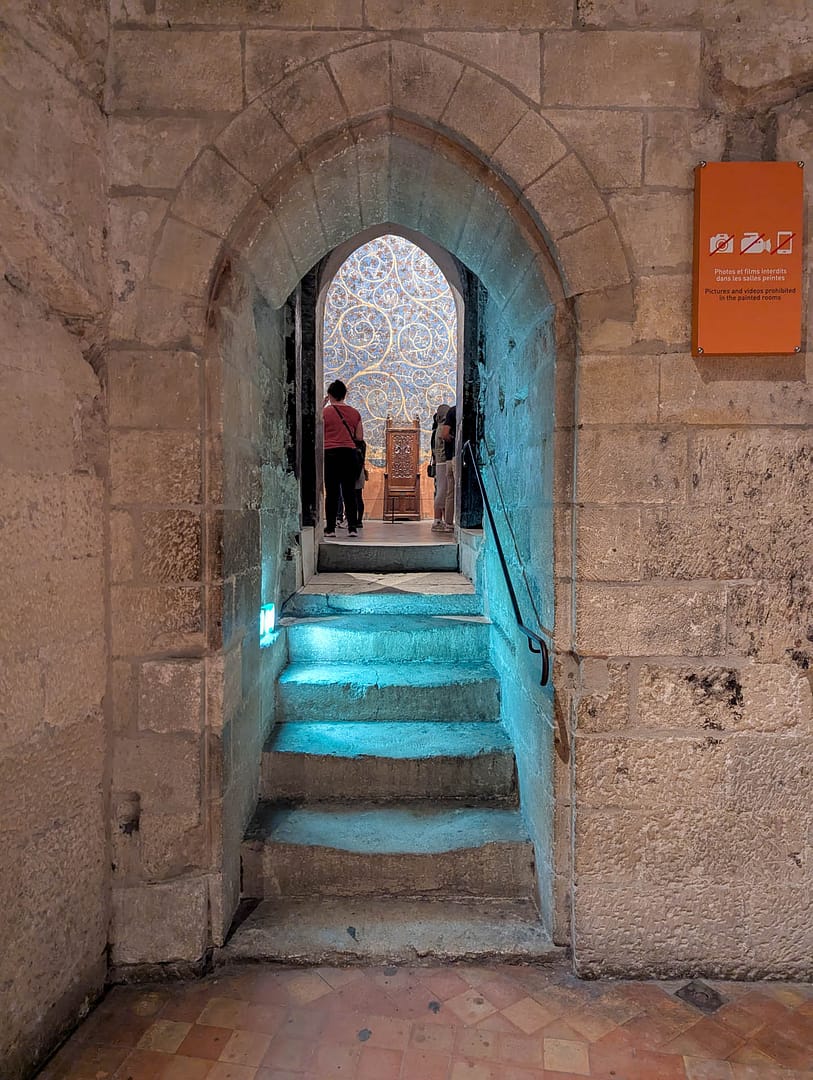
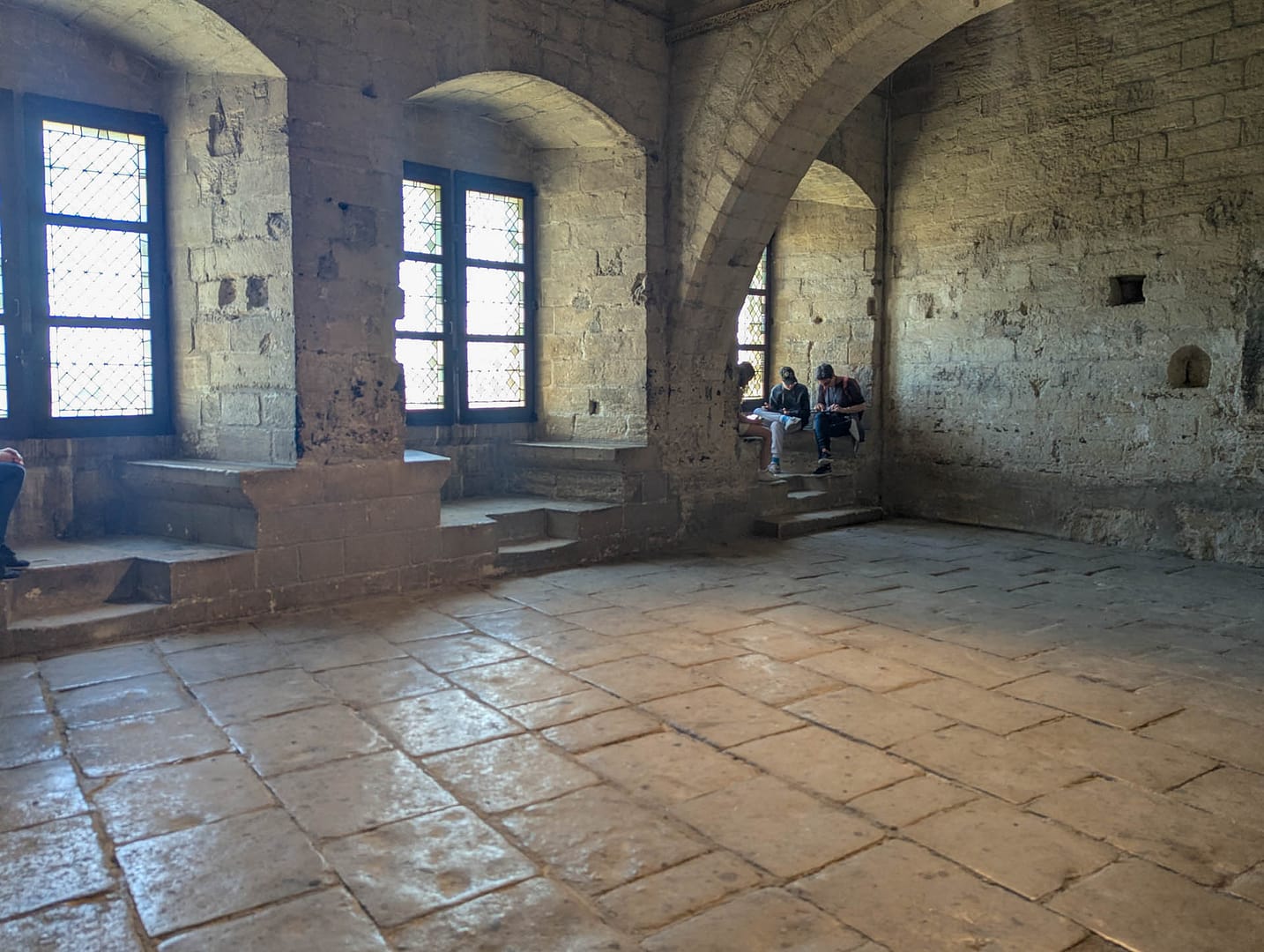
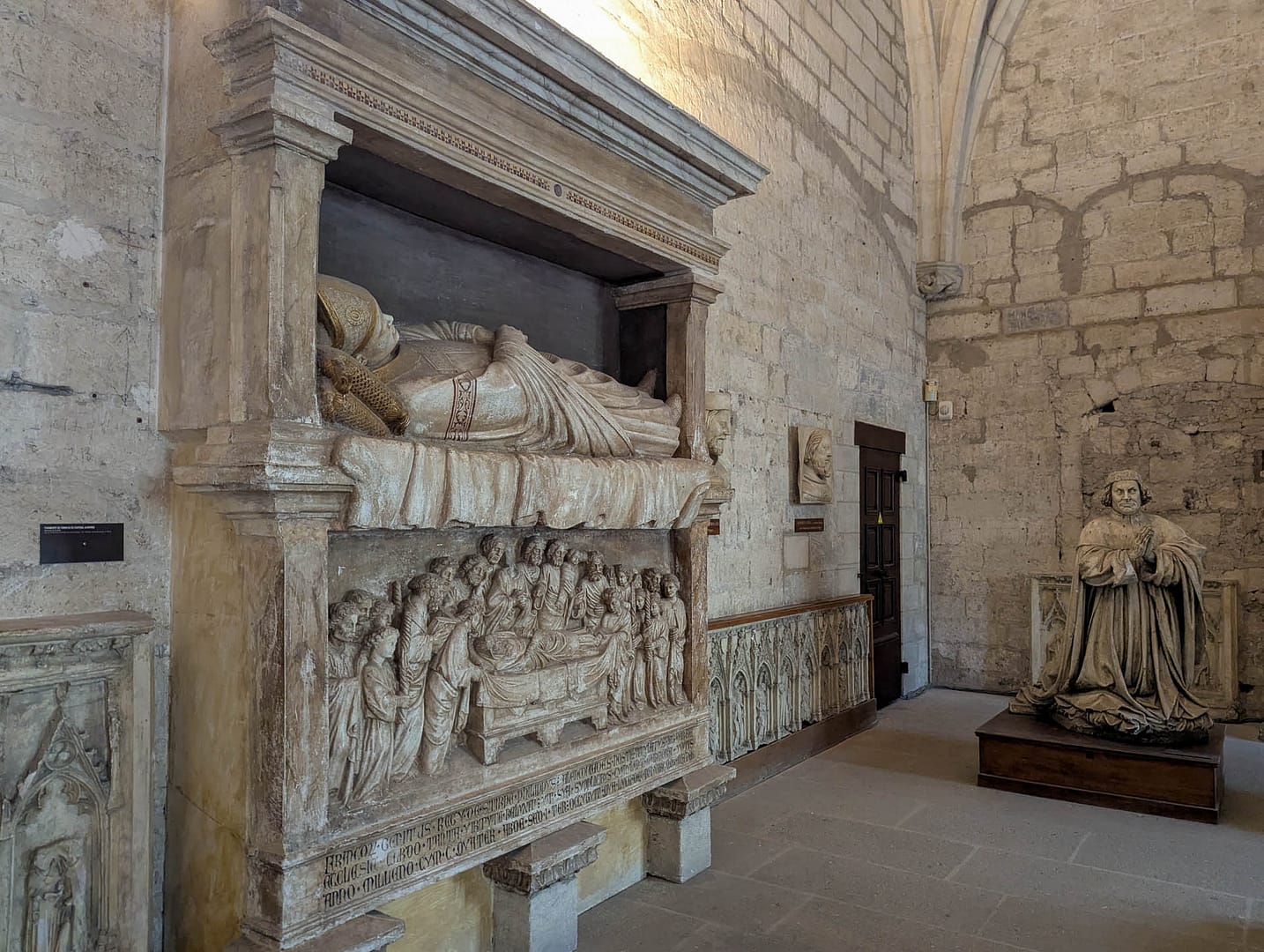
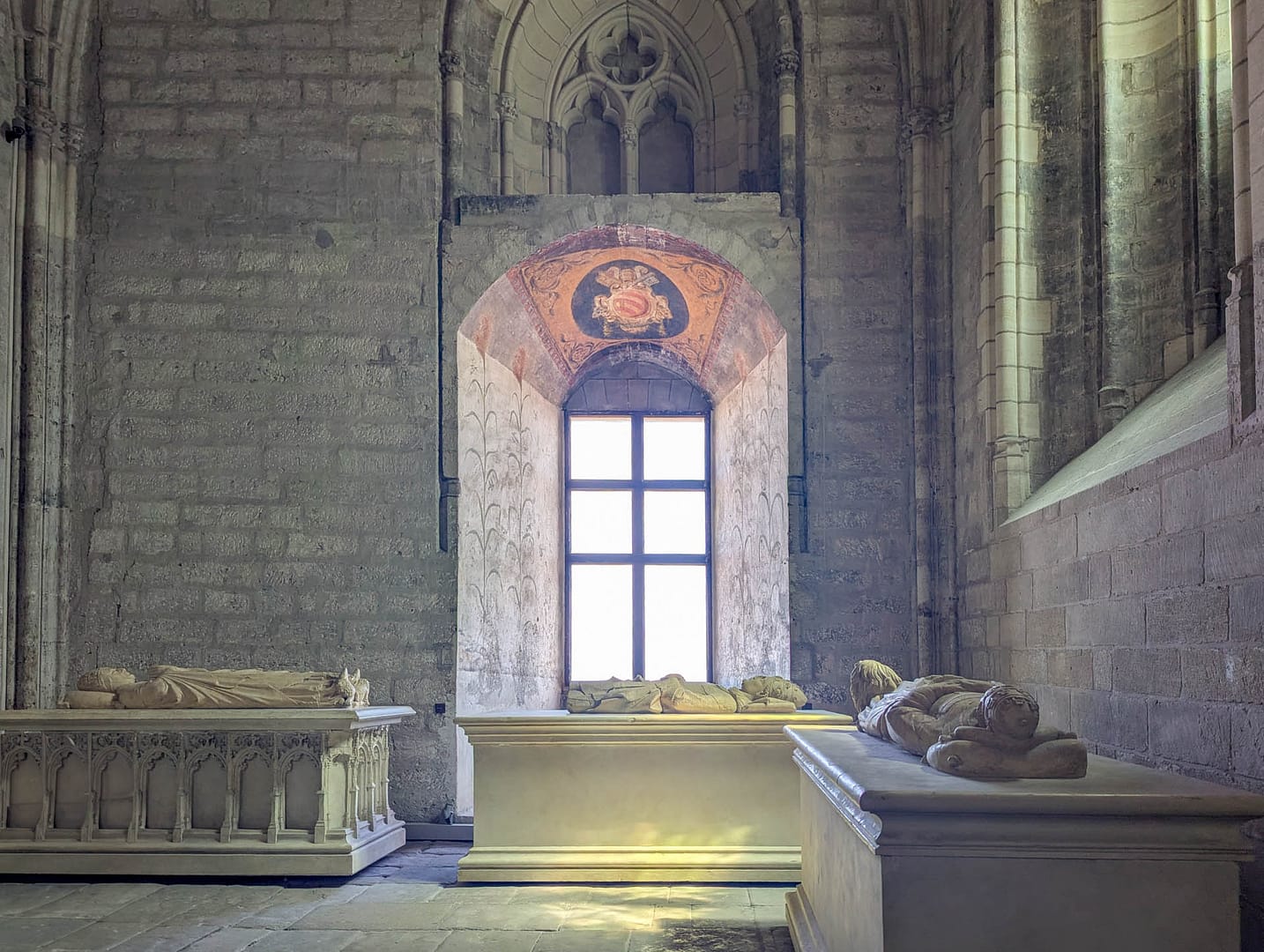
While there’s little if any furniture, you can see architectural details and some wall paintings.
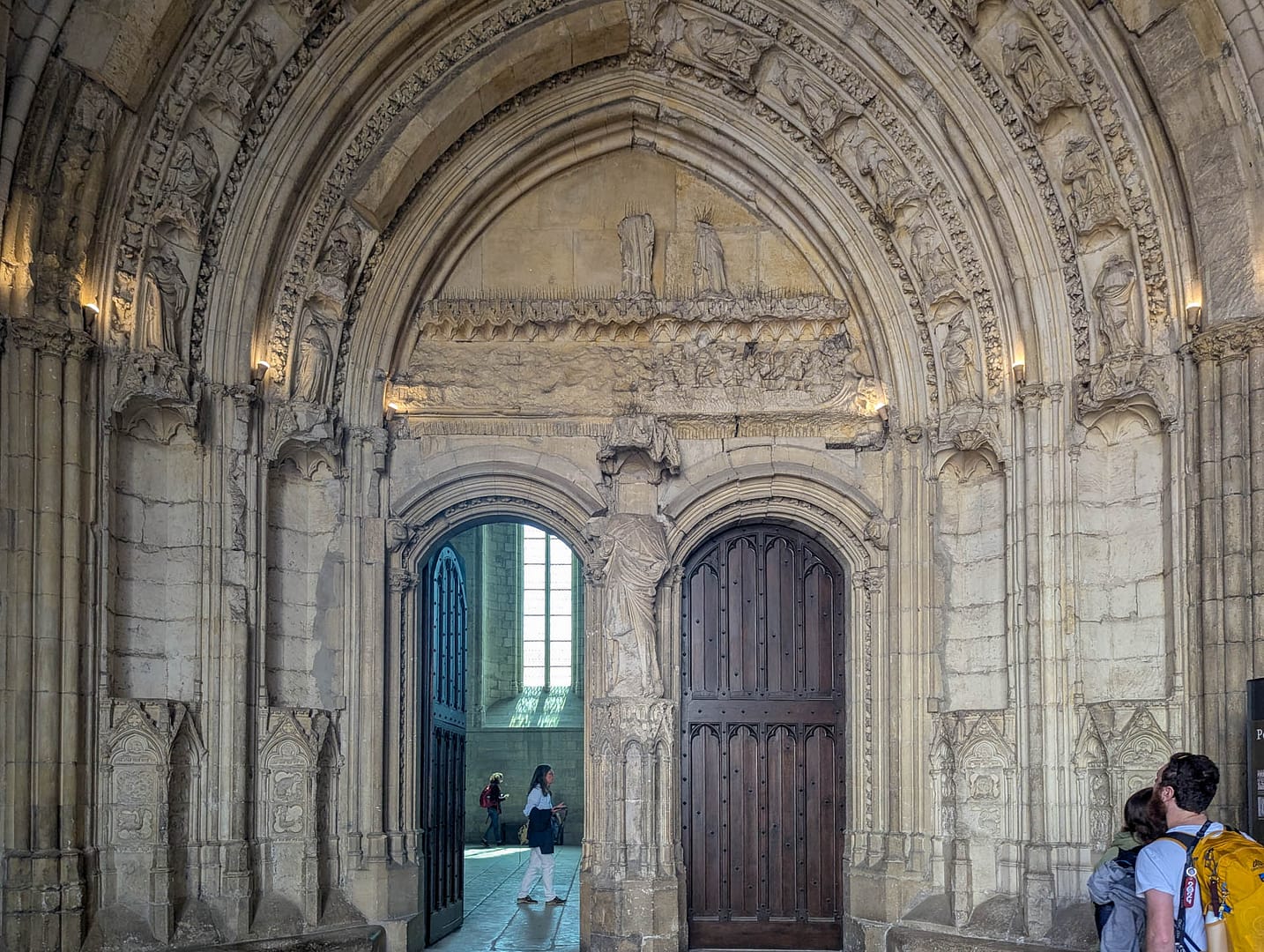
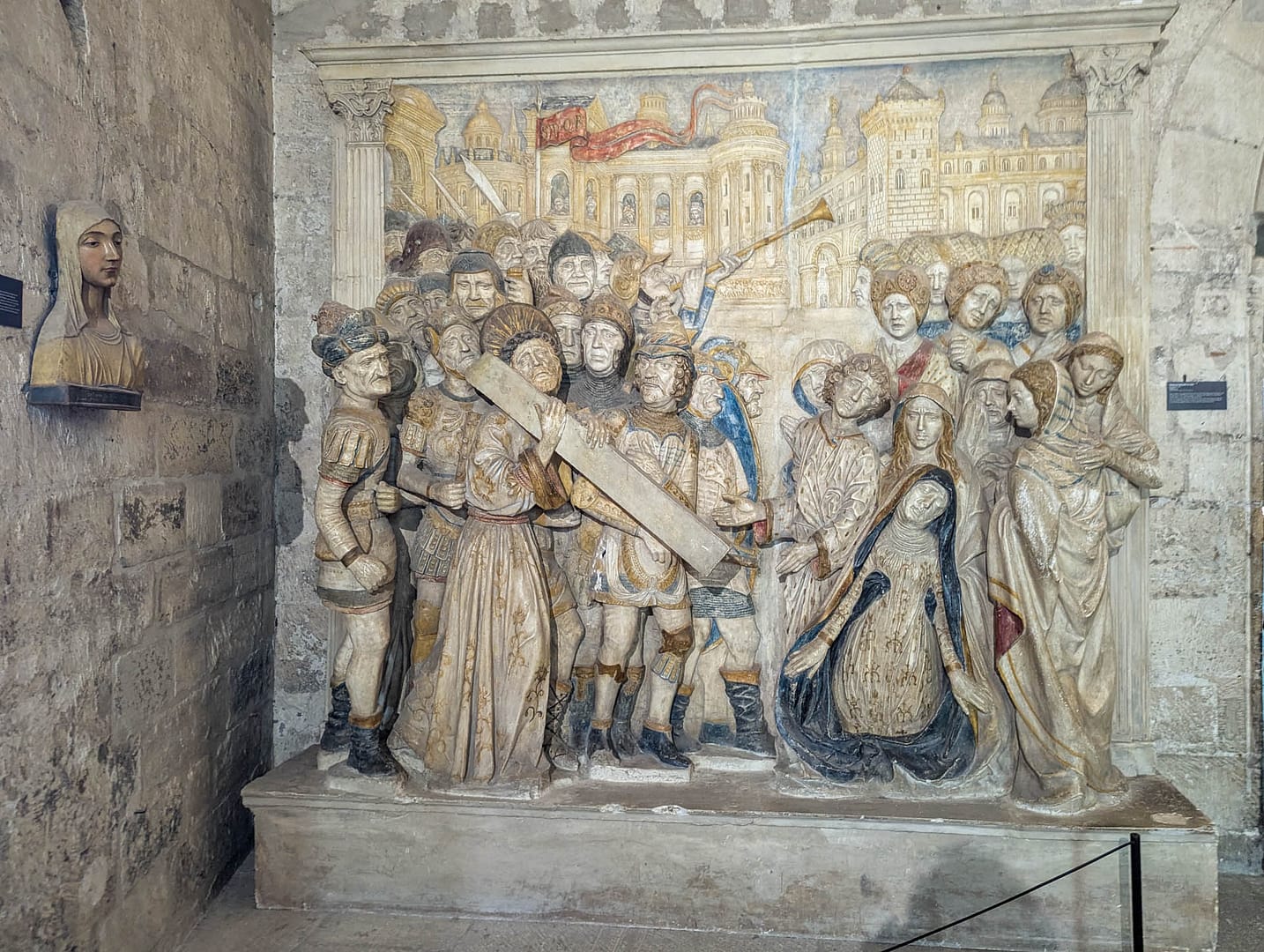
Some of the statues are also painted.
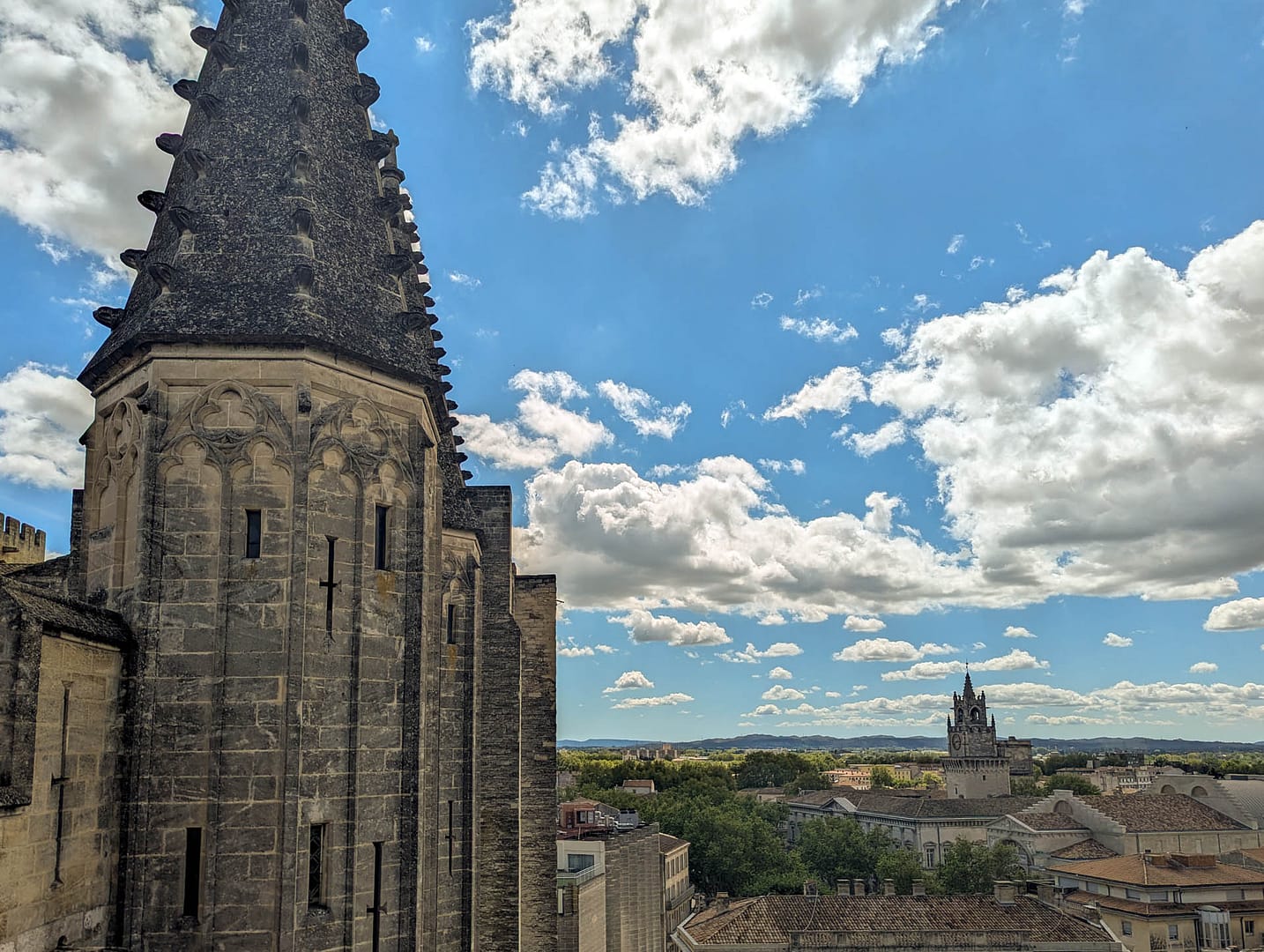
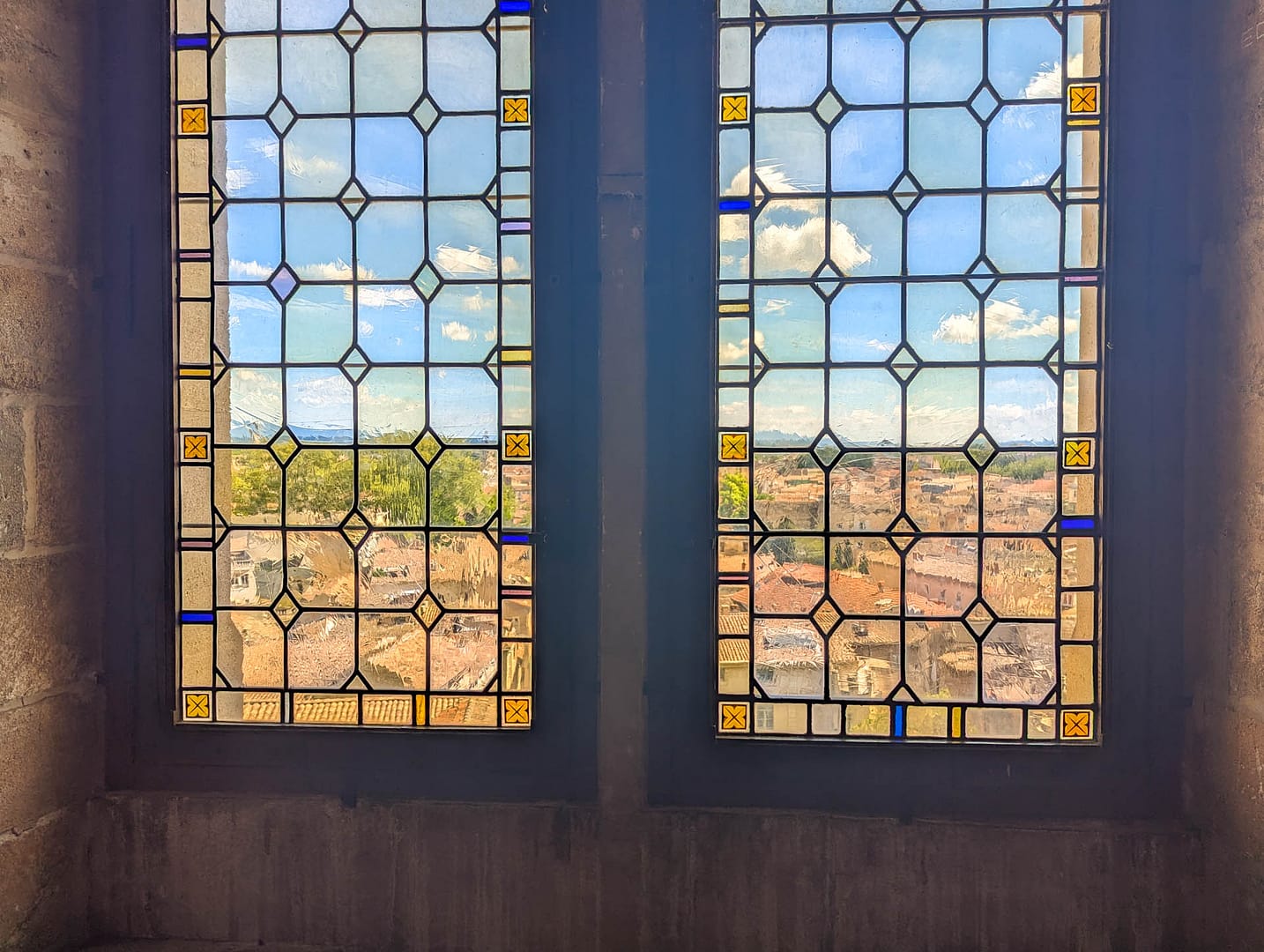
You can even climb to the roof where there are great views of the countryside.
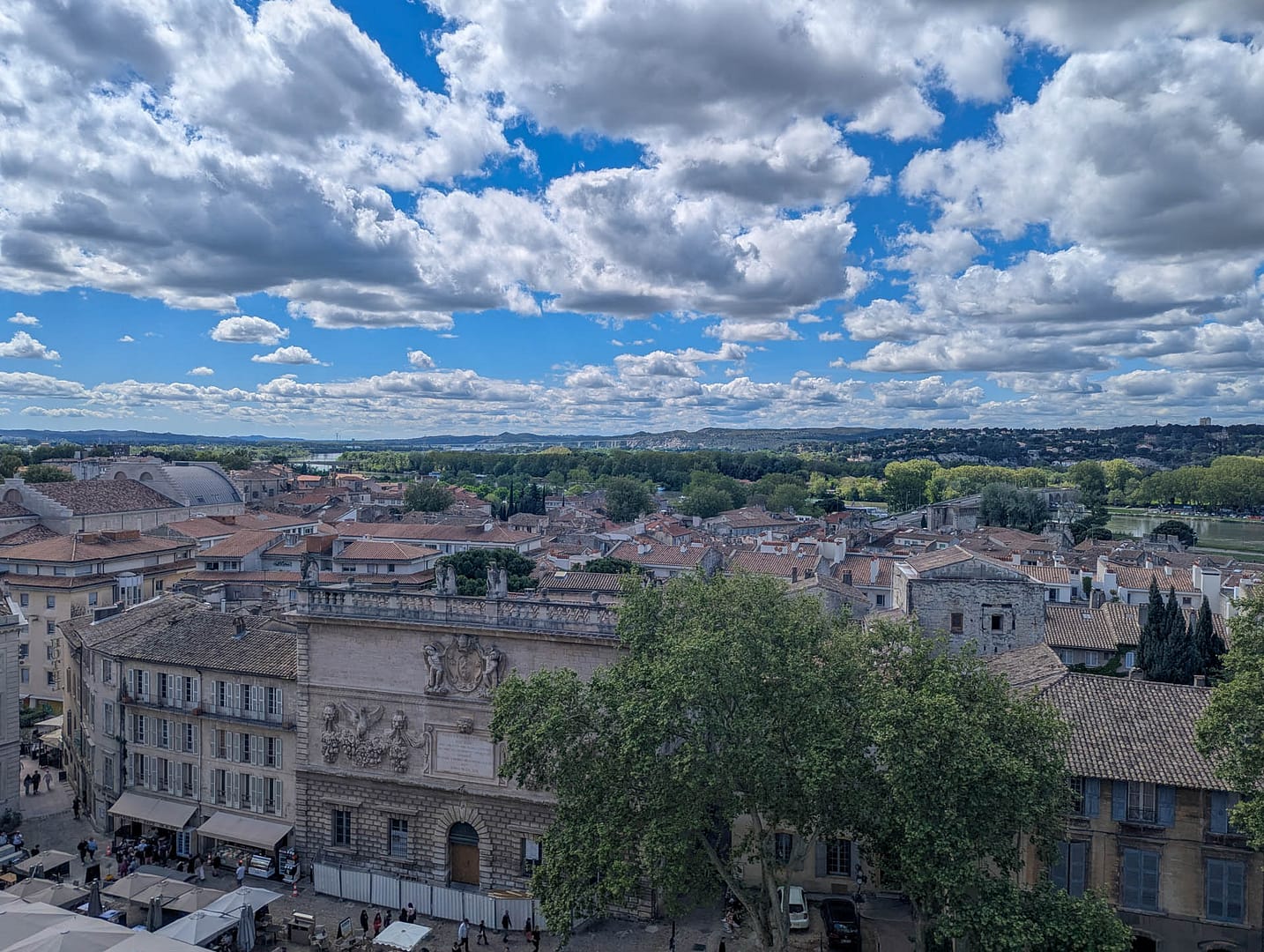
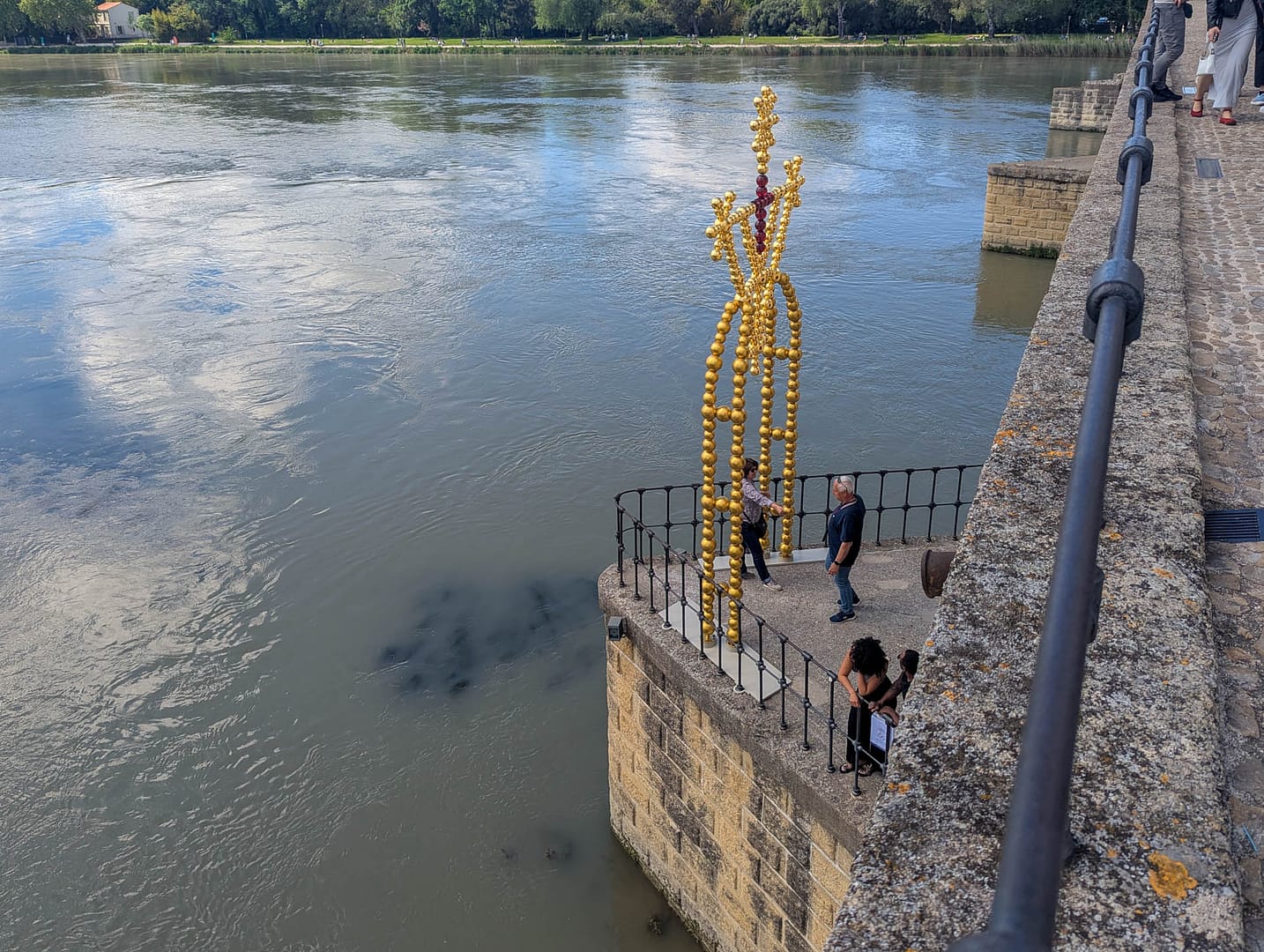
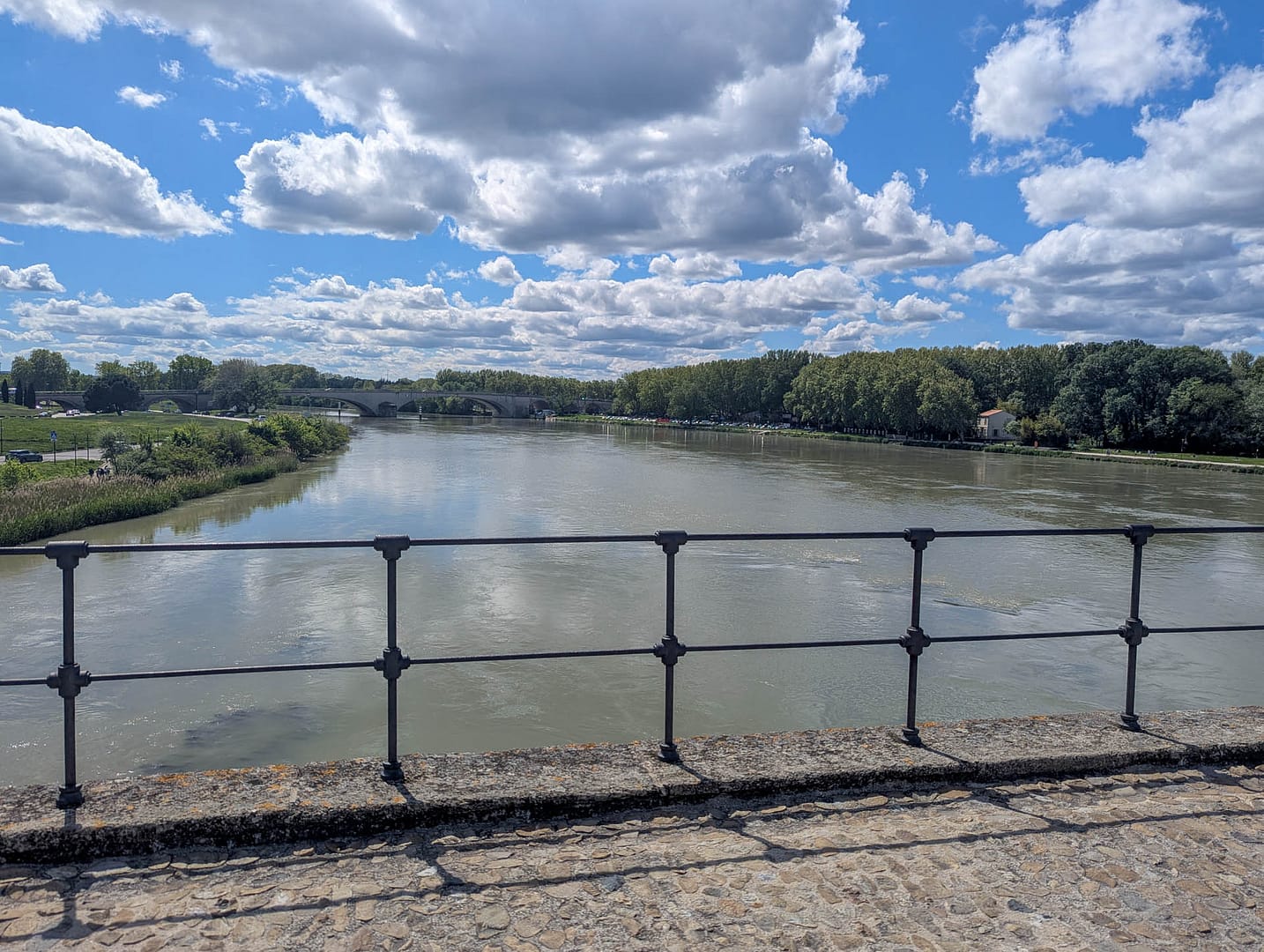
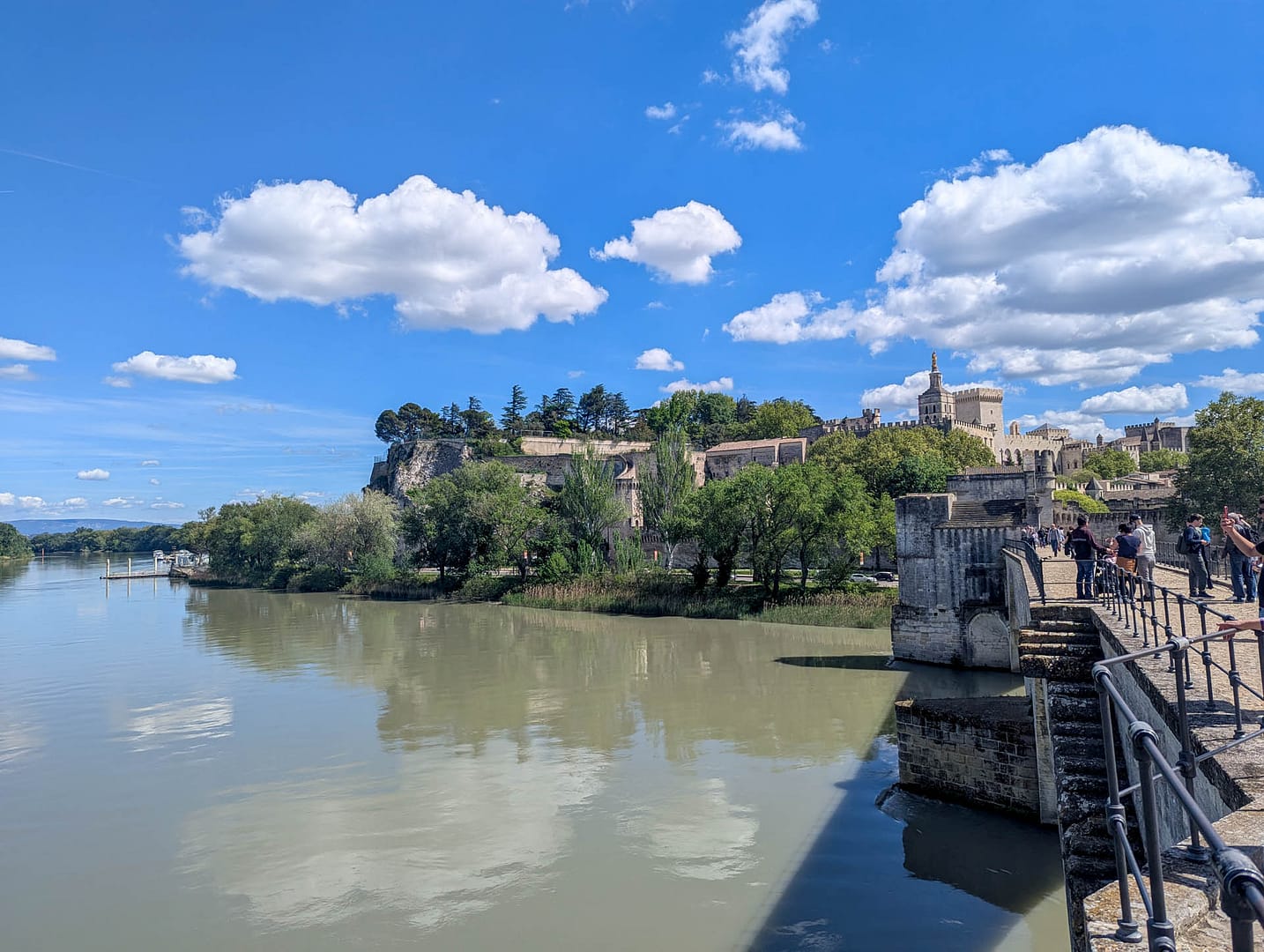
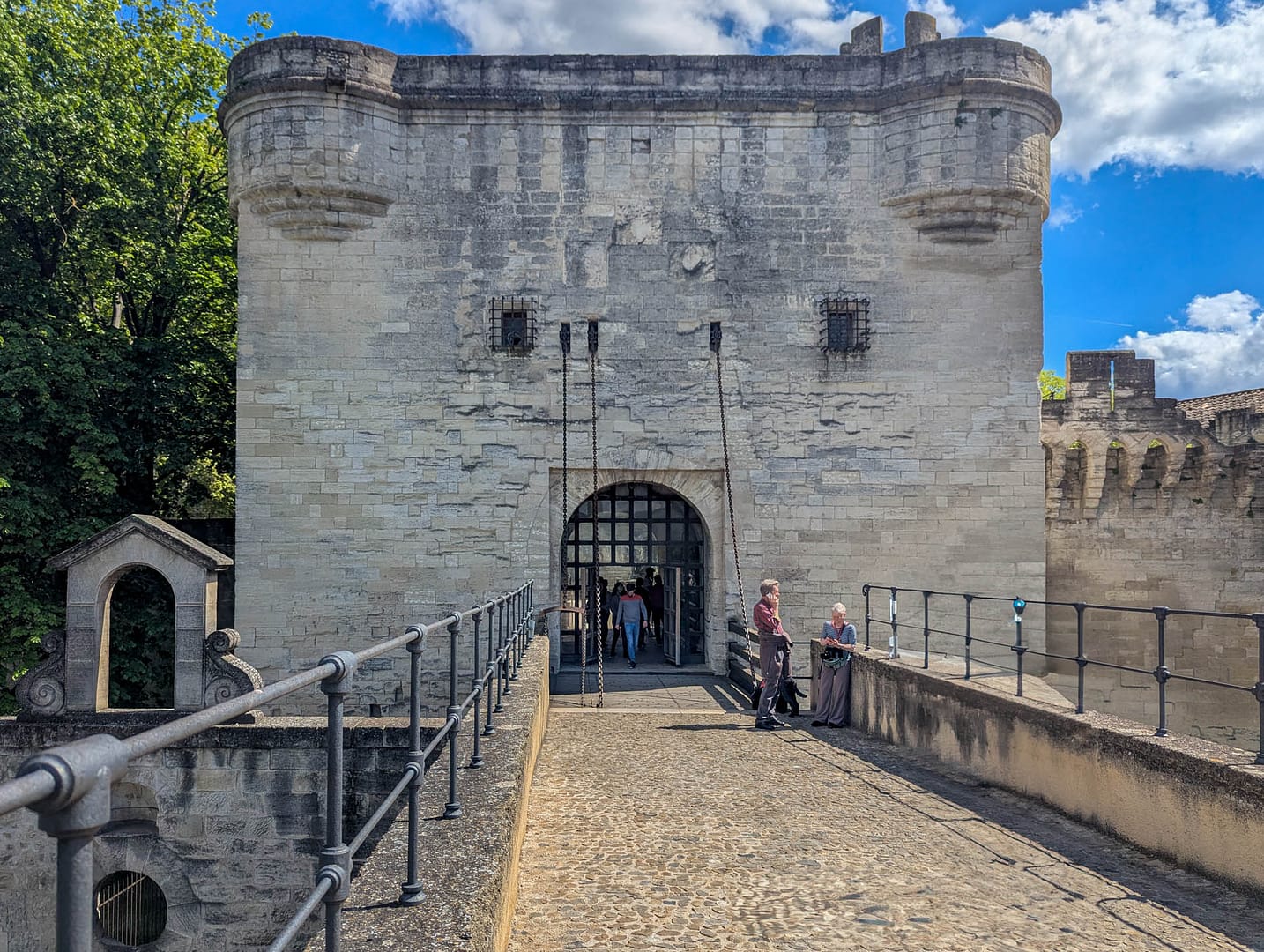
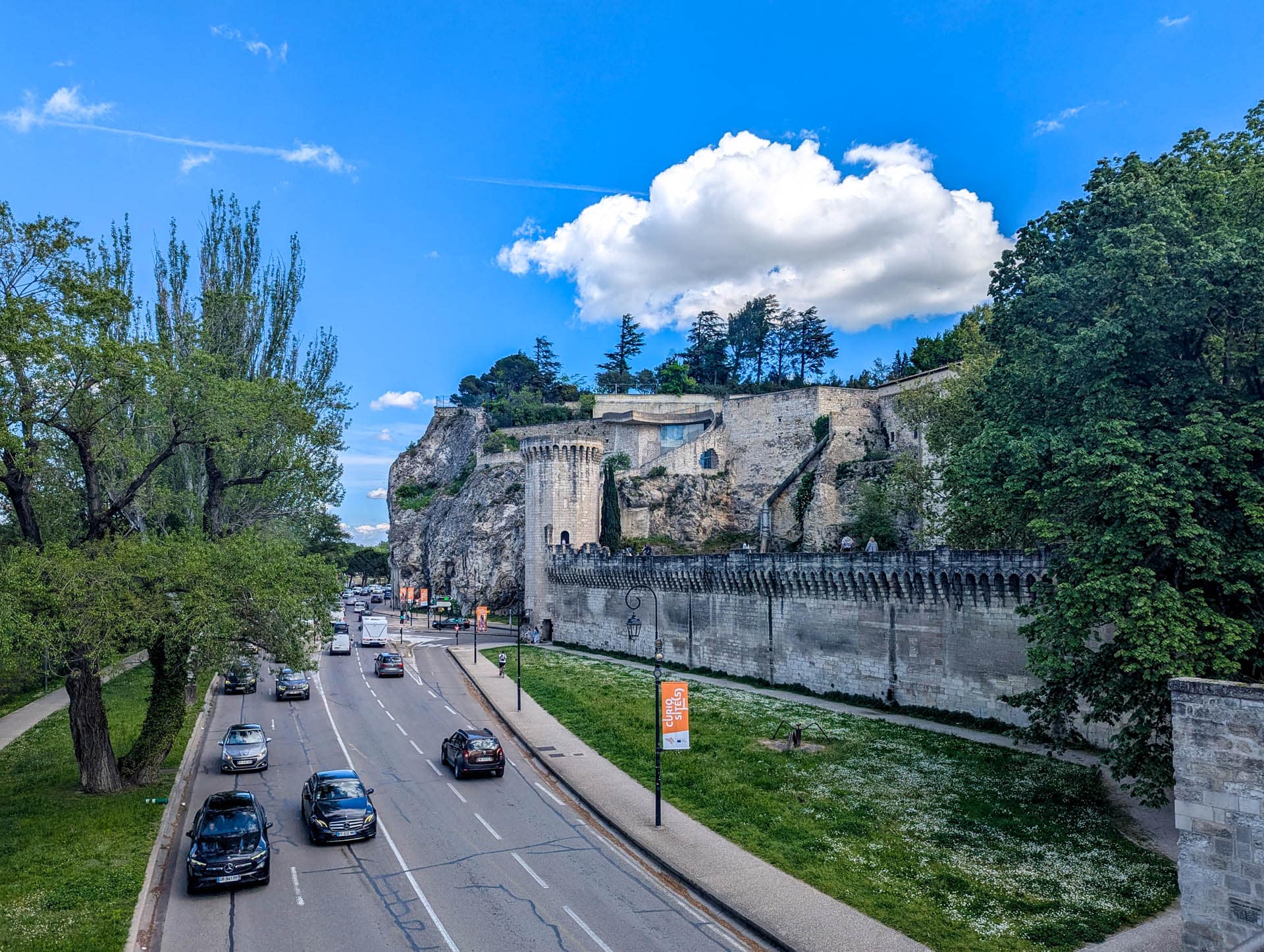
After the Palace of the Popes we walked over to the river, to the stub of a 12th century bridge. Along the way you can see where the city walls blend into nearby cliffs.
From the bridge you get good views of the river and back toward the city. There’s also a photo op, nicely out of the way of traffic.