Date updated: October 24, 2026
One of two monasteries on Crete that we visited. The monastery and remote interior setting are beautiful. It’s history is dramatic.
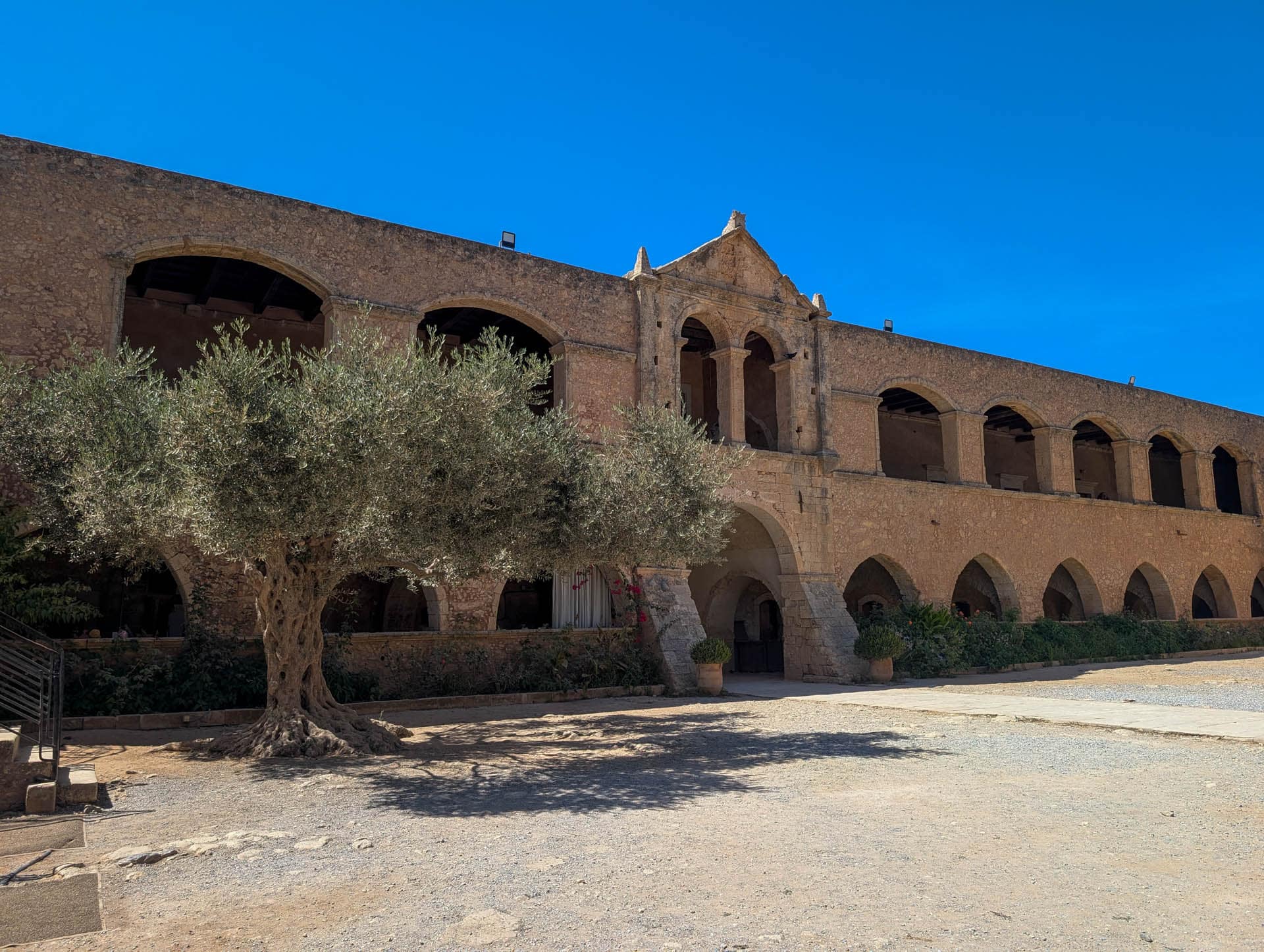
The Arkadi monastery was not busy at all when we visited. It doesn’t look like much from the outside, but you can see why it was a defensive stronghold. It is famous primarily for its role in the Cretan revolution of 1866.
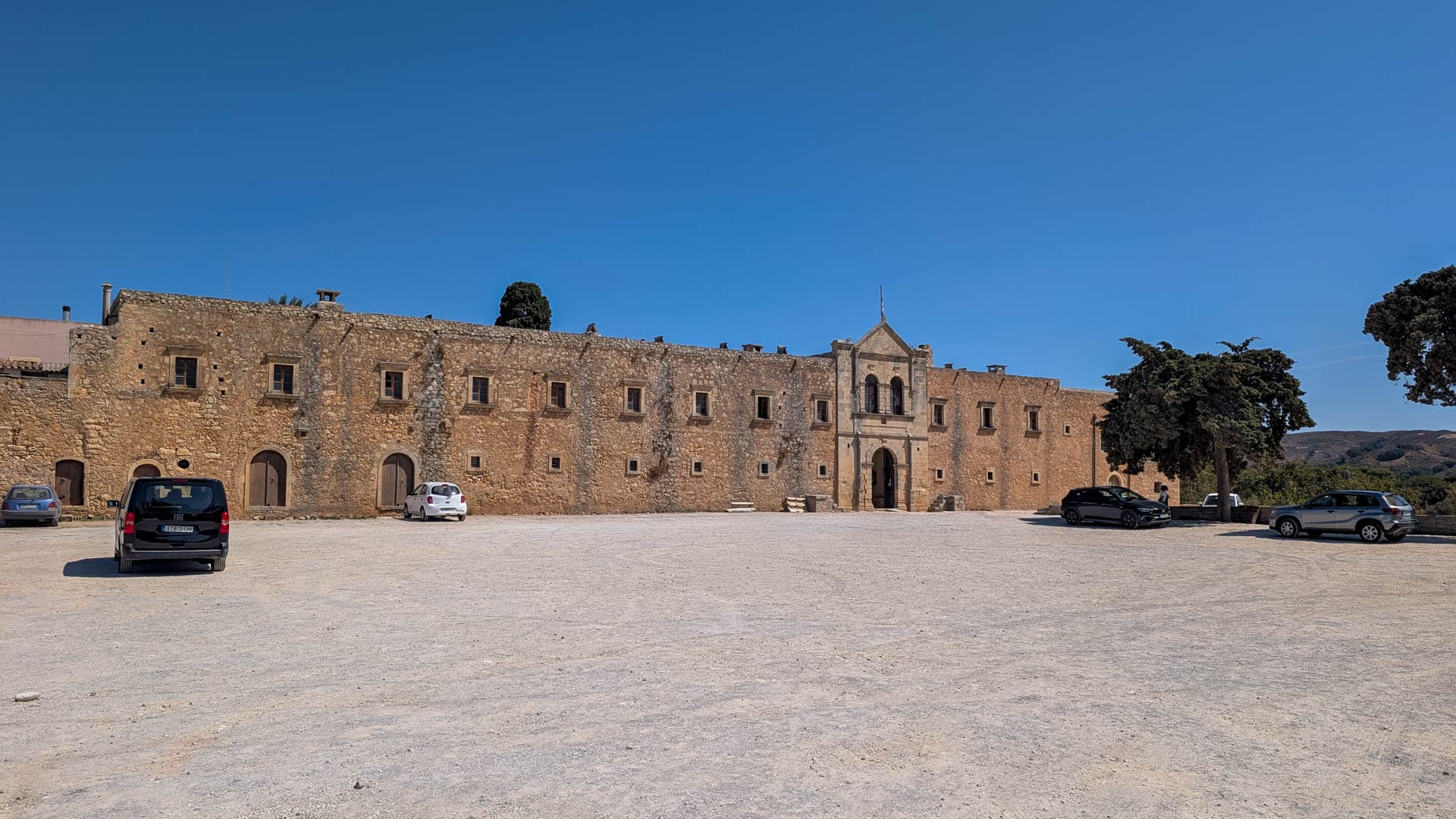
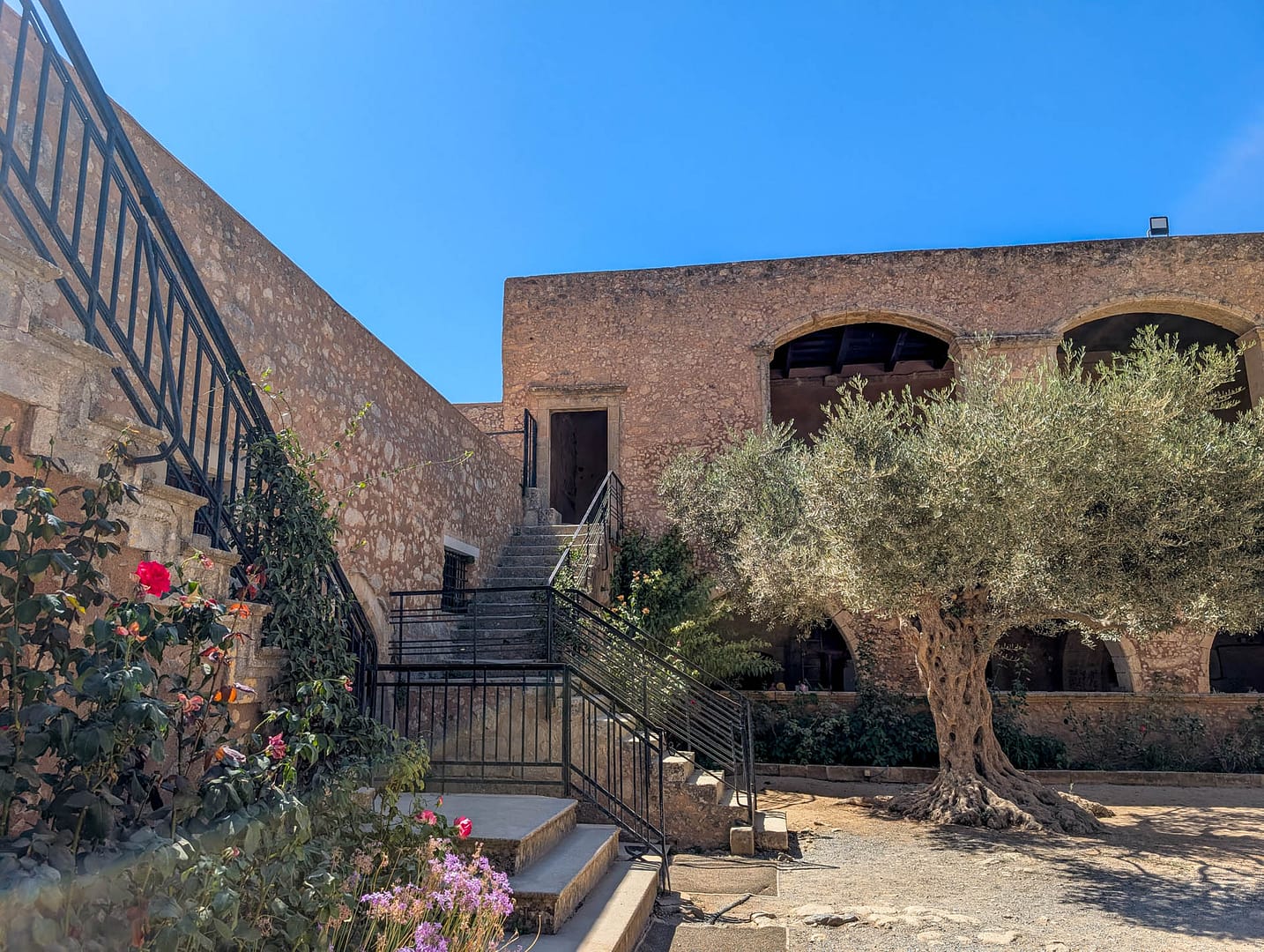
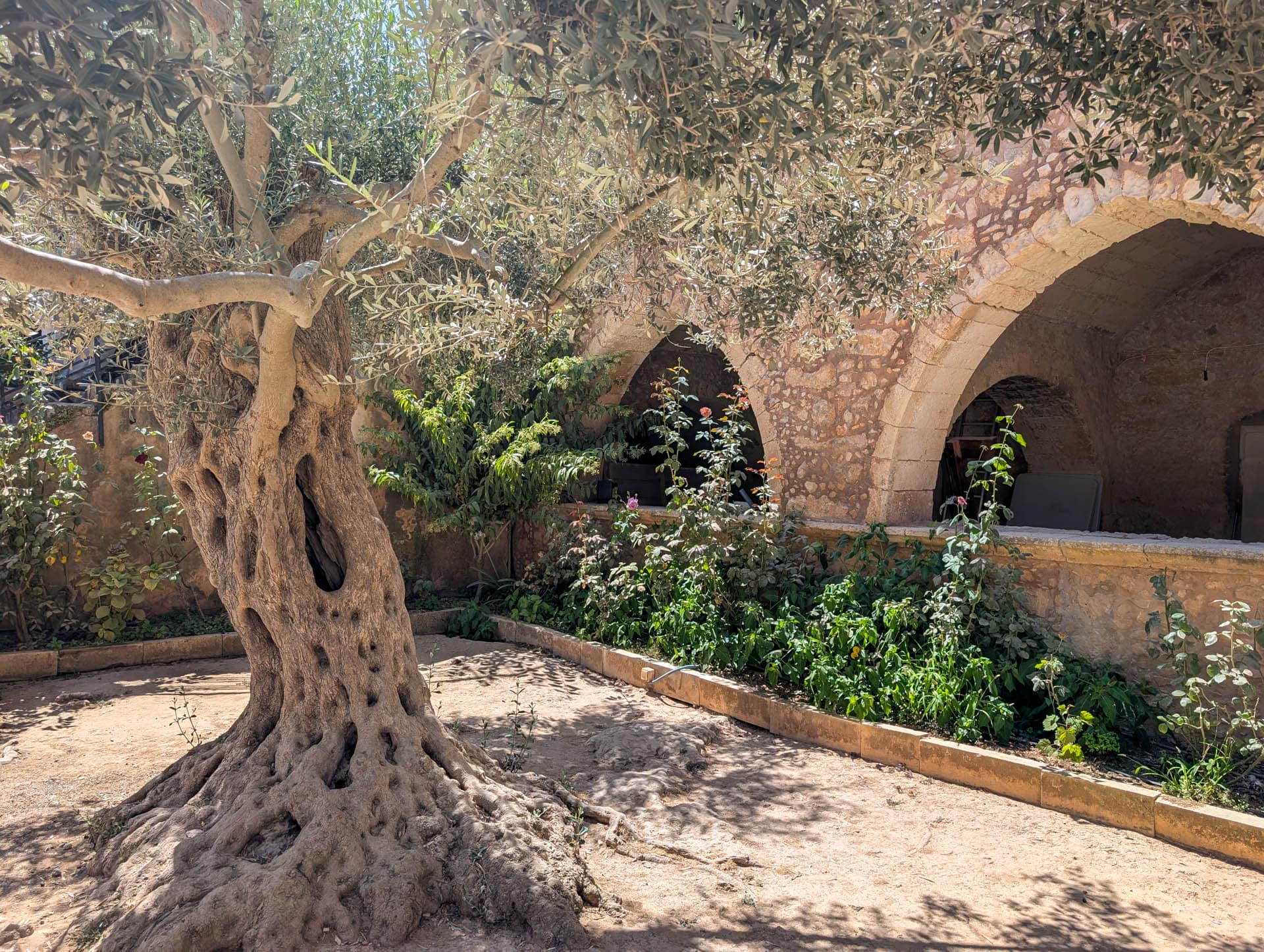
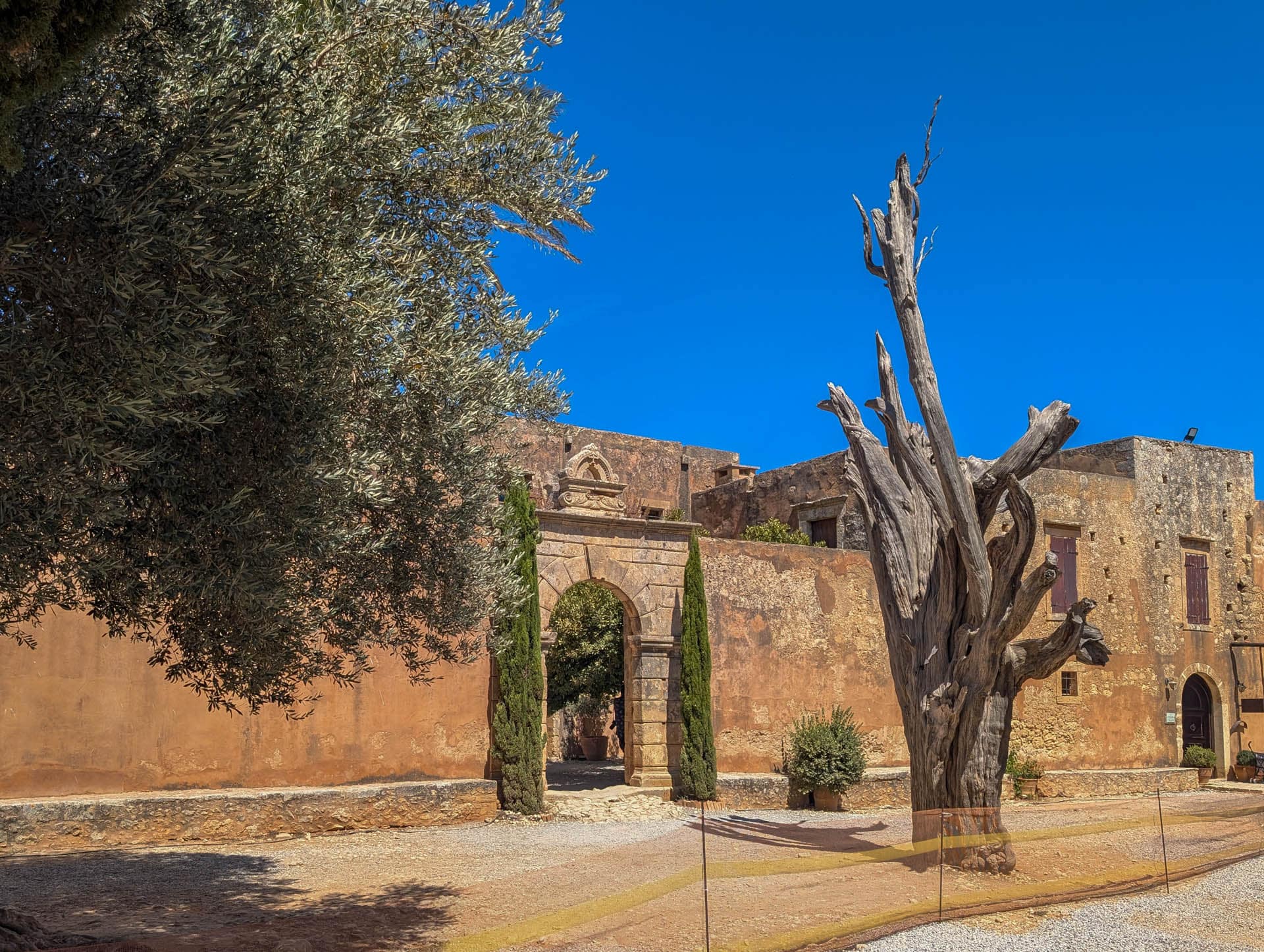
Inside the monastery is surrounded by walls on all four sides. Inside the front wall is a two story building containing monks’ cells. There’s an ancient olive tree in one corner with an amazing trunk.
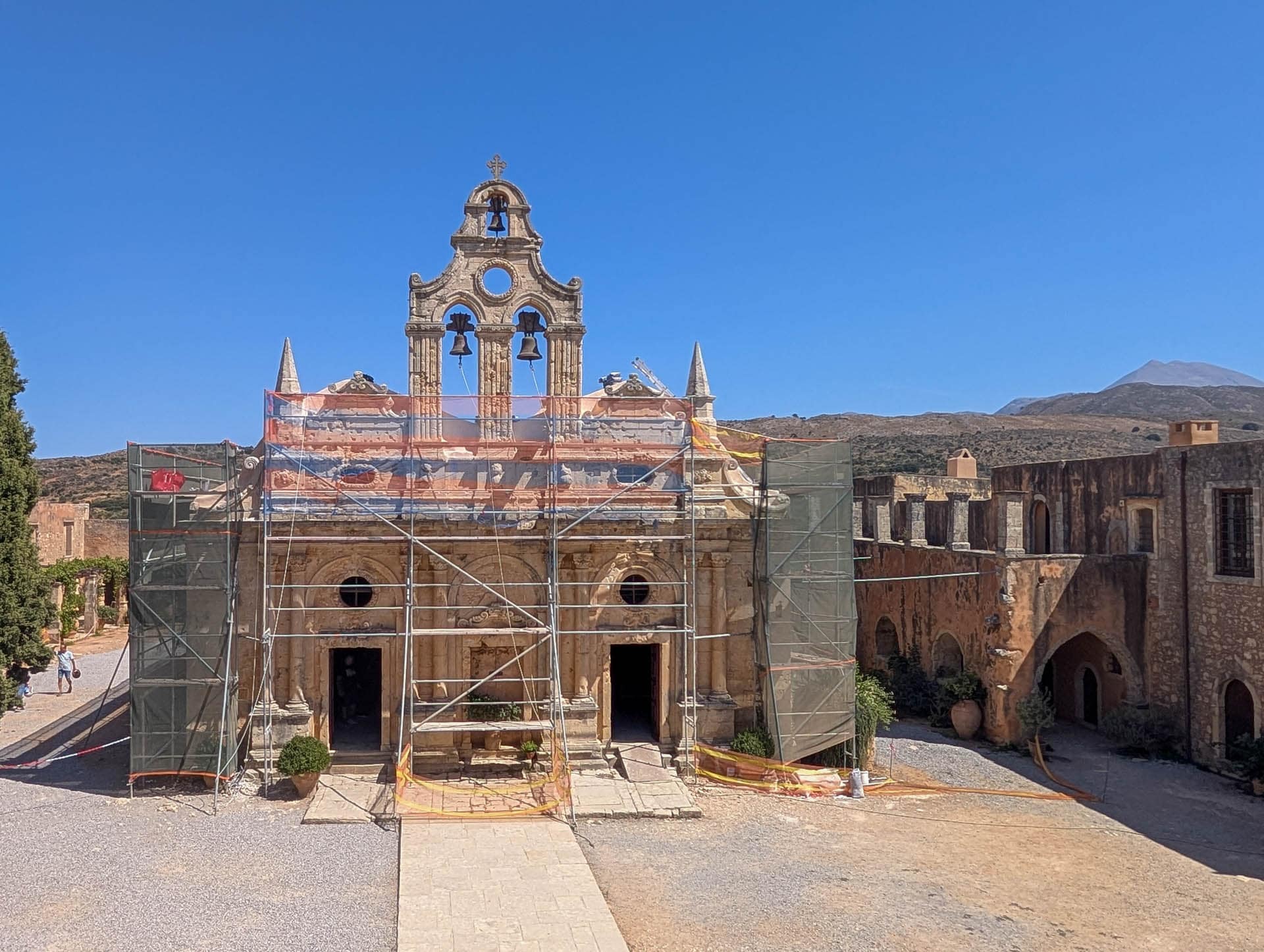
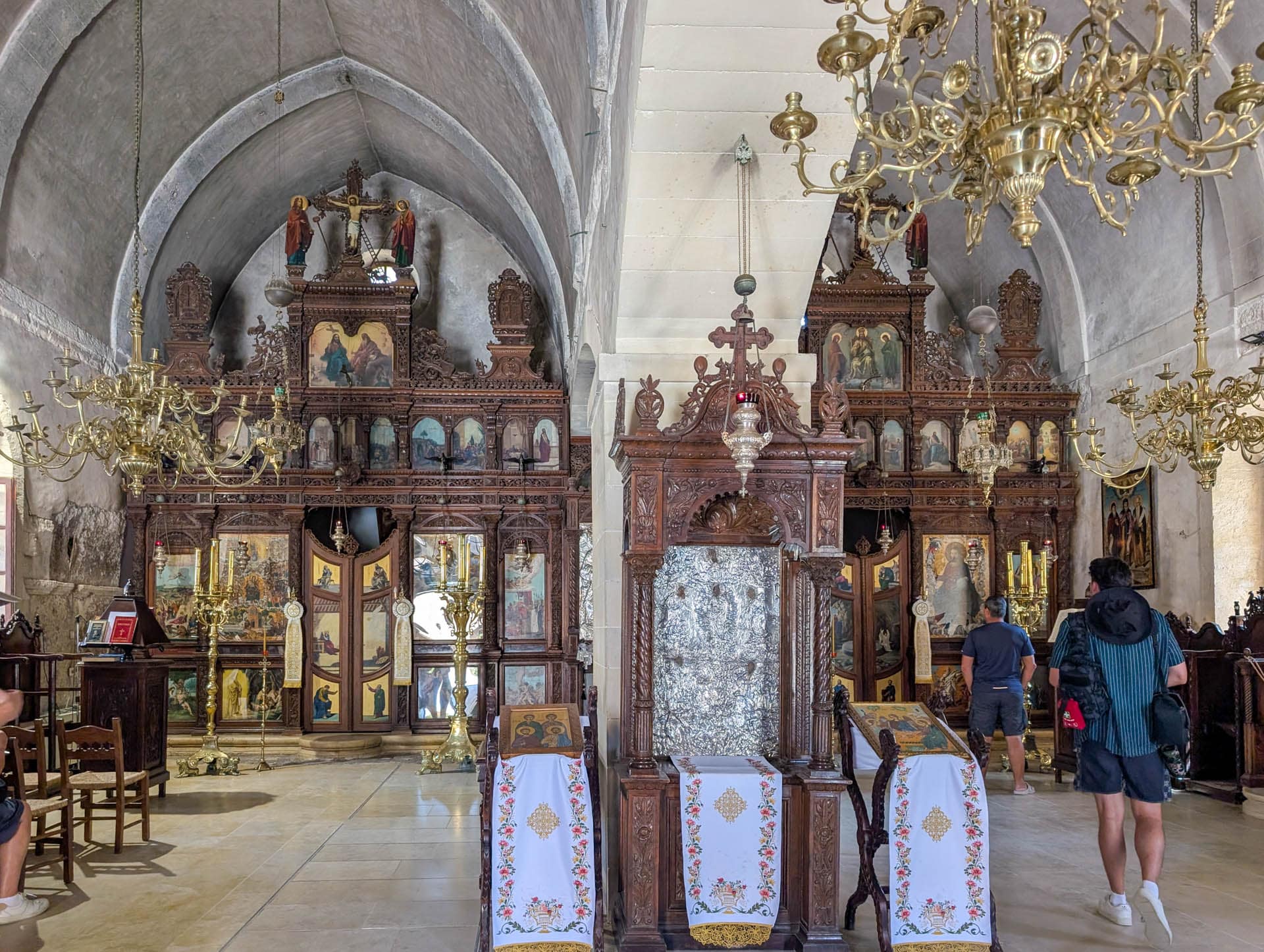
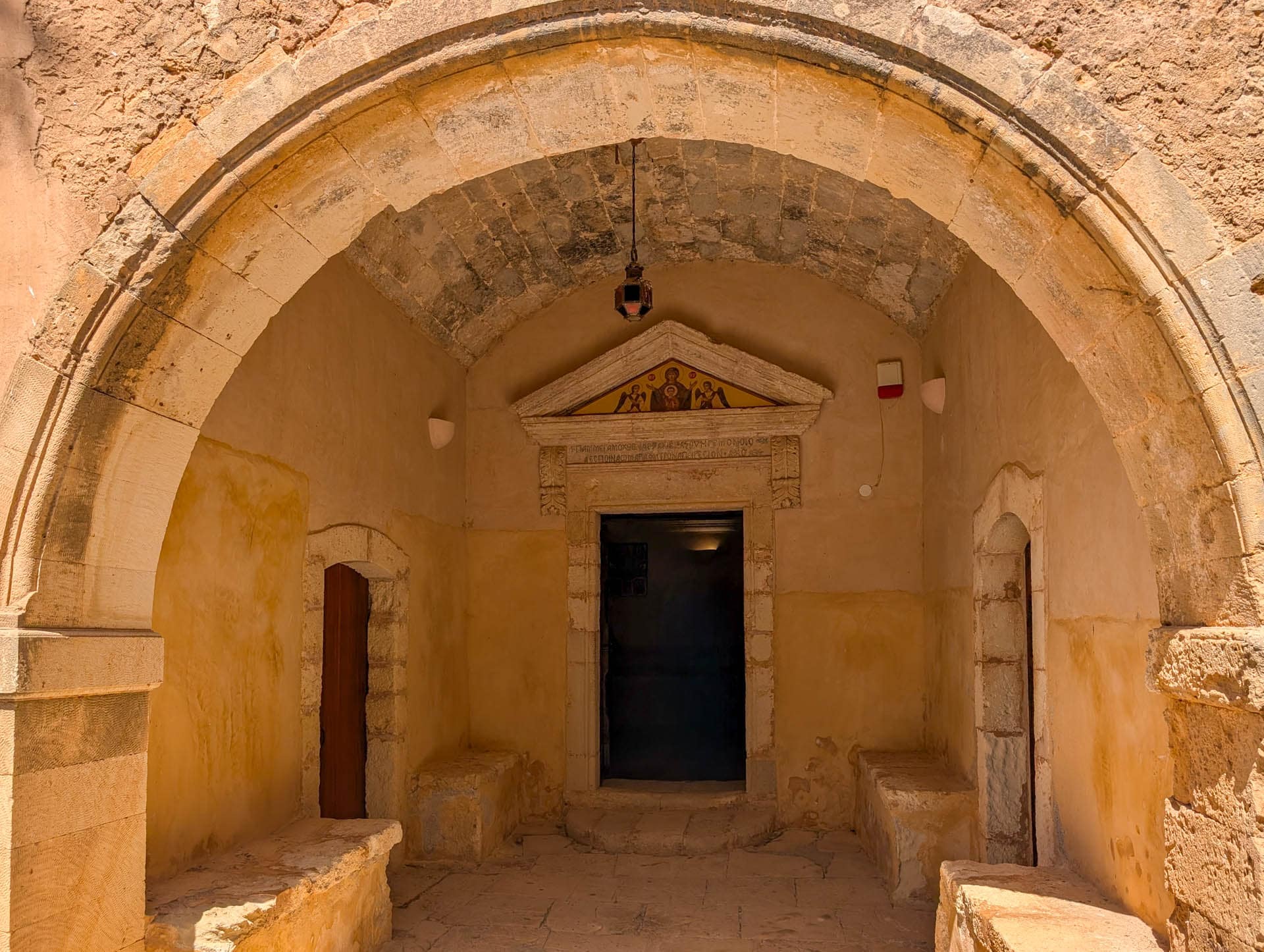
The cathedral is in the center of the square. It was built in 1587 on the site of a smaller church.
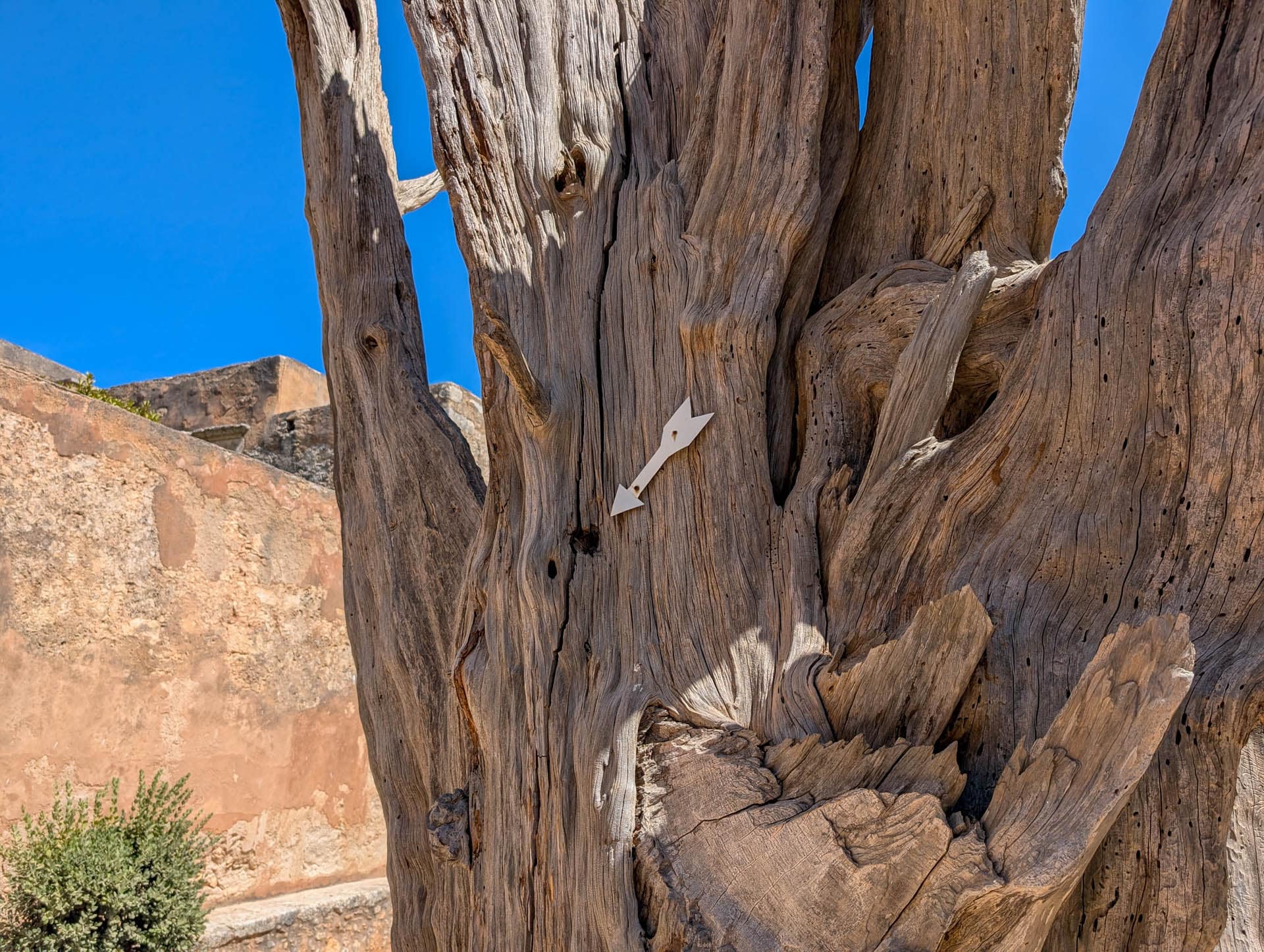
To the north of the church is an old cypress tree that still has a Turkish bullet lodged in it. A helpful arrow points it out.
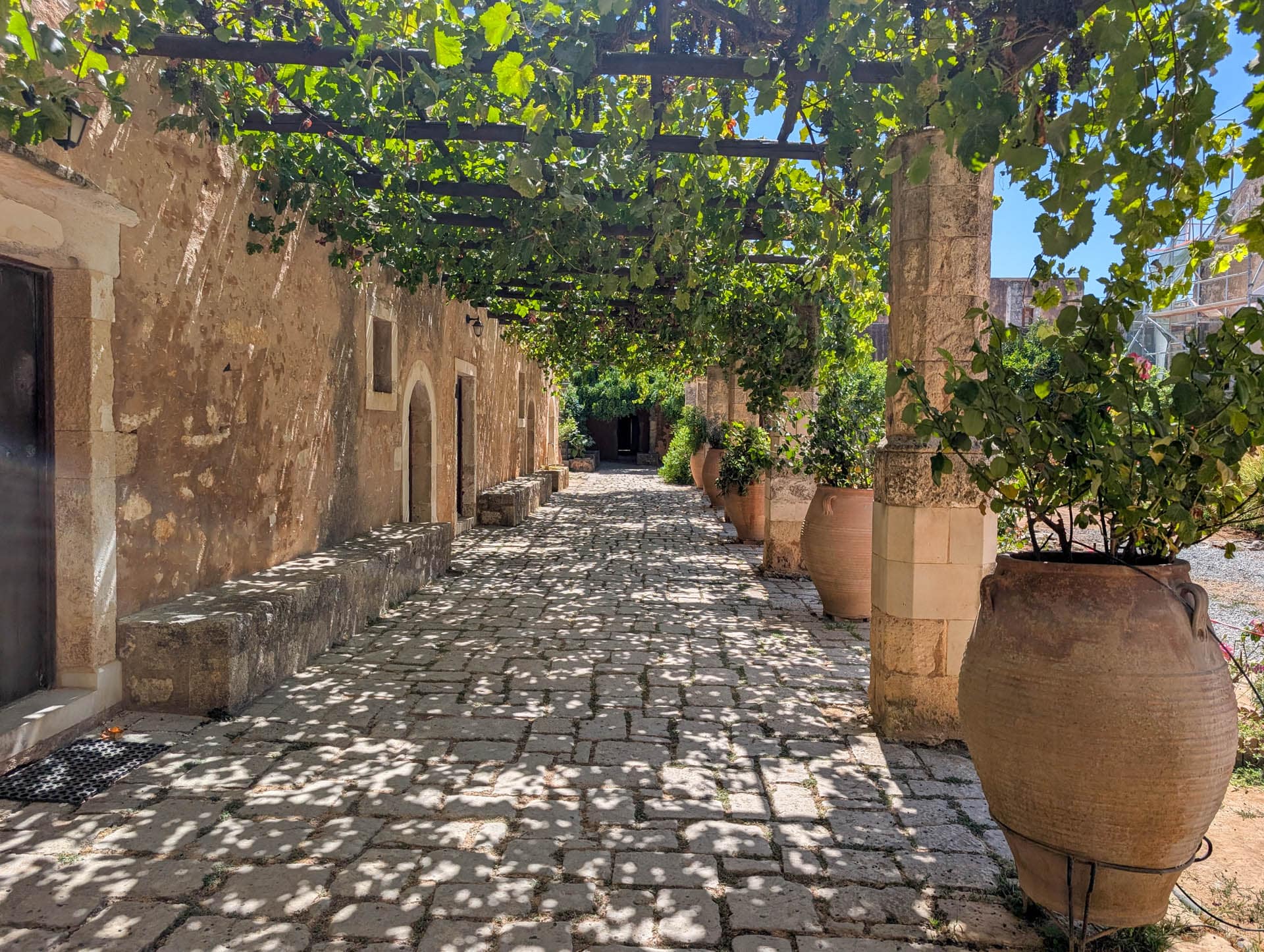
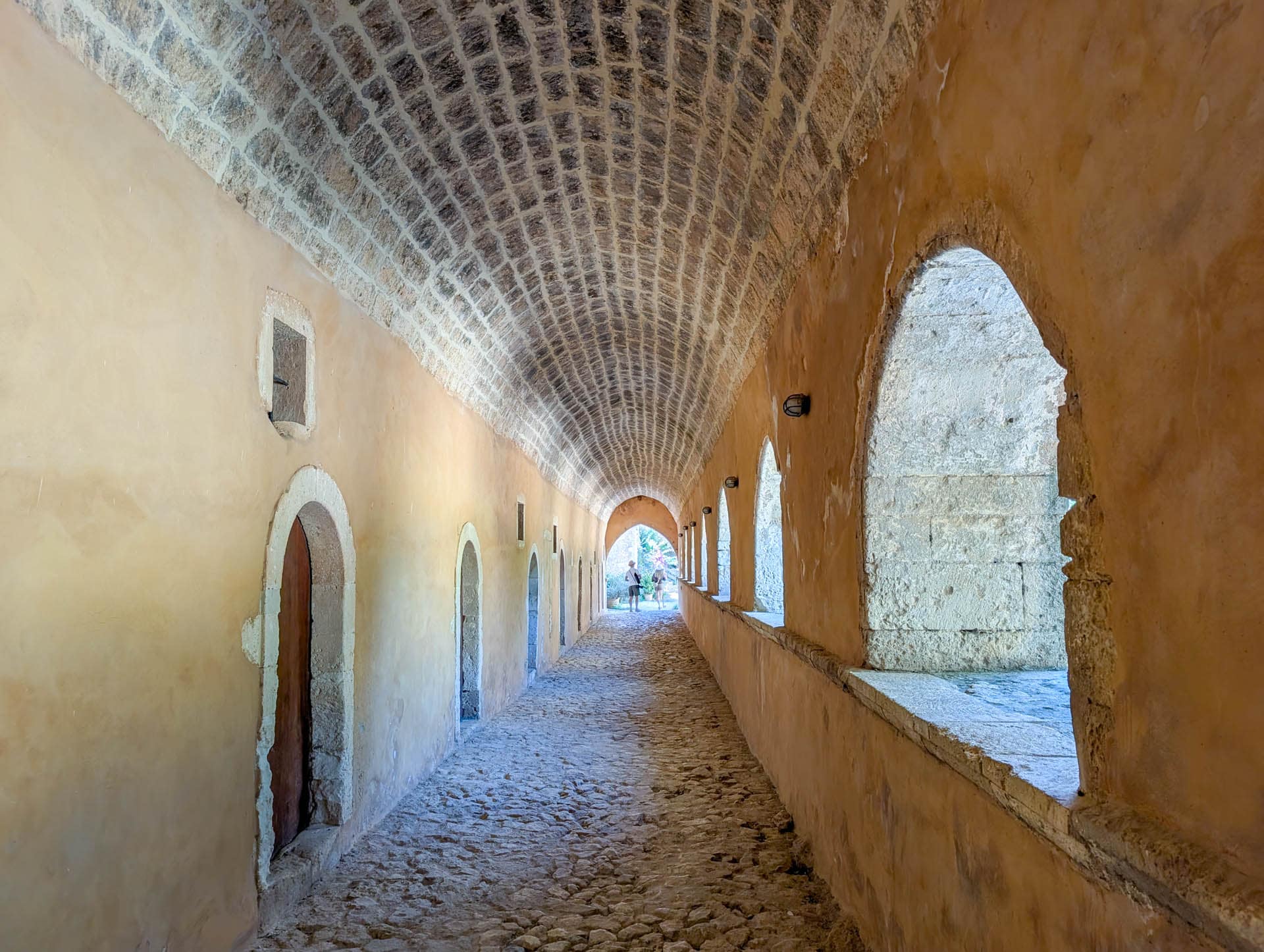
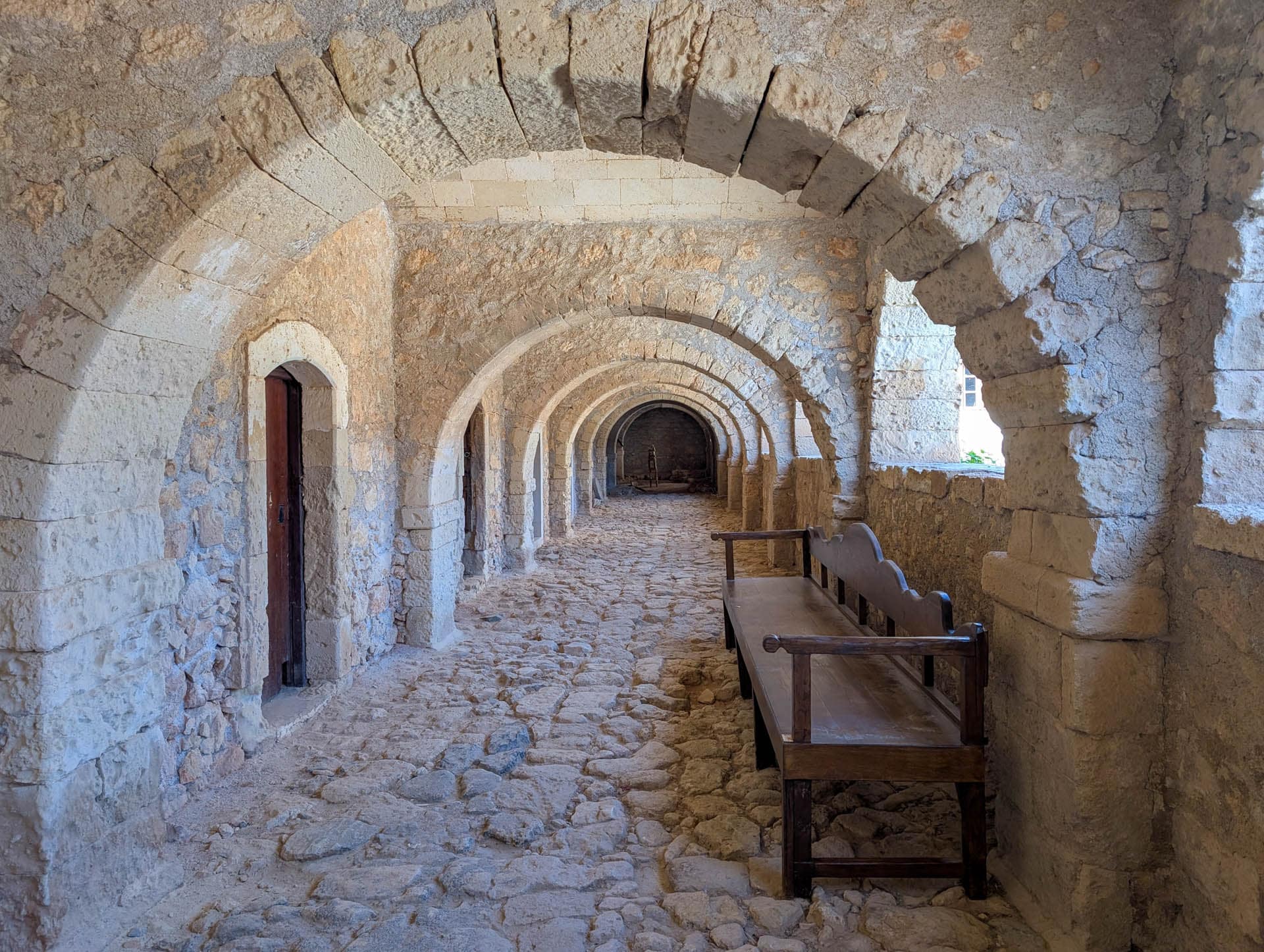
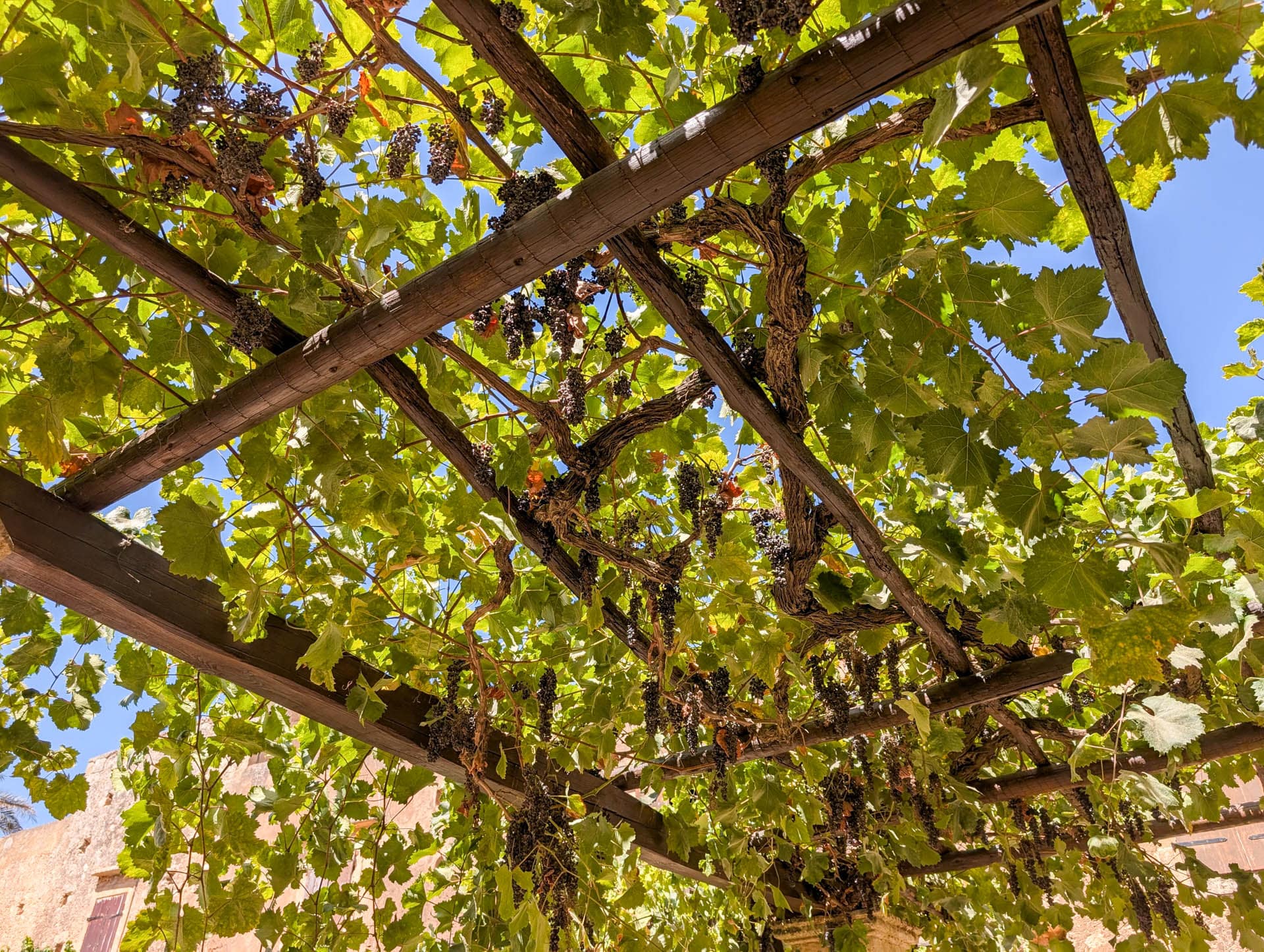
Each side of the square is different. On the north side is the abbot’s house, refectory, and cellars. On the east side are monks’ cells with a trellis supporting grapevines. On the south are more cells with a barrel vault cloister in front. Some of these were open to visitors. On the west side were more cells. The ground floor has very rough cobblestones. From the upper floor are good views of the monastery interior and the surrounding countryside.
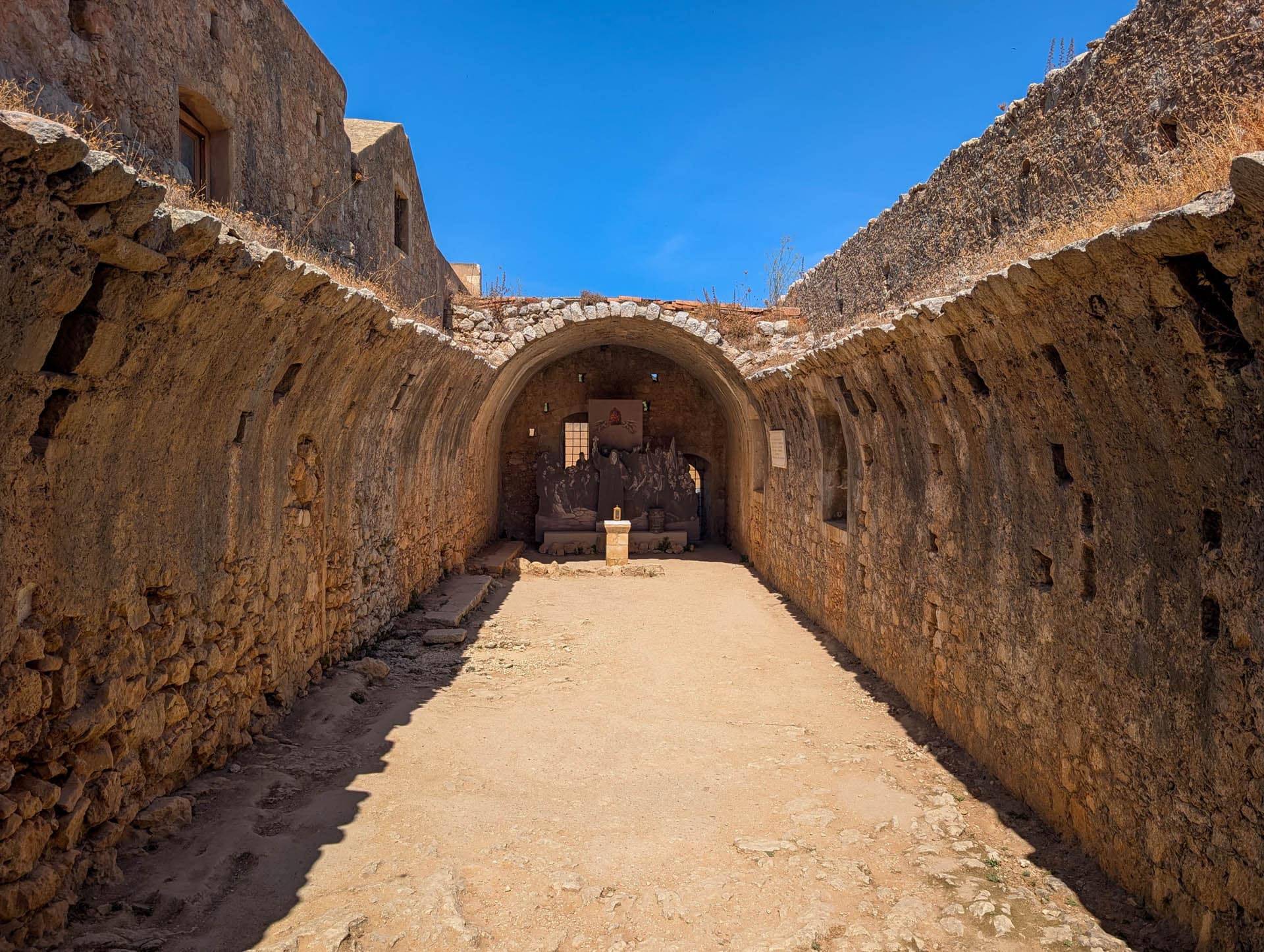
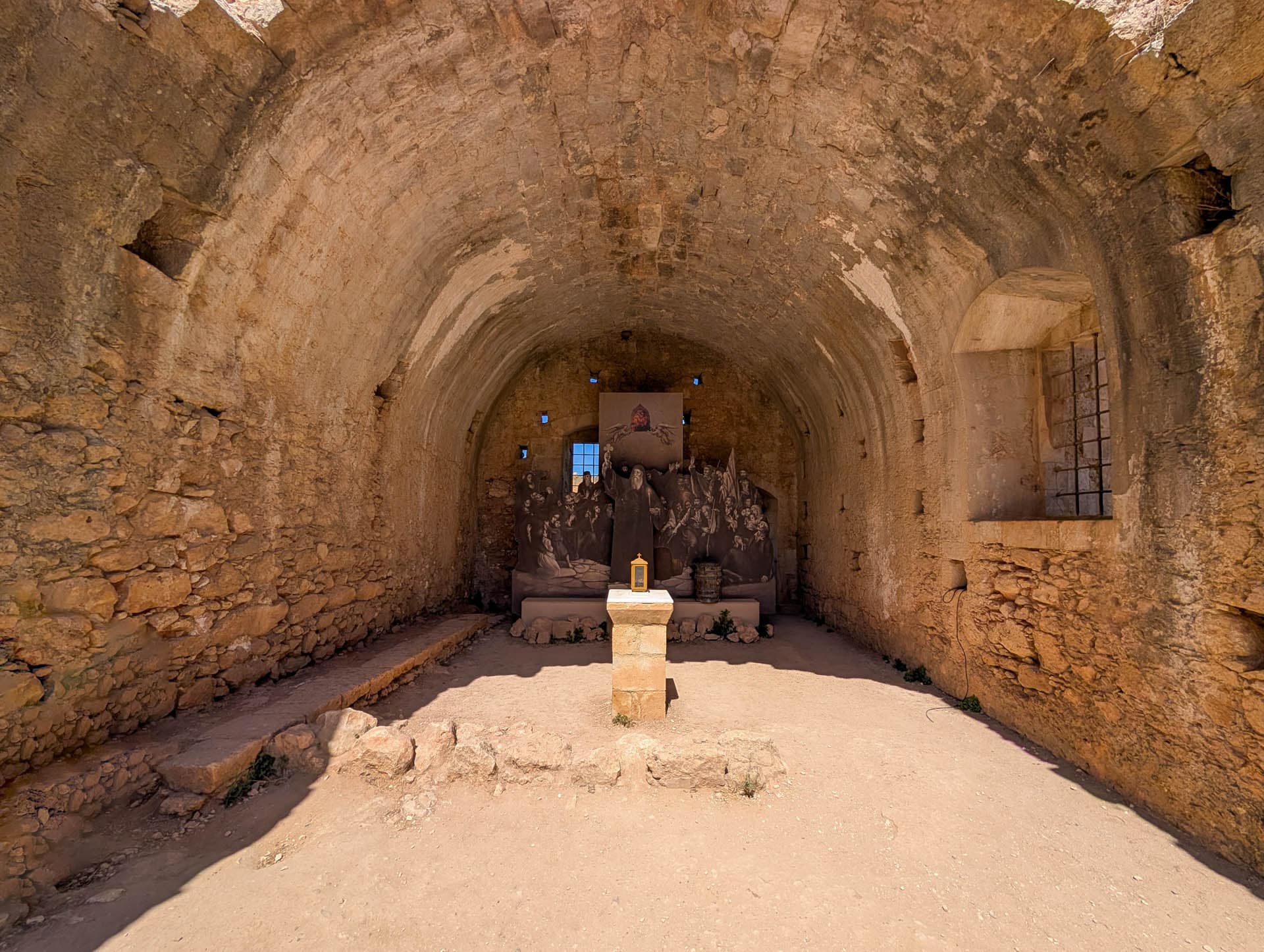
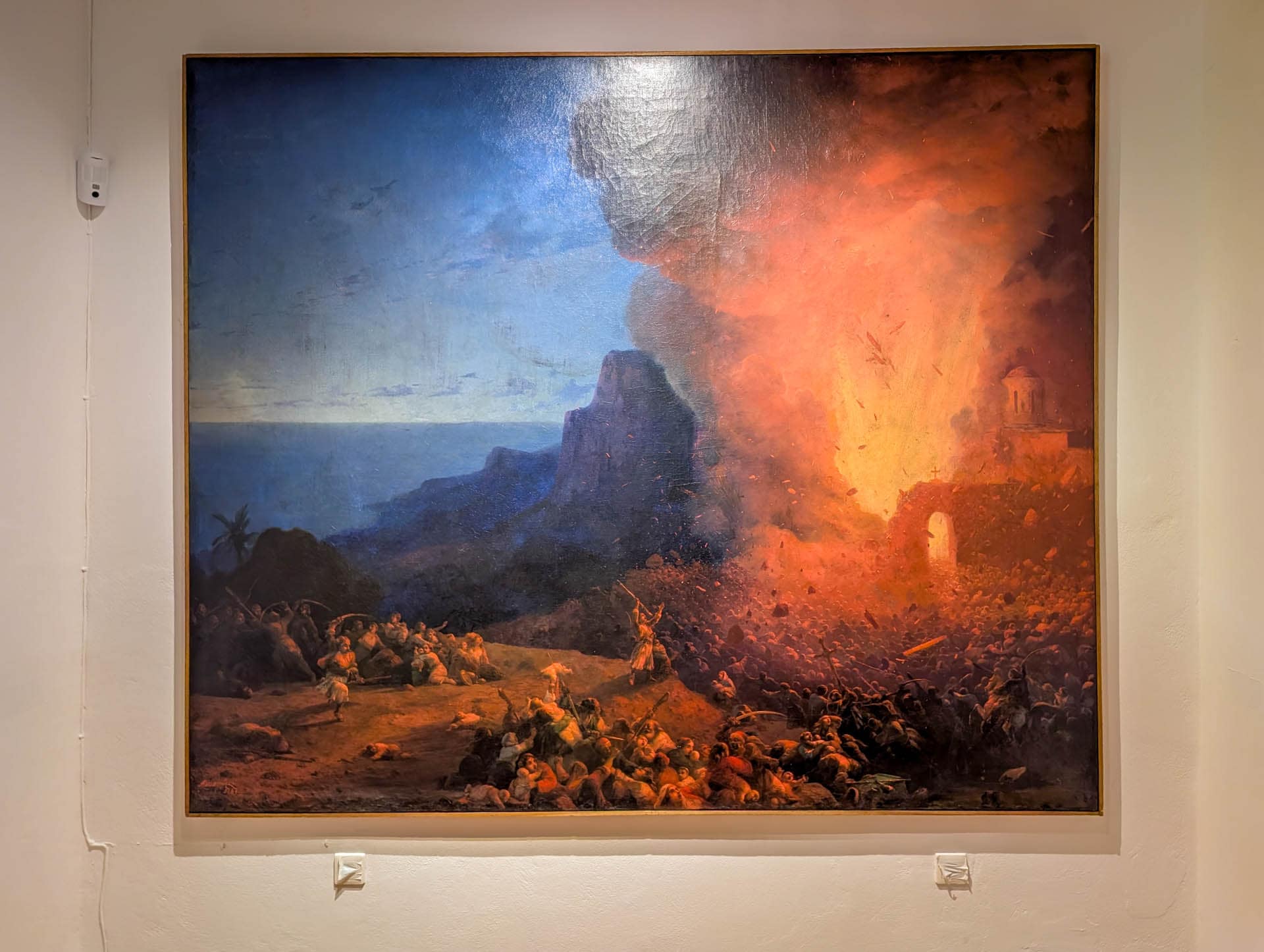
The major drama at the monastery was on November 9, 1866. The monastery was under siege by the Turks, who broke through on that night. The remaining survivors, mostly women, children, and priests, blew the powder magazine they were sheltering in, taking many Turks with them. The roofless powder magazine still stands.
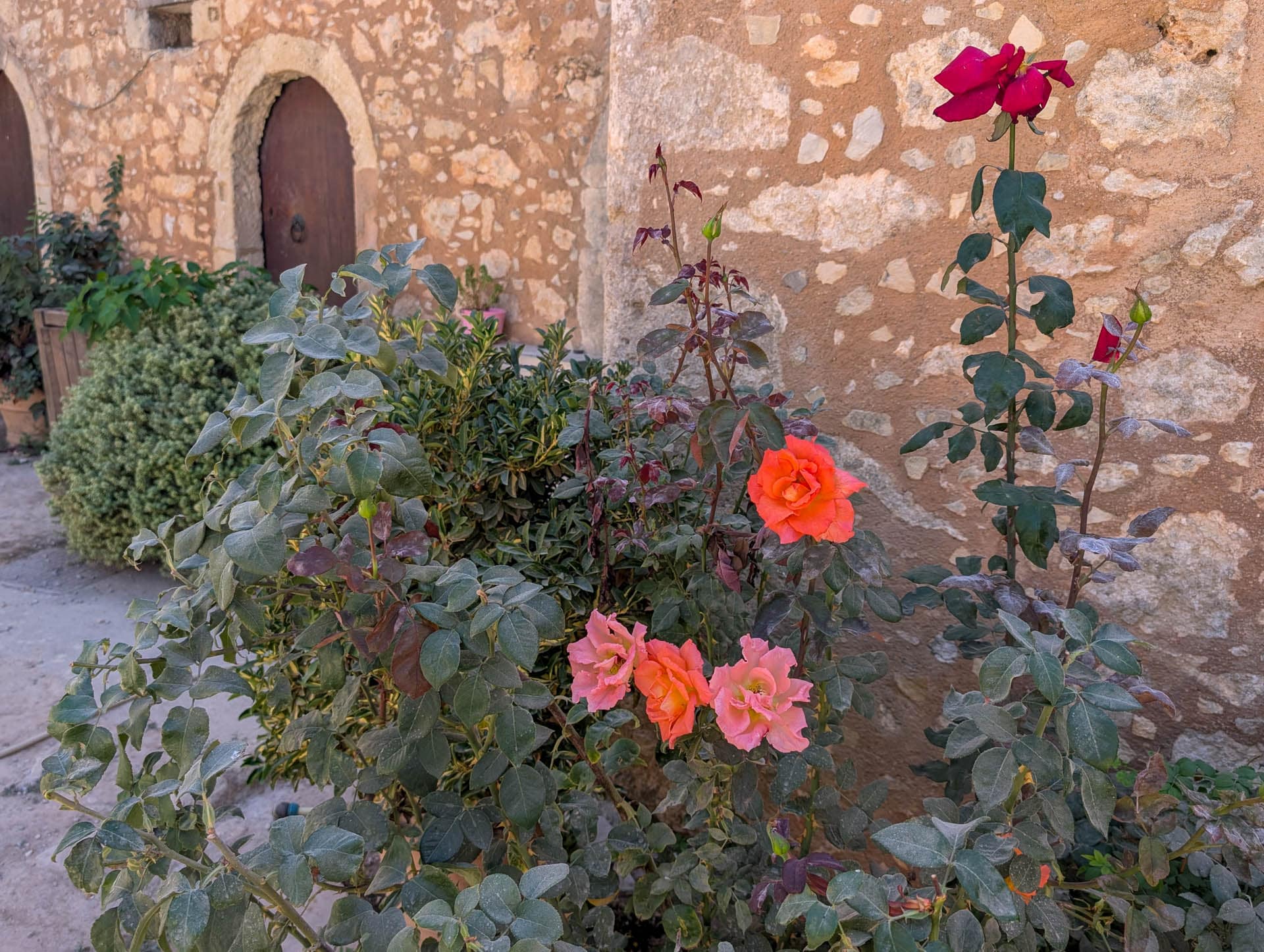
Grapes were still growing when we visited, and roses were blooming in the central courtyard.
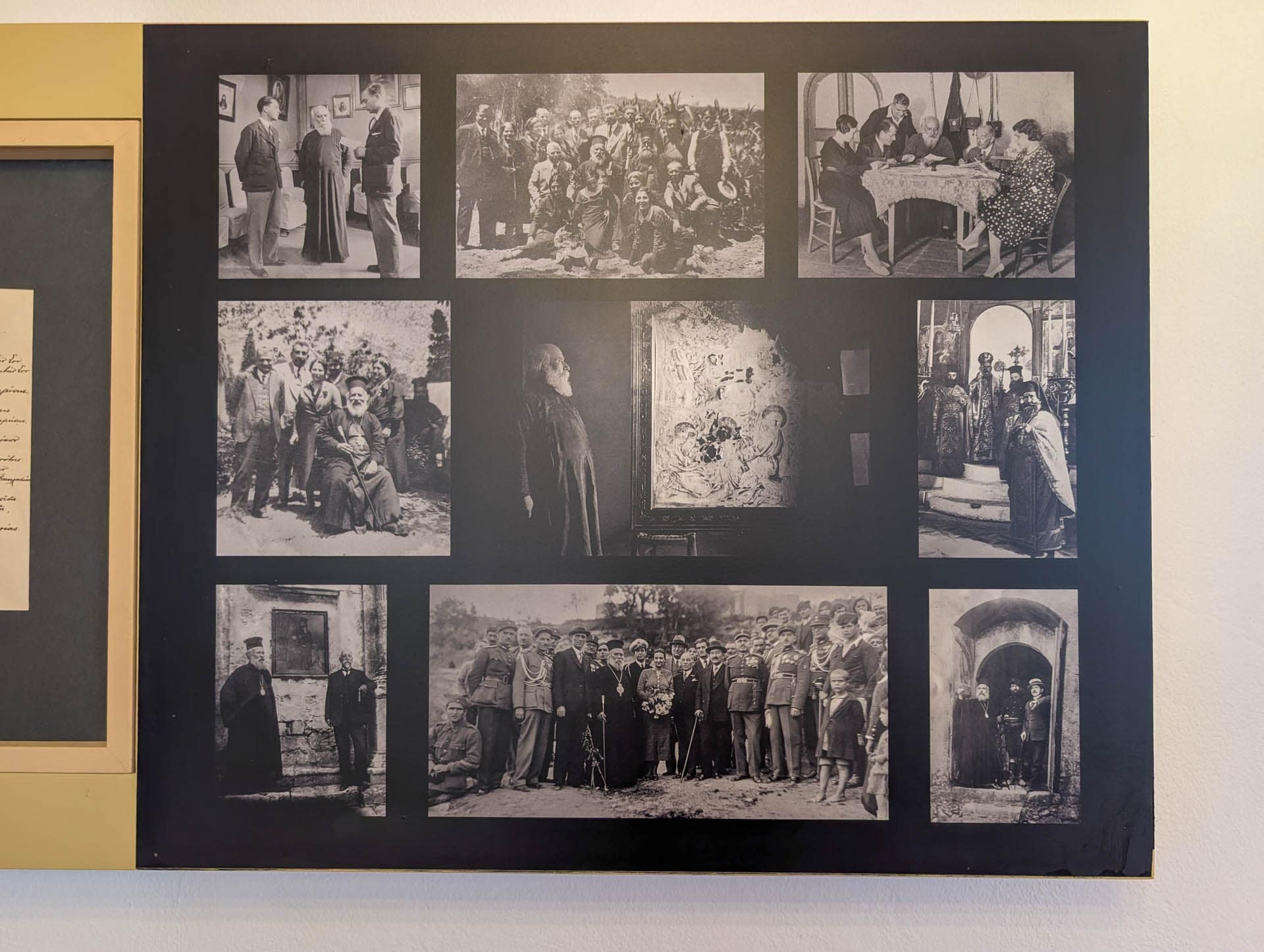
A museum in one corner of the monastery has historic photos and a painting of the blowing of the powder magazine.
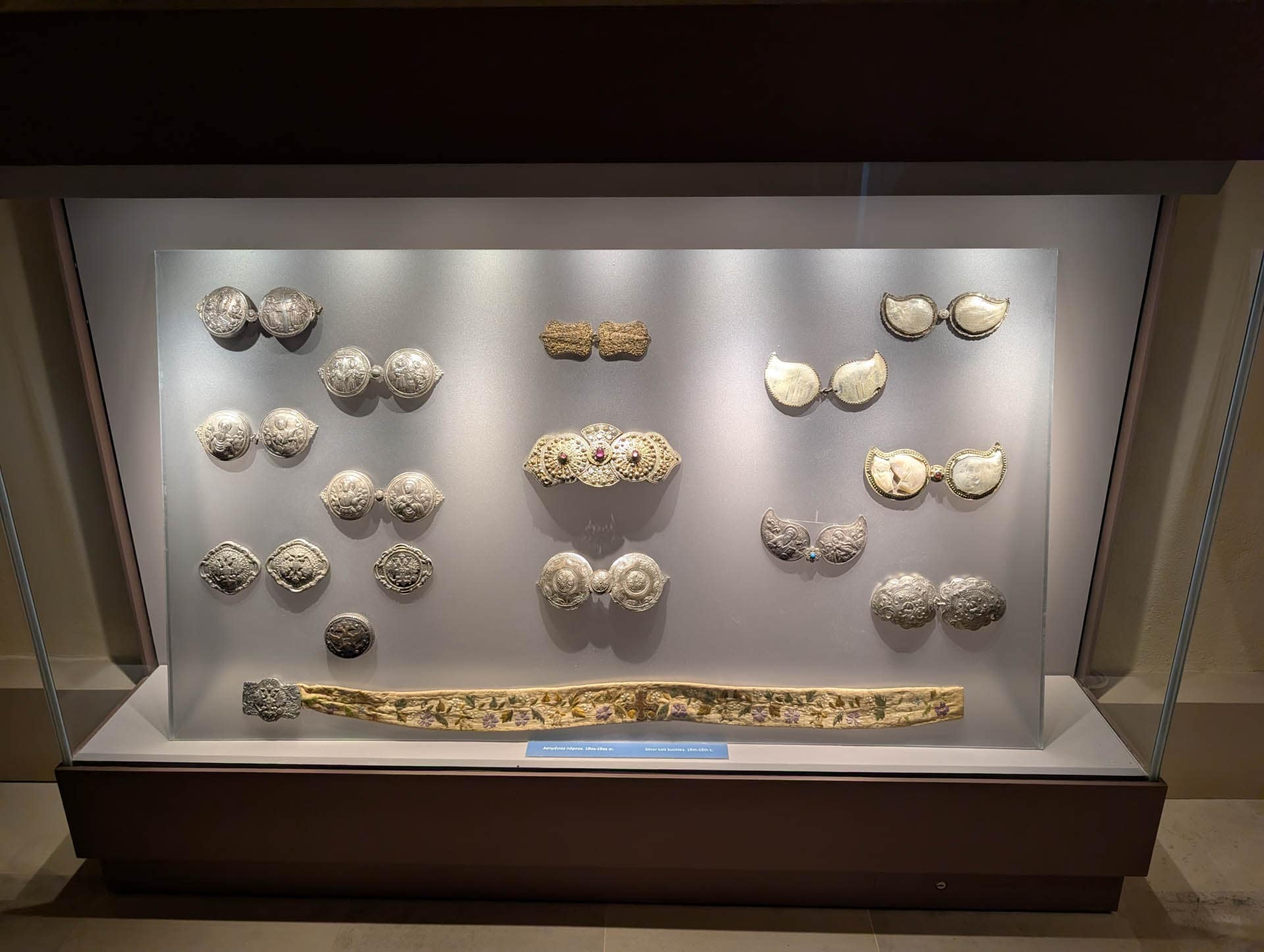
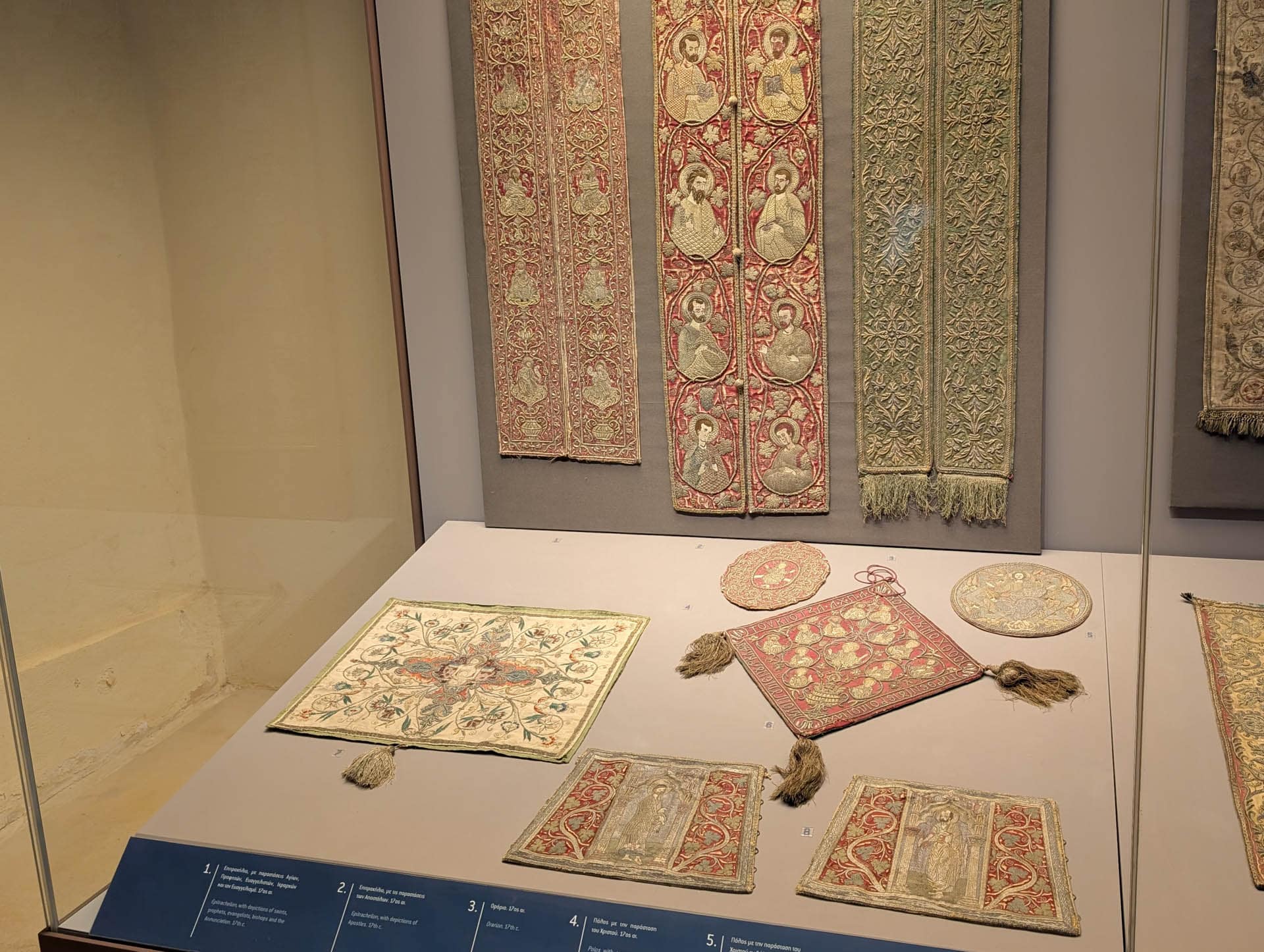
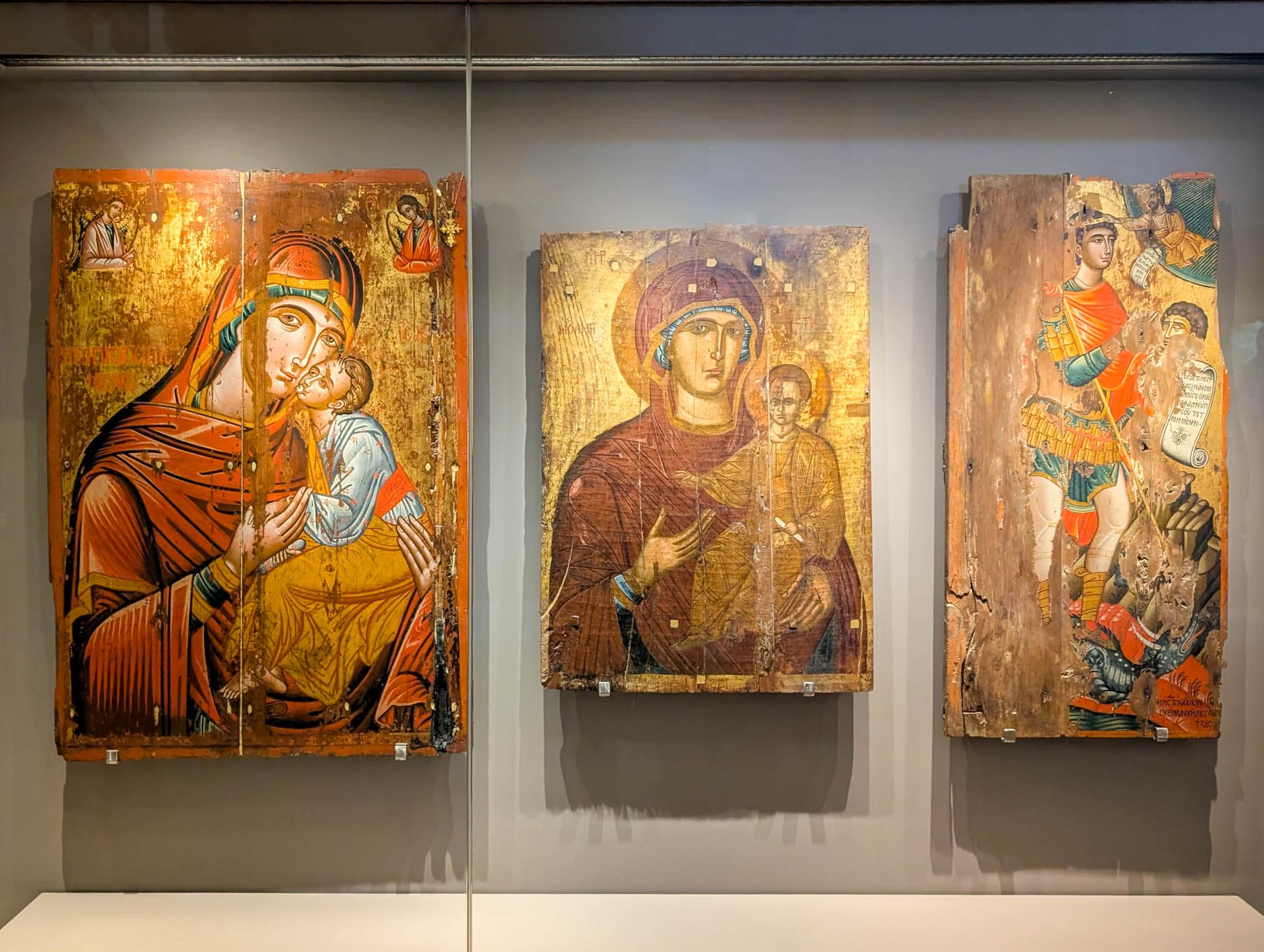
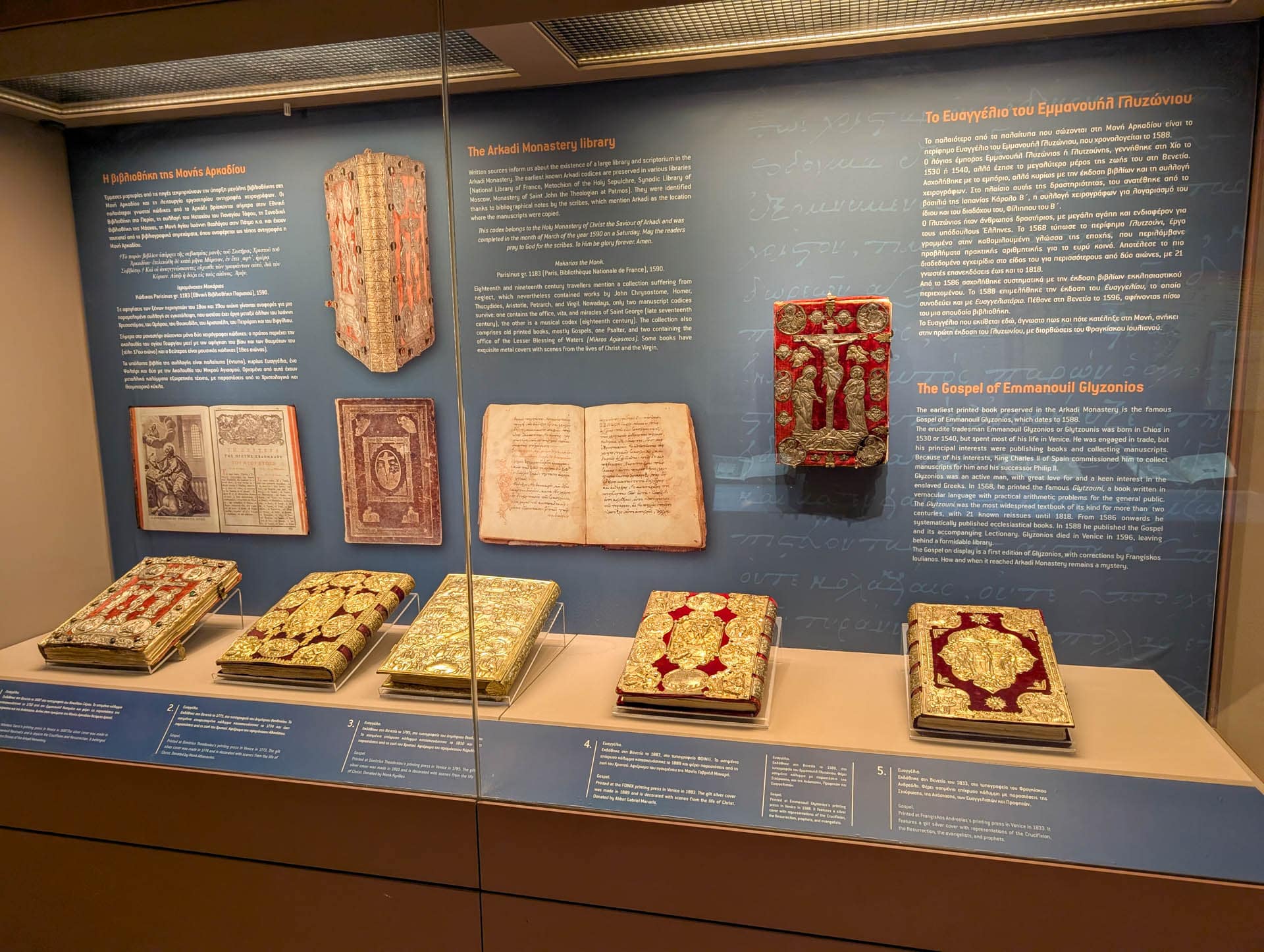
In peacetime the monastery was famous for embroidery and its library. Some of its treasures are displayed in the museum. One is the monastery’s sacred banner. It was given to a Turkish officer as plunder after the siege. He returned it to the monastery four years later.
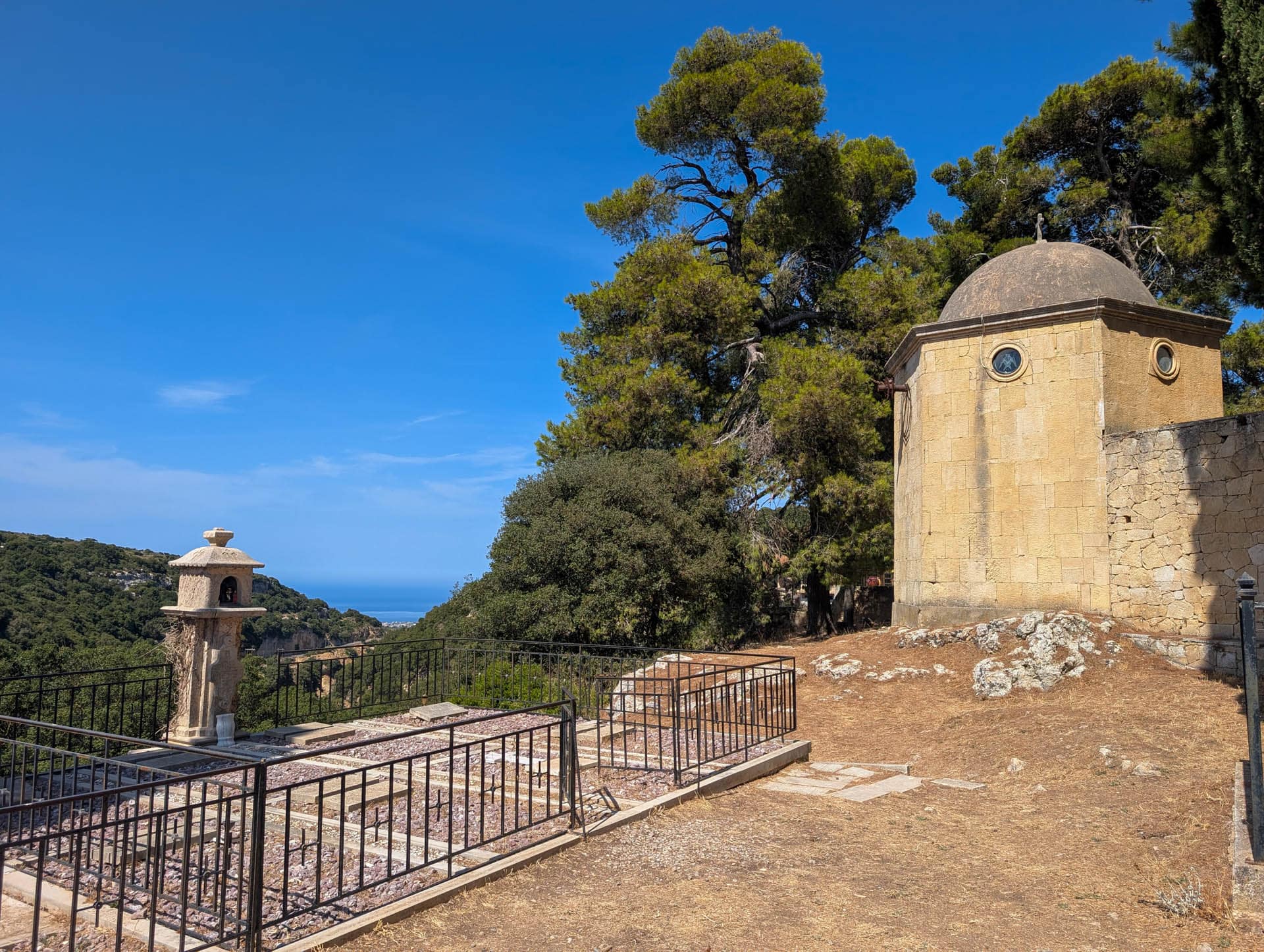
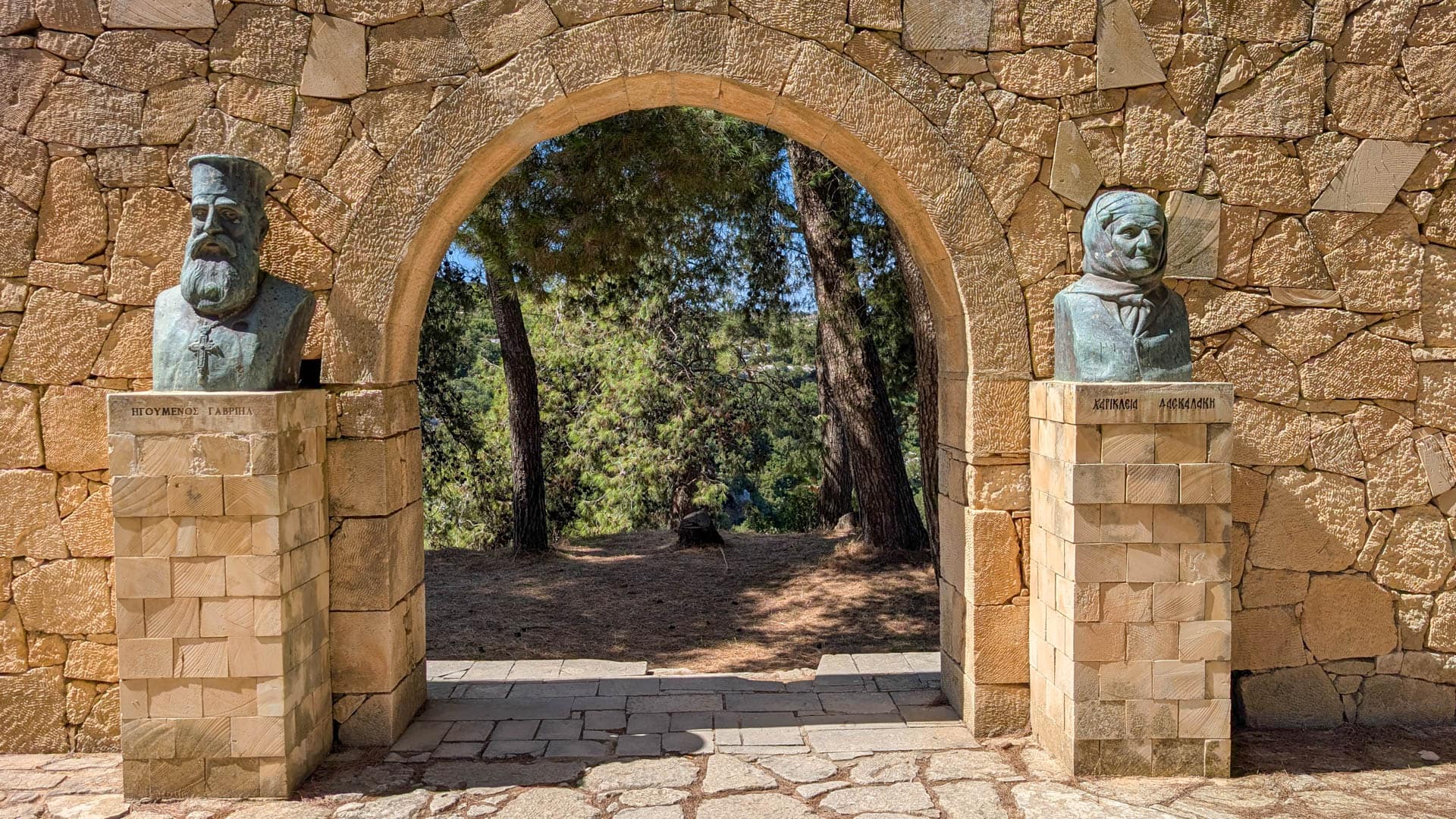
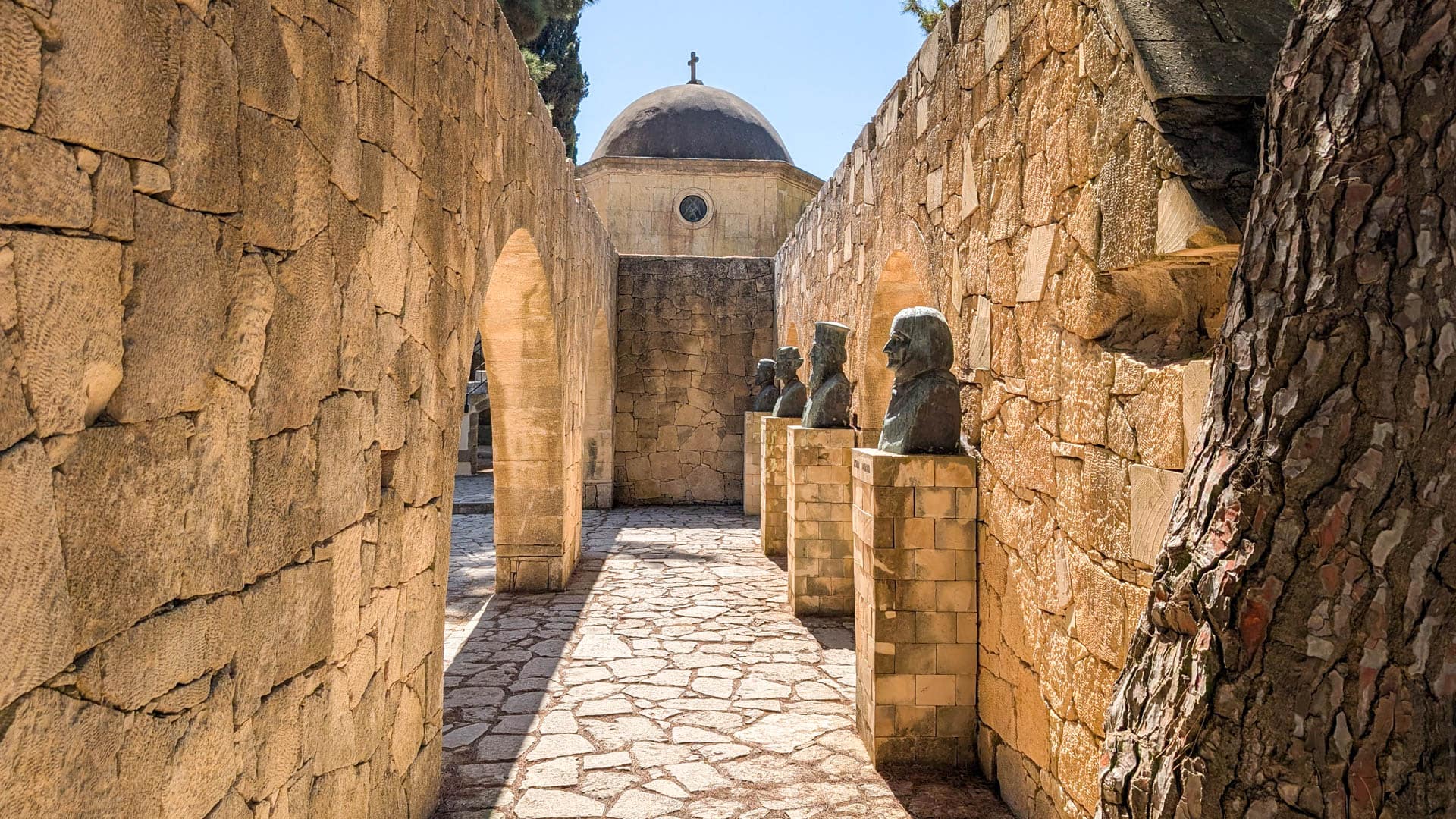
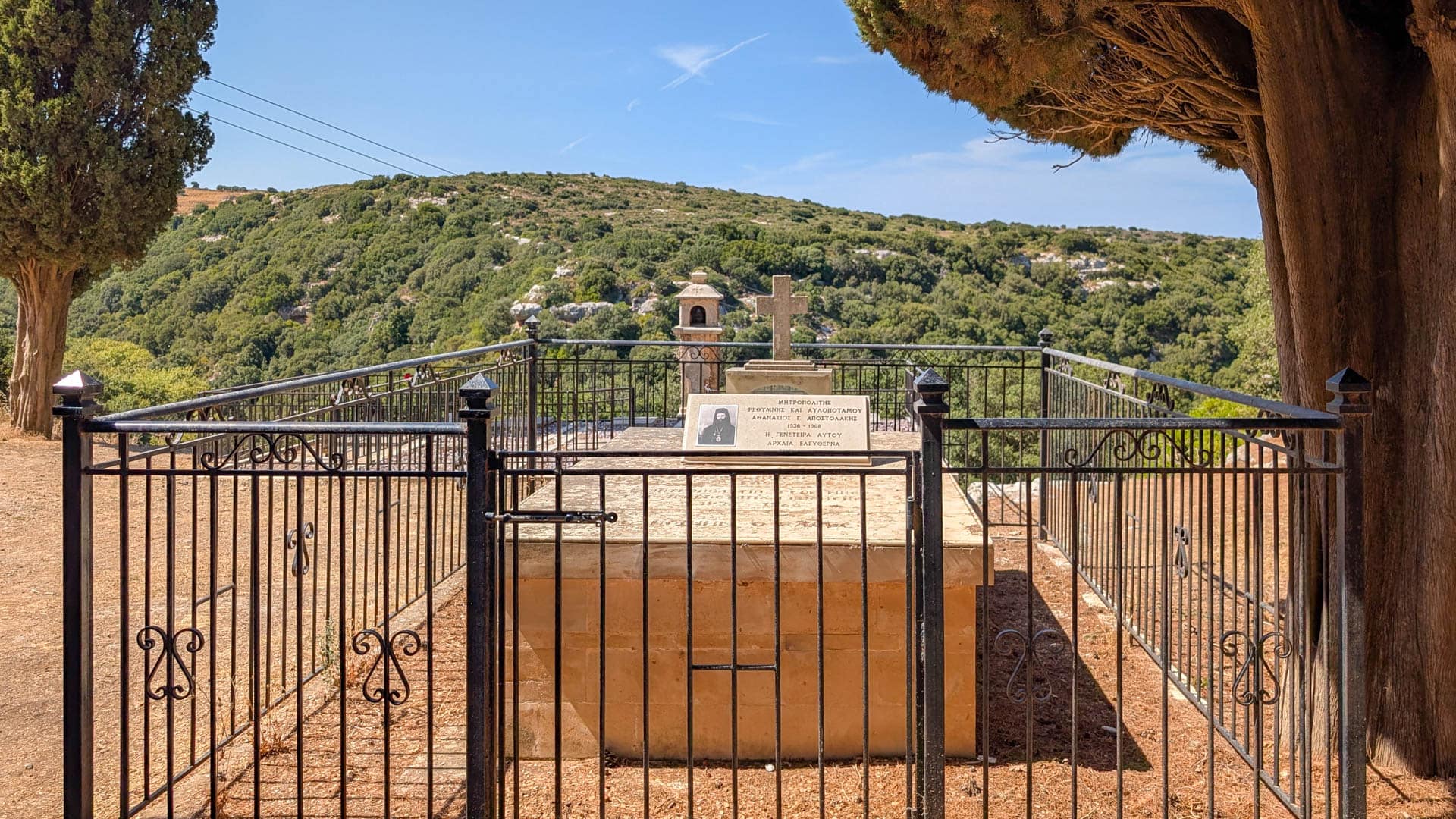
Outside the monastery is a gallery with busts of some of the heroes, and an ossuary holding the bones of the victims. Moving, but creepy. I thought the man buried in the large tomb must be someone famous, but I can’t find anything about this metropolitan (archbishop) who died in 1968 at the age of 32.
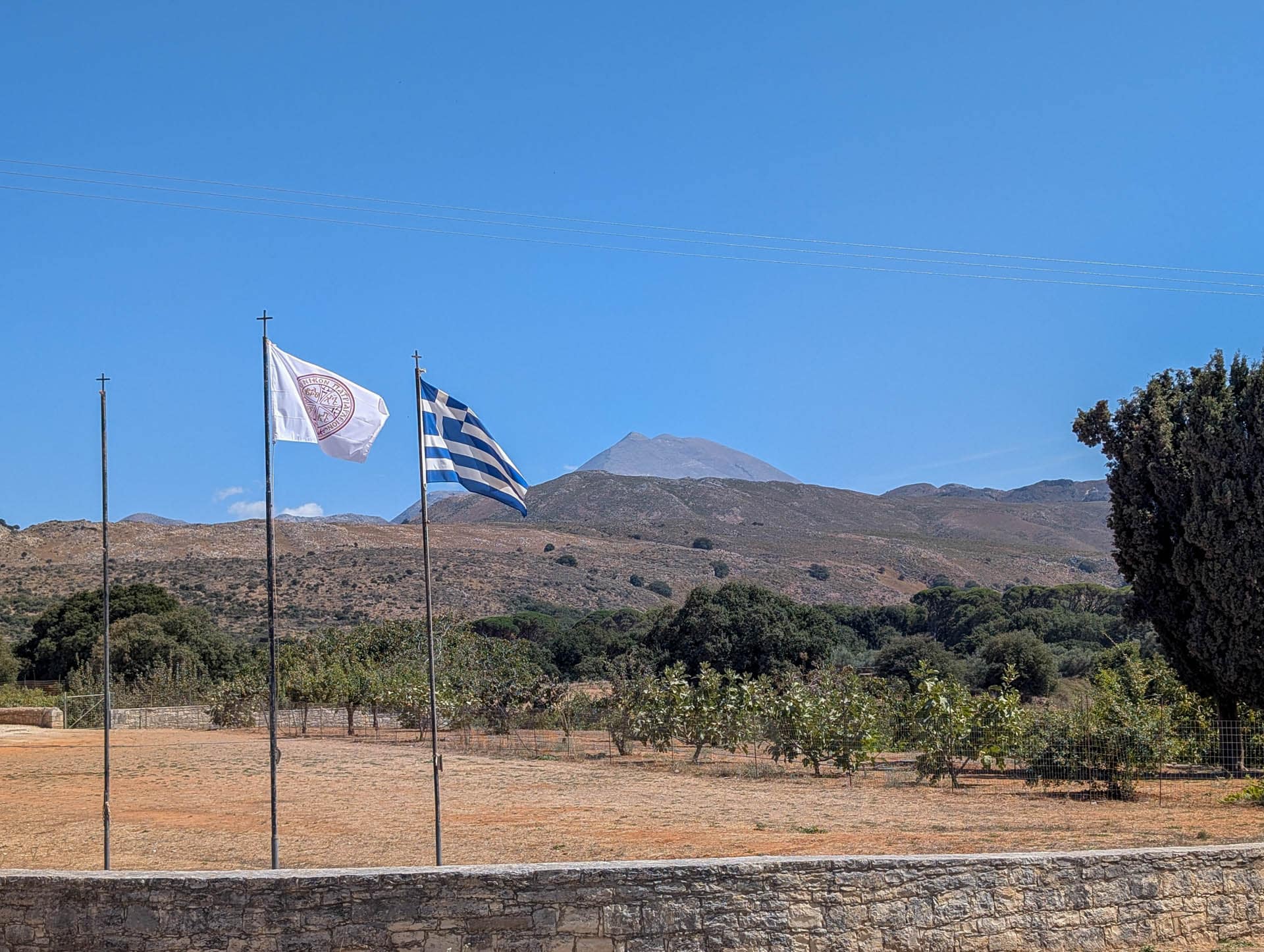
From the upper floor of the monastery you can see mountain peaks in the distance. From just outside the monastery you can see the north coast of Crete. It was pretty drive there from Rethymno, mostly on narrow mountain roads.