What I look for
I don’t set a hard budget. I look for places that meet our needs at the lowest price. I’m happy if it’s less than $150 per night, but I’ll go higher if needed.
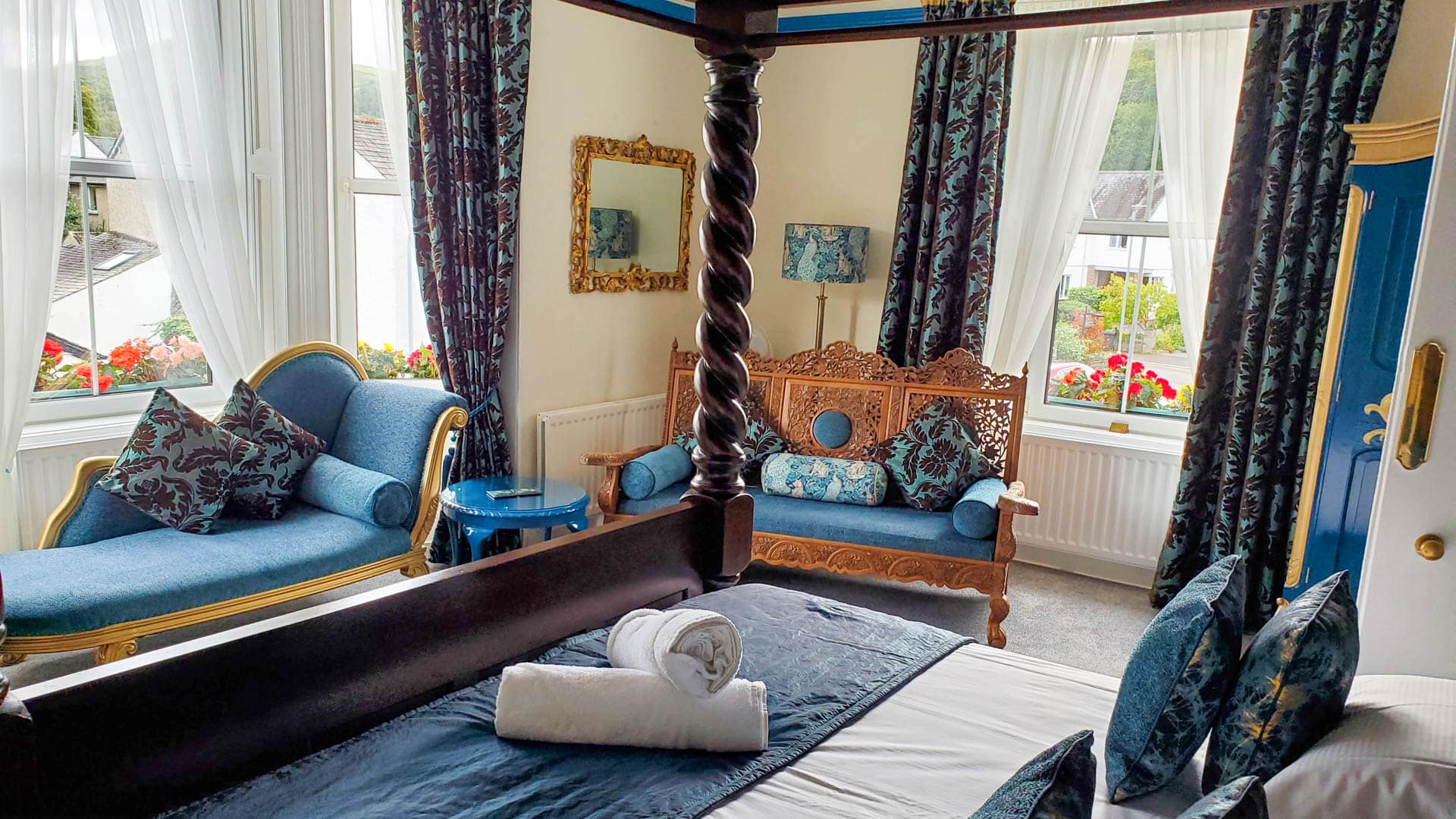
Here’s what I look for. We prefer smaller, locally-owned places to giant resorts and faceless chain hotels. We find them personable and genuinely welcoming, and they often have more local flavor.
- Clean and safe (Duh)
- Our own bathroom
- A fridge, because we travel with medication that needs refrigeration
- Walking distance to bars and restaurants and a supermarket (more on that under Food & Drink)
- Walkable distance to sights, or near public transport if we’ll be using it
- A place to sit outdoors if the weather allows, and place to sit indoors (other than the bed) if the weather does not allow
- A/C if it might be hot
- A pool is nice if it will be hot but we’re more beach people
- The older we get the more we appreciate an elevator
- Local or interesting character (cave hotel, anyone?)
- Laundry facilities at key points
- We don’t care about a TV and probably won’t even turn it on
- We don’t care about a gym
How to find the perfect place
Here’s how I find a place to stay:
- I start with any guidebook recommendations that meet our needs. I don’t think I’ve ever been disappointed with one. They’re often full, though, because lots of people use the same guidebook.
- My next stop is Booking.com because they have the best filters. It’s great for comparison shopping. (For our trip to Asia I used Agoda, which is related to Booking.com.)
- If I don’t find a place there I’ll try Airbnb, then Vrbo. I’ve found them a good source in places where more traditional lodgings are either scarce, expensive, or both.
- If I strike out with all of those I’ll dig into Google maps or websites of local tourist organizations or tourist sights, which sometimes list lodging options. The Blue Ridge Parkway, for example, is tricky because it weaves through out-of-the-way towns and villages.
When to book
I book lodgings as soon as I can.
- It saves time while we’re there
- It saves stress about where we’re going to sleep
- The best places fill up fast. For example, many US national parks open reservations a year in advance and may sell out in hours (or even minutes). In places with repeat visitors, people may book the following year when they leave.
How to book
Regardless of how I find a place, I book direct unless I’m using a credit or otherwise find a great deal. When I compare the final price from Booking.com with booking direct, booking direct is often the least expensive. It’s also best for the host, since they avoid third-party fees. It can be mildly inconvenient to track down details if you need to change something or cancel but I’ve generally found hosts very, well, accommodating. For some places booking direct might be the only option.
Tips
- Shop around, because I’ve seen the same room listed on different sites for different rates and with different rules.
- Watch out for fees not included in the nightly rate when comparing prices. Some hotels charge resort fees. Many vacation rentals charge a cleaning fee and/or a service fee. Sometimes there’s an extra (hefty) charge for hotel parking.
- Then again, some places include extras such as breakfast or a free lift to the local train station or port. A free breakfast can save time and money. (Eat enough and you can skip lunch!)
- Don’t rule out hostels because you don’t want to sleep in a dorm. Many have private or family rooms with baths that are just as comfortable as a more traditional hotel room, though less expensive and with more spartan decor. They also tend to have shared kitchens and social opportunities, if you want to meet other travelers.
- Don’t forget perks you might have. For example our Delta Airlines credit card offers an annual Delta Stays credit if you book through them. (I once booked a room on New Year’s Eve because I hadn’t used the credit yet!)

We include information on this blog on where we stayed.
Responsible Travel
Travel is wonderful. It’s fun, interesting, and mind-opening. If not mind-blowing! We love it. We also recognize that travel impacts the environment and local communities, not always in a good way.
We try to be responsible travelers by:
- Visiting during shoulder or off season to reduce crowds.
- Staying at locally-owned accommodations, eating at locally-owned restaurants, and buying locally made crafts, so money stays in the community.
- In some places locals are being priced out of local housing by short-term rentals. We try to find hosts that are renting their vacation home while they’re not using it or are renting space on their property, or “aparthotels” designed specifically for travelers.
- Flights often can’t be avoided. The world is a big place! Rental cars can, and we try to avoid renting a car at all, or only renting one for a day or two to visit places not feasible via public transportation.
- Limiting plastic consumption. We carry refillable water bottles, have switched to bar shampoo (also helps with the 3-1-1 bag), and travel with wooden cutlery.